VnCommEx
Hợp tác xuất khẩu SUBSCRIBE
VnCommEx
Hợp tác xuất khẩu SUBSCRIBE
  • VCE
  • Product Catalogue
  • Market Insight
    • Wood & Furniture
    • Garment & Footwear
    • Food & Spicy Industry
    • Fruit & Vegetable
    • Others
    • Market Insights
  • Vietnam Market
    • Vietnam Commodity Market Price
    • Vietnam Export Data
    • Vietnam in FTA
  • Publication
  • About Us
  • English
    • 中文 (中国)
    • Tiếng Việt
VnCommEx
VnCommEx
  • VCE
  • Product Catalogue
  • Market Insight
    • Wood & Furniture
    • Garment & Footwear
    • Food & Spicy Industry
    • Fruit & Vegetable
    • Others
    • Market Insights
  • Vietnam Market
    • Vietnam Commodity Market Price
    • Vietnam Export Data
    • Vietnam in FTA
  • Publication
  • About Us
  • English
    • 中文 (中国)
    • Tiếng Việt
All Right Reserved. Designed and Developed by PenciDesign
Vietnam Export Data

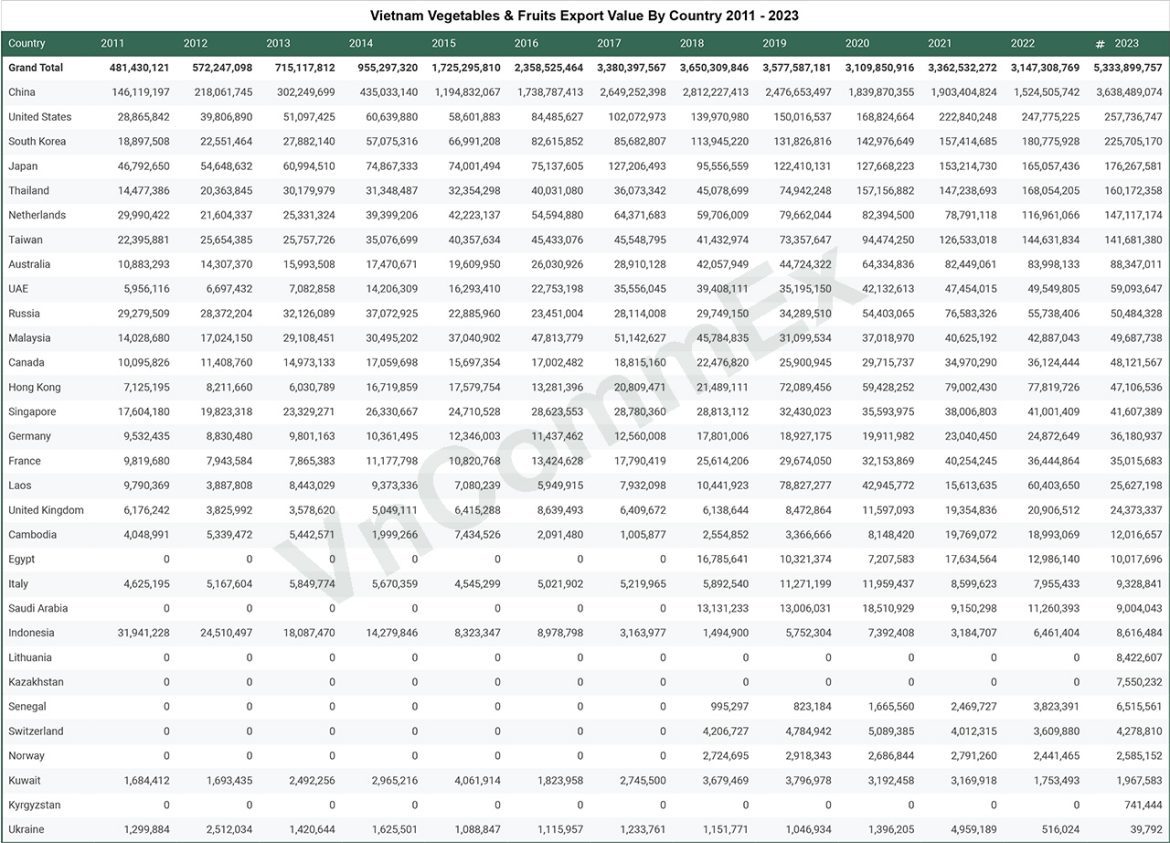
Vietnam’s Fruit & Vegetable Export Value By Country 2011 – 2025 (October updated)

by Henry Truong November 17, 2024
written by Henry Truong

Vietnam’s Fruit & Vegetable Export Value By Country 2011 – 2025 (October updated)

  • Raw data from the General Department of Vietnam Customs
  • Unit: USD Millions
Country2011201220132014201520162017201820192020202120222023202410M 2025Oct-25
Grand Total481.43572.25715.12955.31725.32358.533380.43650.313577.593109.853362.533147.315333.96794.87057.1927.4
China146.12218.06302.25435.031194.831738.792649.252812.232476.651839.871903.41524.513638.494629.854521.4665.64
United States28.8739.8151.160.6458.684.49102.07139.97150.02168.82222.84247.78257.74360.36454.5947.78
South Korea18.922.5527.8857.0866.9982.6285.68113.95131.83142.98157.41180.78225.71314.64264.1327.03
Japan46.7954.6560.9974.877475.14127.2195.56122.41127.67153.21165.06176.27203.26201.1618.63
Thailand14.4820.3630.1831.3532.3540.0336.0745.0874.94157.16147.24168.05160.17278.1797.777.83
Netherlands29.9921.625.3339.442.2254.5964.3759.7179.6682.3978.79116.96147.12111.81135.7112.35
Taiwan22.425.6525.7635.0840.3645.4345.5541.4373.3694.47126.53144.63141.68157.1148.2913.03
Australia10.8814.3115.9917.4719.6126.0328.9142.0644.7264.3382.458488.35111.2114.7814.29
UAE5.966.77.0814.2116.2922.7535.5639.4135.242.1347.4549.5559.0979.1297.4812.07
Russia29.2828.3732.1337.0722.8923.4528.1129.7534.2954.476.5855.7450.4870.2559.926.17
Malaysia14.0317.0229.1130.537.0447.8151.1445.7831.137.0240.6342.8949.6956.4282.5911.15
Canada10.111.4114.9717.0615.71718.8222.4825.929.7234.9736.1248.1269.0762.786.78
Hong Kong7.138.216.0316.7217.5813.2820.8121.4972.0959.437977.8247.1149.0468.115.86
Singapore17.619.8223.3326.3324.7128.6228.7828.8132.4335.5938.014141.6141.7838.314.52
Germany9.538.839.810.3612.3511.4412.5617.818.9319.9123.0424.8736.1860.1867.946.77
France9.827.947.8711.1810.8213.4217.7925.6129.6732.1540.2536.4435.0243.4446.714.27
Laos9.793.898.449.377.085.957.9310.4478.8342.9515.6160.425.6313.718.80.8
United Kingdom6.183.833.585.056.428.646.416.148.4711.619.3520.9124.3737.4647.665.22
Cambodia4.055.345.4427.432.091.012.553.378.1519.7718.9912.0216.9305.03
Egypt000000016.7910.327.2117.6312.9910.0214.7814.212.07
Italy4.635.175.855.674.555.025.225.8911.2711.968.67.969.3315.6835.223.61
Saudi Arabia000000013.1313.0118.519.1511.26915.5318.933.73
Indonesia31.9424.5118.0914.288.328.983.161.495.757.393.186.468.6210.99.310.64
Lithuania0000000000008.4211.3111.140.71
Kazakhstan0000000000007.555.12.520.03
Senegal000000010.821.672.473.826.524.975.230.36
Switzerland00000004.214.785.094.013.614.283.522.620.24
Norway00000002.722.922.692.792.442.593.393.550.39
Kuwait1.681.692.492.974.061.822.753.683.83.193.171.751.973.533.030.53
Kyrgyzstan0000000000000.741.890.070
Ukraine1.32.511.421.631.091.121.231.151.051.44.960.520.040.442.370.49
November 17, 2024 0 comment
0 FacebookTwitterLinkedinWhatsapp
Food & Spicy Industry

Why Vietnam is the Best Place to Source Cashews: A Deep Dive

by Henry Truong November 17, 2024
written by Henry Truong

What makes Vietnam a top cashew exporter?

Vietnam has solidified its position as the world’s leading cashew producer and exporter since 2006, consistently generating over $1 billion in annual export revenue for more than 15 years. This dominance is driven by increasing global demand for high-quality, sustainably sourced nuts, with export values reaching record highs in 2017 and 2024, and Vietnamese cashews now reaching over 90 countries worldwide.

The US is the largest consumer, accounting for over 35% of exports, while the EU is the second-largest market, representing over 23%. China has emerged as a significant market, with exports surging in recent years. The UAE, although smaller in volume, has shown remarkable growth. Vietnam’s dominance in these markets is driven by its high-quality products, competitive pricing, and strong reputation.

The global demand for cashews is increasing due to their health benefits. Vietnam, a leading cashew producer, is well-positioned to capitalise on this trend. The country has invested in technology to improve efficiency and quality, making its products highly sought after globally. With favourable market conditions, Vietnam’s cashew industry is expected to continue its strong growth trajectory.

How does Vietnam ensure high-quality cashew production?

Vietnam ensures high-quality cashew production through its significant processing capacity and advanced automatic equipment, despite needing to import raw cashew nuts, primarily from Africa, to meet demand. This technological advantage allows Vietnamese facilities to process over 100 kg of nuts per hour with automatic machines, compared to 40 kg per worker per shift, achieving an impressive raw kernel recovery rate of 85% to 90%, significantly higher than the approximately 60% seen in Brazil and India.

According to the Vietnam Cashew Association (Vinacas), the country has over 3,000 cashew processing facilities, with Binh Phuoc province, the capital of Vietnam’s cashew industry, having up to 1,400 facilities. The number of cashew processing factories in Vietnam is growing at a rapid pace. Currently, there are approximately 500 cashew processing factories with a combined capacity of over 4 million tons (based on raw cashew nuts), representing 50% of the global raw cashew output.

What quality standards do Vietnamese cashews meet?

Vietnamese cashews consistently meet rigorous international quality and safety standards, as confirmed by the International Nut and Dried Fruit Council (INC) in May 2017, which noted that 90% of Vietnam’s cashew nuts are produced with advanced technology. Most manufacturers hold HACCP certification, while larger factories adhere to high standards like ISO 22000, FSSC 22000, BRC, and HALAL, ensuring compliance with international requirements, especially for the European Union and Muslim markets.

By applying these rigorous standards, Vietnam not only ensures product quality but also strengthens the global position of Vietnamese cashews, meeting the growing demands of international consumers.

How much cashew does Vietnam harvest annually?

Vietnam harvests a substantial amount of cashews annually, with preliminary data from the Ministry of Agriculture and Rural Development indicating a nationwide growing area of 305 thousand hectares, an increase of 2.6 thousand hectares, yielding 367.2 thousand tons of raw cashews. This impressive output is supported by an average cashew yield that is twice the world average, surpassing both Brazil and India.

In recent times, the cashew industry has promoted the application of science and technology in production. Notably, many localities have implemented intensive farming models, transferring technical advances to farmers such as pruning, canopy creation, fertilization, pest control, and helping plants grow and develop well. Therefore, many large-scale cashew growers have implemented intensive farming well, and cared for properly, achieving yields of 30 to 35 quintals/ha, and in some places, from 35 to 50 quintals/ha.

What types of cashew products can you source from Vietnam?

Given its extensive production capacity, Vietnam offers a diverse range of cashew nuts to meet varied customer demands. Popular options include:

  • W Cashews are premium quality, whole, unbroken nuts. They are a popular ingredient in high-end products such as salted roasted cashews and butter-roasted cashews.
  • LP Cashews (Large Pieces): These are large pieces of cashews, often utilized in the production of salted roasted cashews, butter roasted cashews, or mixed products.
  • SP Cashews (Small Pieces): These are smaller pieces of cashews, often used to produce products such as cashew powder and cashew milk.
  • BB Cashews (Baby Bits): These are very small pieces of cashews, which are often used as raw materials for confectionery and chocolate products.
  • WS Cashews (Whole Split) are cashews that have been broken in half and are often used as an ingredient in products such as salted roasted cashews and butter roasted cashews.

What processed cashew products does Vietnam export?

Beyond raw cashews, Vietnam exports a comprehensive array of processed cashew products, catering to the diverse requirements of the global market.

  • The most popular product is roasted cashews, which are made by roasting cashews with salt or other spices.
  • Cashew powder is produced from finely ground cashews and can be used in a variety of applications, including in cakes, ice cream, nut milk, and beverages.
  • Cashew milk is a plant-based alternative made from soaked, finely ground, and filtered cashews. It is a rich source of nutrients and suitable for vegetarians and individuals with cow’s milk allergies.
  • Butter-Roasted Cashews: Cashews are roasted with butter and other spices, resulting in a distinctive and flavorful product.
  • Spiced Cashews: Cashews are seasoned with a blend of spices, including chilli, garlic, and pepper, resulting in a distinctive and appealing flavour profile.
  • Cashew oil: Derived from cashews, this versatile oil is suitable for a range of culinary and cosmetic applications.

What are the current prices for Vietnamese cashew nuts?

Current prices for Vietnamese cashew nuts are influenced by several factors, including the growing global demand driven by the functional food market and healthy eating trends, particularly in major markets like the US, EU, and China. Additionally, rising production costs for inputs such as fertilizer, pesticides, labor, and energy have contributed to increased export prices.

FOB prices of Vietnamese cashew nuts range from 5,350 – 6,560 USD/ton in the period of 2023 – 2024 and tend to increase in price. Refer to domestic cashew nut prices in Vietnam here: Vietnam Agriculture Food Price From November 11th – 17th

Why should you choose Vietnam for sourcing cashews?

You should choose Vietnam for sourcing cashews because it has firmly established itself as the world’s leading exporter, commanding over 50% of the global market share. This dominance is attributed to several compelling factors that make Vietnam an ideal choice for international importers:

  • Consistent Product Quality: Vietnamese cashews are renowned for their high quality, meeting international standards such as HACCP, ISO, and VietGap. The production and processing methods are tightly controlled from harvesting to packaging, ensuring that the cashews maintain their freshness and nutritional value.
  • Abundant and Reliable Supply: Key growing regions like Binh Phuoc, the Central Highlands, and Dong Nai have favourable climates and soils that support a stable year-round supply of cashews. This enables international businesses to maintain a consistent supply chain and minimize risks of shortages.
  • Competitive Pricing: Thanks to low labour costs and efficient production processes, cashews from Vietnam are often offered at competitive prices on the global market. Importers can benefit from cost savings while still ensuring they receive high-quality products.
  • Supportive Export Policies: Currently, Vietnam has 16 FTAs with a lot of countries and regions around the world. Besides that, the Vietnamese government offers various incentives and support policies for agricultural exports, including cashews. These policies facilitate smoother customs procedures and reduce export tariffs, making it easier for international importers to do business with Vietnam.

When sourcing cashews from Vietnam, it’s important to choose a reliable supplier who can meet both quality and volume requirements. Working closely with your supplier to ensure clear contract terms and delivery schedules is also crucial. With its advantages in quality, pricing, and supply, Vietnam is undoubtedly a top destination for cashew sourcing.

If you’re interested in learning more about importing cashews from Vietnam, feel free to contact us for detailed advice and assistance in finding the right supplier.

See further: Sourcing Pepper from Vietnam: Prices, Quality and Growing Areas

November 17, 2024 0 comment
0 FacebookTwitterLinkedinWhatsapp
Fruit & Vegetable

Export Prospects for Vietnamese Grapefruit/Pomelo

by Henry Truong November 16, 2024
written by Henry Truong

These achievements stem from Vietnam’s successful access to major markets. In 2022, Vietnam gained export licenses for the U.S. and New Zealand, the UK in 2023, and South Korea in early 2024. Expanding into these significant markets not only enhances the economic value of Vietnam’s agricultural sector but also solidifies the quality and reputation of Vietnamese grapefruit on the global stage.

Why is Vietnamese grapefruit export turnover low despite high quality and production?

Despite Vietnam’s abundant grapefruit production and high quality, its export turnover remains relatively low due to significant challenges. These include high transportation costs to distant markets and limited official access to its largest market, China, which collectively restrict the full potential of Vietnamese grapefruit on the global stage.

Transportation Costs

Vietnamese grapefruit thrives mainly in the Mekong Delta and the Red River Delta. Its proximity to China enables a quick transportation time of about 1.5 days, which helps keep costs low and preserves freshness. However, shipping to more distant markets like Europe and the U.S. takes between 30 to 45 days by sea. This extended transportation period necessitates stringent preservation measures, increasing overall costs. The longer shipping times can compromise the quality of grapefruit upon arrival, making it difficult to meet the freshness standards demanded by consumers in these markets. As a result, Vietnamese grapefruit struggles to compete with local products or those from countries that are closer in proximity.

Limited Official Exports to China

China is the largest market for Vietnamese grapefruit, generating $18.9 million in turnover during the first half of 2024, which accounts for 66.2% of Vietnam’s total grapefruit exports. However, Vietnamese grapefruit is not officially permitted for export to China. This limitation arises because China has a robust domestic grapefruit production capacity, yielding about 5.2 billion kilograms per year—more than enough to meet its own consumption needs. Consequently, China tends to restrict imports of common grapefruit varieties, favouring only high-end and speciality types to diversify its domestic market.

Currently, only a few speciality grapefruits from Vietnam, such as Doan Hung, green-skin pomelo, and Dien grapefruits, have found their way into the Chinese market, primarily through unofficial channels. This situation results in low export volumes and a lack of consistent production stability, posing difficulties for Vietnamese farmers and businesses when it comes to planning and scaling operations. While official exports would enhance credibility and stability, the absence of formal recognition from China complicates efforts to increase output and secure a reliable export market. It is crucial to note that for most of Vietnam’s key fruits—except coconut—60-80% of export output is directed toward China, highlighting the pressing need for official export pathways to this vast market.

What are the future export prospects for Vietnamese grapefruit?

The future export prospects for Vietnamese grapefruit are highly promising, despite current export volumes not yet reaching their full potential. This optimism is fueled by the successful market entry of other Vietnamese agricultural products like durian and coconut, and the ongoing efforts to secure favorable cooperation agreements. Vietnamese grapefruit possesses several competitive advantages, particularly its exceptional quality and moderate sweetness, which are highly valued in key markets such as the European Union (EU) and the United States, making it a priority in trade negotiations.

Green-skin pomelo, a speciality of Ben Tre, occupies over 9,400 hectares, representing 34% of the province’s total fruit cultivation area. This variety is particularly noteworthy as it was the first grapefruit type permitted for import into the U.S. Currently, Vietnamese green-skin pomelo is sold in American supermarkets at prices ranging from $6.99 to $7.99 per pound, with each fruit weighing around 3 pounds (nearly 1.5 kg). This pricing is significantly higher than that of grapefruit imported from China or Thailand, which is about $2 per pound.

Initially, U.S. importers were hesitant to embrace Vietnamese grapefruit, but consumer acceptance has led to a dramatic increase in import volumes. The preference for green-skin pomelo stems from its balanced sweetness, easy-to-separate segments, and absence of sticky membranes, making it a favoured choice among consumers.

Market Prospect

In the first five months of 2024, Vietnam emerged as the second-largest supplier of grapefruit to the U.S., following Mexico, despite receiving import licenses only in 2023. Export turnover saw a remarkable growth of 400%, enabling green-skin pomelo to capture 30.9% of the market share in the first half of 2024. This trend highlights the increasing popularity of Vietnamese grapefruit products in the U.S. market, signalling a wealth of opportunities for further expansion in the coming years. Additionally, markets in New Zealand and the UK present promising prospects for the growth of green-skin pomelo.

Successful Varieties

Doan Hung grapefruit, a renowned speciality from Phu Tho province, successfully exported its first batch to the Russian Federation in early 2022. Recently, the Plant Protection Department granted nine growing area codes for over 366 hectares of Doan Hung grapefruit, paving the way for nearly 4,500 tons to be eligible for export to the U.S. Similarly, red grapefruit has also made strides, with its first batch of over 5,000 fruits exported to the UK in November 2022. This variety is celebrated for its vibrant colour, sweet flavour, and high nutritional value, particularly its abundant vitamin C content, which is beneficial for health.

To further enhance the export potential of grapefruit, the Vietnamese government and agricultural departments are strengthening production standards to ensure products meet international quality requirements. This includes implementing traceability processes and organic certification to attract consumers who are increasingly interested in healthy foods. Additionally, Vietnam actively participates in international exhibitions to showcase the quality of its grapefruit and open new sales channels.

Accessing these key markets not only boosts the economic value of Vietnam’s agricultural sector but also reinforces the quality and reputation of Vietnamese grapefruit on the international stage. As global demand for healthy and natural foods rises, the Vietnamese grapefruit industry is expected to experience higher growth in the future. Through cooperation with international customers and trade partners, Vietnam will continue to promote the international development of the grapefruit industry and contribute to the sustainable growth of the agricultural economy.

Which international markets offer the best potential for Vietnamese grapefruit exports?

1. United States

Several international markets offer significant potential for Vietnamese grapefruit exports, with the U.S. standing out as a rapidly growing destination. The U.S. ranks ninth globally in grapefruit imports, experiencing a remarkable 2.1-fold increase in import turnover from $12.77 million in 2018 to $27.7 million in 2022, according to the U.S. International Trade Center (ITC). While historically dominated by imports from Israel and Mexico, the introduction of Vietnamese green-skinned pomelo has quickly propelled Vietnam to fourth place in the U.S. market within just one year, capturing nearly 8% of the market share, signaling substantial opportunities for further expansion.

Despite this promising growth, Vietnamese grapefruit exports to the U.S. face challenges. Compliance with stringent packaging procedures and irradiation requirements of a minimum dose of 150 Gy, along with the necessity of a Phytosanitary Certificate, can create hurdles for many Vietnamese exporters.

2. China

China, while being the world’s leading grapefruit producer, is also the second-largest importer of grapefruit. Its import turnover has surged nearly 9.5 times, rising from $12.6 million in 2011 to $132.77 million in 2021. Thailand and Laos dominate the Chinese market, accounting for 39.2% and 38.1% of grapefruit imports, respectively, followed by Israel and Egypt with market shares of 11.5% and 10.6%.

Vietnam has yet to establish a formal export protocol with China for grapefruit. Consequently, most exports occur through informal channels, focusing on speciality grapefruits from northern regions, such as red grapefruit and Dien grapefruit. These varieties are often used for significant holidays or as gifts due to their attractive appearance and delicious flavor.

3. South Korea

According to ITC statistics, South Korea imported $9.5 million worth of grapefruit in the first five months of 2024, marking a 0.9% increase compared to the same period in 2023. The primary suppliers of grapefruit to South Korea include Israel, the U.S., Vietnam, and South Africa, with Israel holding a substantial 60% market share. Currently, Vietnam primarily exports processed grapefruit products to South Korea, generating an annual turnover of approximately $549,000 to $600,000. This figure remains relatively low considering the grapefruit’s potential in this market.

However, promising developments are on the horizon. In early 2024, Vietnam and South Korea concluded negotiations regarding the conditions for exporting fresh grapefruit from Vietnam. This agreement is expected to enhance Vietnam’s market share in South Korea significantly shortly.

CONCLUSION

Vietnam’s grapefruit industry is poised for remarkable growth, supported by its status as the second-largest producer globally, with an annual output of approximately 950,000 tons. Despite facing challenges in export turnover due to factors like transportation costs and limited market access, the future appears promising.

The recent surge in export activities, especially with green-skin pomelo entering the U.S. market and gaining traction, underscores the potential for Vietnamese grapefruit on the international stage. Furthermore, ongoing negotiations and successful market entries into regions like South Korea and the UK have opened new avenues for growth. With countries such as New Zealand also expressing interest in Vietnamese grapefruit, the landscape for export partnerships is expanding.

To maximize these opportunities, forming strategic partnerships with knowledgeable sourcing companies is essential. Vncommex specializes in connecting international buyers with the best grapefruit products from Vietnam. With our extensive network and understanding of global trade dynamics, we can facilitate your entry into this flourishing market. Let Vncommex be your trusted partner in sourcing premium Vietnamese grapefruit, ensuring you stay competitive and well-positioned in the ever-evolving international market.

Read More: Why Import Pomelo from Vietnam? A Guide for International Buyers 

November 16, 2024 0 comment
0 FacebookTwitterLinkedinWhatsapp
Food & Spicy Industry

Sourcing Pepper from Vietnam: Prices, Quality and Growing Areas

by Henry Truong November 15, 2024
written by Henry Truong

Why is Vietnam a top pepper exporter?

Vietnam’s fertile landscape and favorable climate provide ideal conditions for cultivating various perennial crops, with pepper emerging as a dominant force alongside coffee, rubber, tea, cashew, and coconut. Significant investment in these crops, particularly pepper, has propelled Vietnam’s agricultural exports, establishing the country as a global leader in pepper production and trade.

Since the country opened its markets in 1986, pepper quickly became one of Vietnam’s most iconic exports. By 1997, Vietnam had already surpassed Brazil, securing the third spot in global pepper production. Just five years later, in 2002, it overtook India, and by 2007, Vietnam proudly claimed the title of the world’s number one producer and exporter of pepper. From modest beginnings with only 50,000 tons in 2001, the sector has grown exponentially, with exports now exceeding 200,000 tons and accounting for over 60% of the global pepper trade.

Where are Vietnam’s main pepper growing regions?

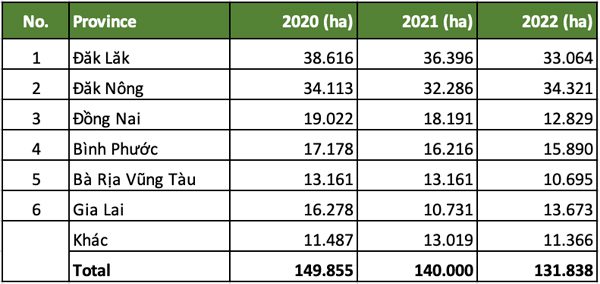
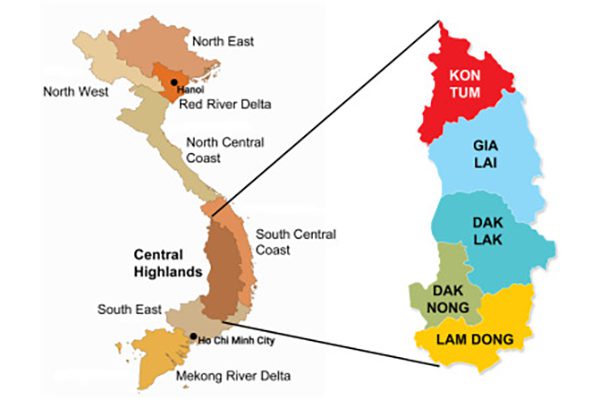
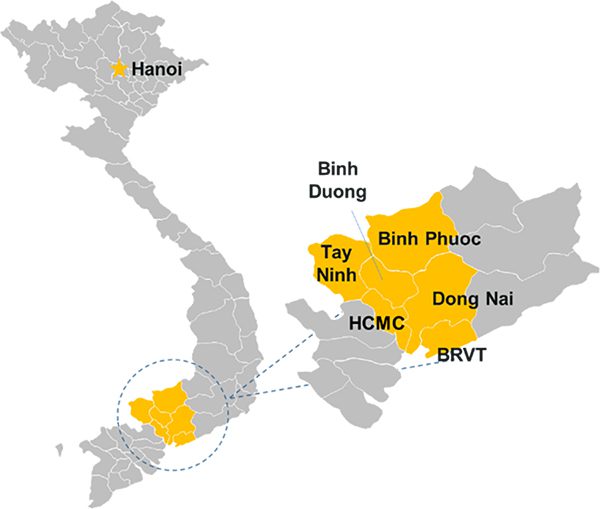
As one of the world’s largest producers and exporters of pepper, Vietnam concentrates its production in two primary regions: the Southeast region and the Central Highlands. These two areas are crucial, contributing approximately 94% of the country’s total pepper-growing area and 97% of its overall pepper output. Below, we detail the major pepper-growing regions and their distinct characteristics.

Central Highlands (Dak Lak, Dak Nong, Gia Lai)

  • 2020: 88,007 ha (58.7%)
  • 2021: 79,413 ha (56.7%)
  • 2022: 81,058 ha (61.5%)

The Central Highlands is the region with the largest proportion of pepper growing area in Vietnam, especially Dak Nong and Dak Lak provinces. Although the area decreased slightly in 2021, this region still plays a key role in pepper production, and the area increased again in 2022. Gia Lai had a significant recovery in 2022, helping to increase the region’s share.

Southeast Region (Dong Nai, Binh Phuoc, Ba Ria Vung Tau)

  • 2020: 49,361 ha (32.9%)
  • 2021: 47,568 ha (34%)
  • 2022: 39,414 ha (29.9%)

Pepper growing area in the southeast tends to decrease sharply, especially in Dong Nai and Ba Ria Vung Tau, so the proportion of this region will gradually decrease. Binh Phuoc plays an important role in a stable area, but the sharp decline in Dong Nai and Ba Ria Vung Tau has affected the total area of this region.

What are the current prices for Vietnamese pepper?

Vietnamese pepper prices are highly competitive globally, particularly for black pepper, making it an attractive option for international buyers. However, it’s important to note that prices can fluctuate based on the specific type of pepper (black or white), its quality grade, and the timing of the purchase.

In 2024, Vietnam’s FOB pepper prices ranged from USD 6,000 to USD 6,500/ton for Black Pepper (500g/l), reflecting significant growth compared to previous years.

As of October 2024, the price of Vietnamese pepper is highly competitive, making it an attractive option for international buyers:

  • Black Pepper: 500 g/l is priced at approximately 6,200 USD/ton.
  • White Pepper: Priced at 9,400 USD/ton.

In comparison:

  • Indonesian Black Pepper: Costs around 6,500 USD/ton.
  • Indonesian White Pepper: Priced at 9,177 USD/ton.
  • Malaysian Black Pepper: Can cost up to 8,400 USD/ton.

There is the pepper price in Vietnam internal, see the pepper price update by week here

What are the main types of pepper grown in Vietnam?

Vinh Linh Pepper

Originating from Quang Tri, the Vinh Linh variety is known for its robust growth and high yield. With medium-sized, long, dark green leaves, Vinh Linh pepper produces large, densely packed fruits that grow on medium-length flower spikes. This variety thrives with proper care, yielding up to 4-5 tons per hectare, and even reaching 7 tons in optimal conditions. The fruits are large, shiny black, and highly aromatic, making them ideal for both dry and ground pepper products. This variety’s superior productivity and excellent quality have made it the most widely cultivated pepper in Vietnam.

  • Spike length: 8.9 cm
  • Density: 584.9 g/l
  • Dry yield/pillar: 4.25 kg

Lada Belangtoeng Pepper

This Indonesian variety was introduced to Vietnam in 1947. Lada Belangtoeng is known for its strong growth, making it relatively resistant to root rot. However, it is less productive and slower to flower in less intensive farming conditions, resulting in lower yields.

  • Spike length: 8.5 cm
  • Density: 474.6 g/l
  • Dry yield/pillar: 3.36 kg
  • While not widely grown due to its relatively low productivity, this variety offers resilience in specific growing conditions.

Split Pepper Varieties

These varieties feature small, slightly wavy leaves and early fruiting. They produce dense clusters of large fruits but are vulnerable to quick death disease. Despite this, they are stable in the early years of growth and produce abundantly.

  • Spike length: 8.3 cm
  • Density: 497.9 g/l
  • Dry yield/pillar: 2.63 kg
  • Varieties like Loc Ninh, Ba Ria red soil pepper, and Dak Lak fat pepper fall under this category.

Indian Pepper

Introduced to Vietnam in 1995, the Indian variety is particularly notable for its large fruit clusters and early fruiting. This variety grows well in regions like Ba Ria red soil, Binh Phuoc, Daklak, and Gia Lai. Its long fruit clusters yield large, flavorful fruits, making it a valuable export variety.

  • Spike length: 13.7 cm
  • Density: 537.4 g/l
  • Dry yield/pillar: 3.93 kg

Phu Quoc Pepper

Originating from Cambodia, Phu Quoc pepper is famous for its high quality and aromatic taste. Its medium-sized leaves and early fruiting make it a sought-after variety, though it is susceptible to root diseases. Phu Quoc pepper’s premium quality has made it a favourite in the international market for decades.

  • Spike length: Medium
  • Density: High
  • Dry yield/pillar: Moderate
  • Its resilience and flavour have earned it international recognition, despite its susceptibility to root diseases.

Buffalo Pepper

Grown in many regions, Buffalo pepper has large, dark green leaves and produces long fruit clusters. Although it is resistant to quick wilt disease, its yield remains inconsistent and relatively low.

  • Spike length: 9.7 cm
  • Density: 525.7 g/l
  • Dry yield/pillar: 2.78 kg
  • Known for its resilience to diseases, Buffalo pepper is less widely grown due to its lower yield.

What makes Vietnamese pepper a top choice for importers?

Vietnamese pepper is highly regarded globally, earning its reputation as one of the best due to a combination of factors that ensure superior quality and competitive pricing. These key advantages make it a preferred choice for international importers.

Ideal Climate Conditions

Vietnam’s humid tropical climate provides the perfect environment for pepper cultivation. The country experiences regular rainfall and consistently warm temperatures, both of which are essential for pepper plants. Pepper thrives in temperatures between 25°C to 30°C, and the average annual rainfall of about 2,000 mm aligns perfectly with the plant’s needs. This climate is especially beneficial for regions in southern Vietnam, such as Binh Phuoc, Ba Ria-Vung Tau, and Tay Ninh, where most of the country’s pepper is cultivated.

Fertile and Nutrient-Rich Soil

The land in Vietnam is rich in natural nutrients, thanks to the presence of alluvial soils, red basalt soils, and loose clay. These soils are excellent for growing pepper as they provide both good drainage and moisture retention, which is essential for pepper plants to thrive. The rich soil ensures that the plants have the necessary nutrients for robust growth and high yields, leading to high-quality peppercorns.

High Productivity and Competitive Prices

Vietnamese pepper stands out in terms of productivity, with yields significantly higher than many other pepper-producing countries. The country’s well-established farming practices, coupled with favourable climate and soil, ensure that pepper production remains highly efficient. 

The pricing advantage of Vietnamese pepper, especially when compared to other major producers, gives it a significant edge in the global market. Only Brazilian pepper, with its competitive pricing, can rival Vietnamese pepper in terms of cost.

Sourcing in Vietnam is a smart choice for international businesses, but finding high-quality suppliers at reasonable costs is not always easy. B2B transactions are complex and involve risks for both parties. Understanding this, VnCommEx offers a sourcing service that connects international businesses with reliable suppliers in Vietnam. With a clear and transparent process, we aim to balance the interests of both sides to foster long-term cooperation. Contact us for Pepper sourcing today!

November 15, 2024 0 comment
0 FacebookTwitterLinkedinWhatsapp
Fruit & Vegetable

Why Import Pomelo from Vietnam? A Guide for International Buyers

by Henry Truong November 14, 2024
written by Henry Truong

Vietnam is the second-largest producer of pomelo in the world, following China. The country boasts a cultivated area of 105,400 hectares and an output of nearly 905,000 tons per year, ensuring a consistent, high-quality supply for international markets. Notable pomelo varieties with distinct regional characteristics, such as green-skin pomelo, five-roi pomelo, Dien pomelo, red pomelo, and Doan Hung pomelo, enhance the reputation of Vietnamese pomelo on the global stage.

What makes Vietnamese pomelo special in quality and flavor?

Vietnamese pomelo stands out for its unique quality and flavor, a direct result of the country’s diverse climate and rich soil conditions. Each region in Vietnam cultivates distinct pomelo varieties, which vary not only in shape and weight but also in their specific flavor profiles, significantly enhancing the appeal of Vietnamese pomelo in the international market. Key export varieties, each with its own unique characteristics, include:

  1. Green-Skin pomelo: Weighing between 800-2000 grams, this variety features a green peel when ripe and light pink flesh. It boasts a sweetness of about 11-12% and a rich, delicious flavour, making it a staple in Bến Tre known for its juicy sweetness.
  2. Nam Roi pomelo: Shaped like a pear, this pomelo has a green-yellow peel at ripeness and weighs around 1400-1800 grams. With a light sweetness of 6-8%, it has white flesh and smooth, juicy segments, appealing to a wide range of palates.
  3. Dien pomelo: Originating from Hanoi, Dien pomelo typically weighs between 800-1000 grams. It is highly regarded for its sweetness, ranging from 12-14%, and has a rich flavour complemented by yellow skin.
  4. Doan Hung pomelo Grown predominantly in Phú Thọ, this pomelo weighs around 700-800 grams and offers a unique taste, balancing sweetness (9-11%) with a slight bitterness, making it easy to peel and very enjoyable.

With extensive cultivation areas primarily in the Red River Delta and Mekong Delta, Vietnam maintains a stable supply, achieving yields of 68-158 quintals per hectare. The country exports approximately 100,000-200,000 tons of pomelo annually, meeting consistent international demand due to its long growing season and reliable quality.

In the supply chain, traders serve as vital intermediaries, connecting farmers with processing enterprises. They bear around 93.6% of the pomelo purchasing costs, ensuring effective management of the consumption process despite the scattered, small-scale production typical in Vietnamese agriculture. Thus, the primary challenge lies not in the quality of the pomelo but in optimising supply chain management to enhance the global competitiveness of Vietnamese pomelo products.

How does Vietnam ensure high-quality pomelo and develop processed products?

Vietnam ensures high-quality pomelo by adhering to stringent cultivation standards that meet international requirements. The country currently features over 40 certified pomelo-growing areas across 10 provinces, collectively producing approximately 15,000 tons annually that are specifically qualified for export to demanding markets like the U.S.

Statistics indicate that Vietnamese agricultural products, including processed pomelo, are now present in more than 180 countries and territories. The abundance of raw materials has facilitated increased investment in processed products. As of June 2023, Vietnam has approximately 13,000 agricultural processing facilities, with about 3,369 focusing on the preliminary processing of plant-based products. Significant investments have been made in modern agricultural, forestry, and fishery processing factories. Between 2017 and 2022, 76 large-scale agricultural processing projects were initiated, with an investment of over 73 trillion VND, reflecting heightened interest in the agricultural processing industry.

Despite this potential, only 10-15% of agricultural products are currently processed. However, processed pomelo products are diverse and gaining traction, including:

  1. Pomelo Juice: Rich in vitamin C and antioxidants, natural pomelo juice is favoured in international markets. It can be conveniently bottled or canned for immediate consumption or as an ingredient in various dishes and drinks.
  2. Pomelo Jam: Made from pre-processed pomelo peel soaked in sugar, this jam offers a sweet, refreshing flavour. It is popular during holidays and as a gift, appealing to consumers seeking natural products.
  3. Pomelo Essential Oil: Extracted from the peel, this essential oil contains antioxidant and antibacterial properties, making it suitable for cosmetics, hair care, soaps, and perfumes. Vietnamese pomelo essential oil is well-received in markets like Korea, Japan, and Europe due to its natural aroma and high quality.
  4. Pomelo Peel Tea: Dried pomelo peel can be processed into tea, promoting health benefits such as weight loss, digestion aid, and immune boosting. It is particularly popular in Asian markets like Korea and Japan, where herbal teas are favoured.
  5. Pomelo Syrup and Jam for Mixing: In addition to juice, pomelo syrup is exported as an ingredient for cocktails, mocktails, and fruit teas. Pomelo jam serves as a filling for cakes or enhances the flavour of various dishes.
  6. Dried Pomelo: This natural snack has a moderate sweetness and chewy texture, appealing to health-conscious consumers. Dried pomelo is conveniently packaged for easy transport and preservation, making it ideal for export.
  7. Pomelo Powder: Created from dried and crushed pomelo peel or segments, pomelo powder is used in functional foods, cosmetics, and beverages. It can be mixed with water, baked into goods, or incorporated into daily meals for health benefits.

These processed pomelo products not only enhance the overall value of Vietnamese pomelo but also create substantial export opportunities. The diversification of products meets the varied demands of international consumers, particularly those interested in health-conscious and natural offerings.

Which Vietnamese pomelo products are best for the high-end market?

For the high-end market, Vietnam’s green-skin pomelo stands out as the flagship export product, particularly favored in discerning markets like the U.S. and Canada. These premium pomelos are predominantly cultivated in the Mekong Delta, with Ben Tre Province playing a leading role, dedicating nearly 9,400 hectares—approximately 35% of its total fruit-growing area—to this variety. To meet stringent export requirements, the Ben Tre agricultural sector has actively collaborated with various entities to establish and strengthen the green-skin pomelo supply chain, involving 32 cooperatives and 9 groups representing 1,467 households across 542.65 hectares as of 2022.

The inaugural shipment of green-skin pomelo from Vietnam reached the U.S. in November 2022 and was met with a warm reception from local consumers, who praised its exceptional quality. In the U.S. market, the selling price for Vietnamese pomelo ranges from $6.99 to $7.99 per pound, with each pomelo weighing approximately 3 pounds (nearly 1.5 kg). Although this price is 2 times higher than that of pomelo from China and Mexico, Vietnamese green-skin pomelo continues to see strong demand and has become a “hot” commodity. Remarkably, they quickly ascended to 4th place in the U.S. grapefruit market share rankings within just a year.

Green pomelo has successfully penetrated the high-end market not only due to its exceptional quality but also because of the close cooperation between producers and local authorities. To further promote branding and improve production processes, stakeholders have actively implemented a series of quality control and certification measures to ensure that products meet international standards. Additionally, farmers in the Border Province have enhanced their cultivation and management skills through training and technical support, ensuring a stable and high-quality supply.

The cultivation process for green pomelo in Vietnam emphasizes sustainability and employs modern agricultural technologies to protect the ecological environment while increasing both productivity and fruit quality. As consumer demand for healthy foods rises, green grapefruit is increasingly favoured in the market for its rich nutritional value and natural flavour.

How do trade agreements support Vietnamese pomelo exports?

Free trade agreements (FTAs) that Vietnam has signed, including the CPTPP, EVFTA, ACFTA, VKFTA, RCEP, and AJCEP, play a crucial role in supporting and facilitating the export of both fresh and processed pomelo products. These agreements are instrumental in significantly reducing or eliminating tariffs, expanding market access, and ultimately enhancing the competitiveness of Vietnamese agricultural products, including pomelo, on the global stage.

Currently, the primary markets for Vietnamese pomelo include Korea, the U.S., the EU, ASEAN countries, Australia, Canada, and New Zealand. The import tax rate for pomelo in these markets is 0%. In contrast, for China, where no formal protocol has been established for pomelo exports, trade is primarily conducted through small-scale channels, which can involve complex procedures. Nevertheless, the tax rate for pomelo remains relatively low compared to other countries.

To check import tax rates for products, it’s essential to consider trade barriers and trade preferences stemming from agreements with your country. These preferences can help importers save anywhere from 10% to 30% depending on the specific item. Understanding these agreements is vital for optimizing costs and enhancing profitability when importing Vietnamese pomelo.

CONCLUSION

Thanks to their superior quality and distinct flavours, Vietnamese pomelo has emerged as a key player in the international market. As the second-largest pomelo producer globally, Vietnam boasts a diverse range of varieties, including the highly sought-after green skin, Nam Roi, Dien, and Doan Hung pomelos

The unique characteristics of these pomelos, shaped by the country’s diverse climate and fertile soil, have captivated consumers and opened doors to lucrative export opportunities.

Support from various free trade agreements has played a crucial role in enhancing the competitiveness of Vietnamese pomelo. With zero import tariffs in key markets and an increasing global appetite for quality agricultural products, Vietnam is well-positioned to capitalize on these advantages. As the pomelo sector continues to evolve, focusing on sustainable practices and quality enhancement, the prospects for Vietnamese pomelo in the international market remain bright, promising significant growth and diversification opportunities for exporters and producers alike.

To navigate this thriving market and source the best pomelo in Vietnam, consider partnering with Vncommex. As a trusted agent, Vncommex specializes in helping you find high-quality pomelo at competitive prices, ensuring you receive the best value while meeting your sourcing needs.

November 14, 2024 0 comment
0 FacebookTwitterLinkedinWhatsapp
Vietnam Commodity Market Price

Vietnam Agriculture Food Price From November 04th – 10th

by Henry Truong November 11, 2024
written by Henry Truong

Note: This price is the Vietnam domestic market price. Please contact us if you want to know the EXW, FOB, or CNF prices.

Source: Department of Industry and Trade or Department of Agriculture of provinces in Vietnam

CommodityTypeLowest Price
(USD/Kg)
Highest Price
(USD/Kg)
TROPICAL FRUIT
DurianPremium Ri6 Durian – Mekong Delta6,126,32
Ri6 Durian – Mekong Delta (Bulk)2,572,77
Premium Monthong Durian – Mekong Delta6,726,72
Monthong Durian (Bulk)2,772,96
Premium Ri6 Durian – Southeast Region5,736,12
Ri6 Durian – Southeast Region (Bulk)2,372,57
Premium Monthong Durian – Southeast Region6,326,72
Monthong Durian – Southeast Region (Bulk)2,572,77
Premium Ri6 Durian – Central Highlands5,736,33
Ri6 Durian – Central Highlands (Bulk)2,372,57
Premium Monthong Durian – Central Highlands6,526,91
Monthong Durian – Central Highlands (Bulk)2,572,69
Dragon FruitRed Flesh Dragon Fruit0,590,99
White Flesh Dragon Fruit0,400,59
JackfruitJackfruit0,491,19
PomeloNam Roi Pomelo0,51–
Green Skin Pomelo0,991,98
MangoSweet Hòa Lộc Mango (Bulk)1,26–
CoconutGreen Siam Coconut (Grade 1)0,99 USD/Piece1,19 USD/Piece
Green Siam Coconut (Grade 2)0,59 USD/Piece0,79 USD/Piece
Macapuno Coconut1,98 USD/Piece2,37 USD/Piece
Dried Coconut3,955,93
BananaBanana0,400,59
PineapplePineapple0,240,47
LimesGreen Limes0,280,59
Persian Limes0,400,59
AvocadoButter Avocado0,710,99
Booth Avocado0,791,38
034 Avocado1,191,38
Hass Avocado1,982,17
Pinkerton Avocado1,982,17
Cuba Avocado1,381,58
Red Fresh Avocado1,782,17
SPICE INDUSTRY
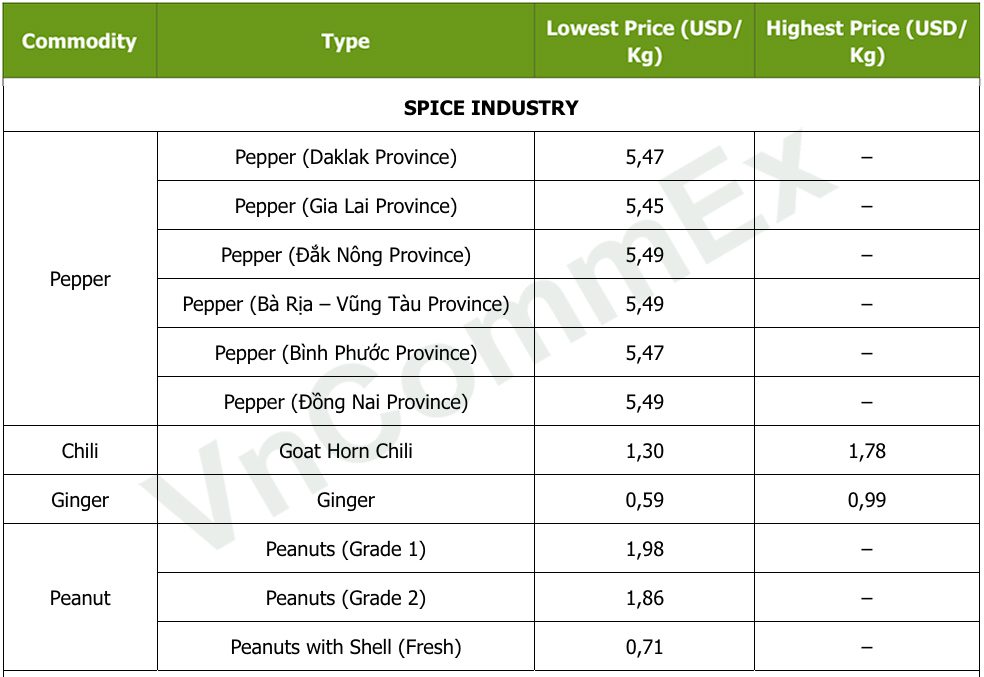
PepperPepper (Daklak Province)5,47–
Pepper (Gia Lai Province)5,45–
Pepper (Đắk Nông Province)5,49–
Pepper (Bà Rịa – Vũng Tàu Province)5,49–
Pepper (Bình Phước Province)5,47–
Pepper (Đồng Nai Province)5,49–
ChiliGoat Horn Chili1,301,78
GingerGinger0,590,99
PeanutPeanuts (Grade 1)1,98–
Peanuts (Grade 2)1,86–
Peanuts with Shell (Fresh)0,71–
FOOD INDUSTRY
RiceSticky Rice0,710,87
Regular Rice0,590,63
Nang Nhen Rice1,11–
Thai Fragrant Long Grain Rice0,790,87
Jasmine Fragrant Rice0,670,71
Huong Lai Rice0,87–
Standard White Rice0,69–
Nang Hoa Rice0,85–
Regular Sóc Rice0,73–
Thailand0,83–
Taiwanese Fragrant Rice0,83–
Japanese Rice0,89–
Bran0,360,40
CoffeeGreen Coffee Beans – Đắk Lắk Province (Bulk)4,17–
Green Coffee Beans – Lâm Đồng Province (Bulk)4,17–
Green Coffee Beans – Gia Lai Province (Bulk)4,19–
Green Coffee Beans – Dak Nông Province (Bulk)4,19–
CornCorn0,36–
TeaFresh Tea Bud – Seed0,40–
Fresh Tea Bud – Branch0,45–
Cashew NutWhite Cashew Kernel W2407,1113,83
White Cashew Kernel W3206,7213,43
White Cashew Kernel W4505,1412,25
Broken White Cashew Kernels WS5,819,84
Macadamia NutFresh Macadamia – Đắk Lắk Province2,763,55
Fresh Macadamia – Lâm Đồng Province2,653,55
Fresh Macadamia – Dak Nông Province2,733,75
Fresh Macadamia – Bình Định Province2,964,74
Dried Macadamia – Đắk Lắk Province13,0514,22
Dried Macadamia – Lâm Đồng Province13,0514,22
Dried Macadamia – Đắk Nông Province13,0514,22
Cacao BeansBulk Cocoa Bean2,372,57
Fermented Cocoa Bean Grade I2,692,80
Fermented Cocoa Bean Grade II2,282,80
Fermented Cocoa Bean Grade III3,553,71
Fresh Cocoa Bean0,240,26
Pure Cocoa Powder5,537,11
November 11, 2024 0 comment
0 FacebookTwitterLinkedinWhatsapp
Fruit & Vegetable

How to Import Jackfruit from Vietnam? Important steps

by Henry Truong November 10, 2024
written by Henry Truong

Vietnamese jackfruit exports are categorized into three grades for fresh jackfruit: Grade 1 (weighing 9 kg or more per fruit), Grade 2 (weighing 6 – 8 kg per fruit), and Grade 3 (weighing less than 5 kg per fruit). While most of Vietnam’s fresh jackfruit exports are destined for the Chinese market, the processed jackfruit product segment is experiencing rapid growth in distant markets, particularly Australia, the EU, and the United States.

However, processed fruit from Vietnam still accounts for a small proportion of the total fruit imports in the United States. Furthermore, as the market is gradually developing and managed by numerous intermediaries, the quality of products, both fresh and processed jackfruit, remains inconsistent. This requires a well-defined and thorough plan when importing jackfruit from Vietnam.

The article below will explain in detail the procedures for importing fresh and processed jackfruit from Vietnam.

Understand more about The Outlook of the Global Jackfruit Market: Trends and Forecast

Where are the best jackfruit growing regions in Vietnam?

 To secure a supply of high-quality and competitively priced jackfruit from Vietnam, you should first research the major jackfruit growing regions. Vietnam boasts many large-scale jackfruit cultivation areas, primarily concentrated in the Mekong Delta, with key provinces including Tien Giang, Hau Giang, Vinh Long, Dong Thap, and Dong Nai, where you can find suppliers meeting your target market’s quality standards.

Tien Giang is the province with the largest jackfruit growing area in this region, with over 15,000 hectares, yielding 26.5 tons per hectare and a total production of around 270,300 tons per year. About 50% of Tien Giang’s jackfruit growing area meets the highest quality standards and has been granted export region codes by China for formal export. In addition to Tien Giang, provinces like Hau Giang, Vinh Long, and Dong Thap also have stable production and quality jackfruit. Choosing the right growing region based on price, jackfruit variety, and season timing can help optimize import costs, especially if you require a year-round supply.

In addition to fresh jackfruit, you may also consider importing processed jackfruit. Vietnam currently has about 150 fruit processing plants equipped with modern technology, with a total processing capacity of nearly 1.1 million tons per year. These plants meet international standards and focus on products like dried jackfruit, canned jackfruit, and other processed jackfruit products to meet both domestic and international market demands. Furthermore, there are around 7,500 smaller processing facilities, mainly serving the domestic market or acting as subcontractors for larger companies.

Given the diverse supply from both large and small suppliers, you may consider working with intermediary companies or professional agents. They can assist you in controlling product quality and ensuring that the prices offered are competitive with market rates, while also making the import-export procedures more manageable.

Thorough research on Vietnam’s jackfruit growing regions and selecting reliable suppliers will help you build a stable supply chain that meets the quality and pricing demands of your target market.

How can I find reliable jackfruit suppliers in Vietnam?

 Finding a reliable supplier is the most critical step when importing jackfruit from Vietnam, as it ensures you can source high-quality products at competitive prices. To help you find suitable jackfruit suppliers in Vietnam, consider the following effective methods:

  • Attend Agricultural Trade Shows: Agricultural trade shows are a great opportunity to meet various jackfruit suppliers in Vietnam. These events showcase products, and production processes, and provide information on the types of jackfruit being distributed. Notable trade shows include the Vietnam Food Expo and Agri Vietnam Expo.
  • Contact Agricultural Associations in Vietnam: Associations like the Vietnam Fruit and Vegetable Association (Vinafruit) can help you access a list of reputable suppliers in the jackfruit cultivation and export sectors. These associations often provide updated information on certified companies with export experience.
  • Work with Sourcing Agencies in Vietnam: Another effective approach is to partner with sourcing agencies. These agencies have in-depth market knowledge and can assist you in finding, evaluating, and connecting with reputable suppliers. They can also help negotiate prices and contract terms.
  • Search Online Directories: Use online resources such as Yellow Pages, business directories, or BtoB platforms to find suppliers. Websites like Vtown, Vietnam Export, and Yellow page provide supplier listings with detailed product and service information.
  • Get Referrals from Friends or Partners: They may refer you to reputable suppliers they have previously worked with.

Evaluating Suppliers

  • Determine Needs and Requirements: Before contacting suppliers, clearly define the quantity of jackfruit you need, the desired quality, and delivery time. This provides a clear basis for comparing and evaluating each supplier.
  • Visit Suppliers (if needed): If possible, conduct an in-person visit to inspect the production process and working conditions. This helps you better understand the supplier’s capacity and scale.

Supplier Evaluation Criteria

  • Product Quality Check: Request suppliers to provide product samples so you can verify the quality and origin of the jackfruit. This is crucial to ensure the product meets export standards and market demands.
  • Pricing: Compare prices from various suppliers to find the most reasonable one. However, don’t focus solely on low prices—other factors like quality and long-term supply capacity should also be considered.
  • Supply Capacity: Ensure that the supplier can meet your product requirements in terms of quantity and delivery time. Check their operational history and refer to their past partners.
  • Contract: Draft a clear contract outlining delivery schedules, payment methods, and the responsibilities of each party. This helps mitigate risks and protect your interests throughout the transaction.

What should I do to monitor the jackfruit delivery process from Vietnam?

To ensure your jackfruit products are shipped on time, arrive undamaged, and meet established quality standards, it is crucial to closely monitor the entire delivery process. In Vietnam, common shipping terms include FOB, CIF, and EXW, and regardless of the method chosen, diligent tracking of the shipment is essential for smooth delivery. Paying special attention to delivery times will help ensure the imported goods align perfectly with your company’s business requirements.

Conclusion

Importing jackfruit from Vietnam offers significant potential for businesses due to its abundant supply and high quality. However, to achieve optimal efficiency, businesses need to thoroughly research growing regions, select reputable suppliers, and develop a well-structured import plan. By participating in trade shows, partnering with sourcing agencies, and conducting thorough supplier evaluations, you can ensure that your supply meets the necessary quality and pricing standards while optimizing the import process. With the right strategy, you can seize the opportunities presented by Vietnam’s promising jackfruit export market.

For importers looking to source high-quality jackfruit products from Vietnam, working with a knowledgeable sourcing agent can make a significant difference. At VnCommEx, we specialize in connecting importers with reputable suppliers in Vietnam, ensuring that you find the best jackfruit products to meet your business needs. Our expertise and extensive network will help streamline the sourcing process, allowing you to focus on growing your business while we handle the complexities of supplier management and product procurement. Reach out to VnCommEx sourcing service today to discover how we can assist you in finding the perfect jackfruit suppliers in Vietnam.

See more:

  • Why Choose Vietnamese Jackfruit? A Guide for International Importers
  • Where to Buy Jackfruit in Bulk: Best Global Suppliers
November 10, 2024 0 comment
0 FacebookTwitterLinkedinWhatsapp
Fruit & Vegetable

Why Choose Vietnamese Jackfruit? A Guide for International Importers

by Henry Truong November 9, 2024
written by Henry Truong

The market potential for jackfruit, especially young jackfruit, is vast, particularly in regions where vegetarianism is on the rise. This trend is evident in European countries and the U.S., where consumers are increasingly concerned about environmental sustainability and animal welfare.

Young jackfruit stands out as a promising solution, much like it has for millions in Asia striving for better livelihoods.

Currently, four countries—Vietnam, Bangladesh, India, and Thailand—can supply finished jackfruit, particularly young jackfruit, to the global market. Vietnam has consistently held its position as the world’s leading jackfruit exporter, making it an ideal source for global importers seeking high-quality products.

This article will delve deeper into why Vietnam should be your top choice for sourcing jackfruit.

Why is Vietnamese jackfruit known for its high quality and large output?

As of 2021, Vietnam’s total jackfruit cultivation area, primarily consisting of Thai jackfruit, spanned 58,511 hectares. The Mekong Delta provinces hold the majority, with 30,045 hectares allocated for jackfruit farming. Leading these provinces is Tien Giang with 13,141 hectares, followed by Hau Giang at 6,966 hectares.

Despite having a smaller jackfruit growing area compared to Bangladesh (79,000 hectares), Thailand (37,000 hectares), and India (102,552 hectares), Vietnamese jackfruit enjoys significant popularity in international markets for various compelling reasons:

  1. Outstanding Product Quality: Vietnamese jackfruit varieties, such as Thai jackfruit, Nghe jackfruit, and Tu Quy jackfruit, are renowned for their delectable flavour, rich sweetness, and satisfying crispness. The consistent quality of these fruits meets the stringent requirements of many export markets, particularly in Europe and the United States.
  2. Favorable Climate Conditions: Vietnam’s tropical monsoon climate offers ample rainfall and stable temperatures, making it conducive for jackfruit cultivation. Key growing regions, such as the Mekong Delta and Southeast, benefit from fertile alluvial soil, promoting the robust growth of jackfruit trees that produce high-quality fruits characterized by their sweet, rich flavour.
  3. Supportive Agricultural Policies: The Vietnamese government actively promotes the agricultural sector through various initiatives aimed at improving productivity and sustainability. These efforts include investments in research and development to enhance jackfruit varieties and farming practices, solidifying Vietnam’s role as a significant supplier in the global market.

Through these combined advantages, Vietnam continues to position itself as a leading source of high-quality jackfruit, catering to the increasing demands of international markets and establishing itself as a vital player in the global fruit industry.

How competitive is the price of Vietnamese jackfruit for importers?

The price of Vietnamese jackfruit is highly competitive for international importers, typically ranging from $0.37 to $1.23 USD/kg (approximately VND 9,000 – VND 30,000), depending on type and quality. This competitive pricing is further enhanced by the superior quality of the fruit and the significant advantages offered by Vietnam’s extensive network of trade agreements, which often reduce or eliminate import tariffs.

  • Thai Jackfruit: Standard export-grade prices range from VND 30,000 to VND 33,000 (about $1.27 to $1.40 USD) per kg. Lower grades are priced at around VND 25,000 to VND 28,000 (approximately $1.06 to $1.19 USD), while the lowest quality can be as low as VND 15,000 to VND 18,000 (about $0.63 to $0.76 USD).
  • Bangladesh Jackfruit: Prices generally range from BDT 80 to BDT 150 (approximately $0.72 to $1.35 USD) per kg, though quality can be inconsistent.
  • Indian Jackfruit: Prices in India range from ₹30 to ₹100 (about $0.36 to $1.20 USD) per kg. As India is still developing its jackfruit export sector, the quality remains a concern, which may justify the lower prices.

Compared the top of Jackfruit exporters here: Where to Buy Jackfruit in Bulk: Best Global Suppliers

What factors make importing jackfruit from Vietnam more cost-effective?

Importing jackfruit from Vietnam is often more cost-effective due to several key factors that reduce overall expenses for international buyers. These advantages include favorable tax benefits from numerous free trade agreements, lower transportation costs facilitated by Vietnam’s extensive coastline, and a robust logistics infrastructure that ensures efficient and timely delivery.

  1. Taxes: Import tariffs significantly affect pricing. Free trade agreements (FTAs) can lower or eliminate these tariffs, making Vietnamese jackfruit more appealing. Vietnam has signed 19 global FTAs, with 16 currently active, allowing its agricultural products to access over 60 countries with preferential tax rates, often as low as 0%.
  2. Transportation Costs: Vietnam’s long coastline of 3,260 km facilitates low shipping costs to major seaports. While sea freight rates may be slightly higher than those in Bangladesh, they tend to be around 10% lower than in India and on par with Thailand.
  3. Logistics Infrastructure: Vietnam’s ongoing investment in logistics and infrastructure improvements enhances the efficiency of the supply chain, reducing delays and costs. The development of modern cold storage facilities and transportation networks ensures that jackfruit can be transported fresh, maintaining its quality during transit.

What are the main benefits of sourcing jackfruit from Vietnam?

  1. Tax Benefits: For example, under the EU-Vietnam Free Trade Agreement (EVFTA), Vietnam’s jackfruit exports to EU countries are mostly tax-free. Conversely, countries like Bangladesh, Thailand, and India face import tariffs fluctuating from 10% to 20%. This tariff differential can result in significant savings for importers sourcing from Vietnam.
  2. Consistent Quality: While Vietnamese jackfruit prices are competitive, they also reflect the high quality of the fruit. The stringent agricultural practices in Vietnam, including the use of clean farming techniques without harmful chemicals, ensure that jackfruit meets international food safety standards, making it attractive to health-conscious consumers in target markets.
  3. Market Demand: The increasing global demand for plant-based products enhances the attractiveness of sourcing jackfruit from Vietnam. As consumers in Europe and North America lean towards vegetarianism and veganism, high-quality jackfruit can serve as a versatile meat substitute, further boosting its market potential.

Understand more about the advantages of FTAs of Vietnam: Maximizing Benefits from Vietnam’s FTAs and Business Incentives

How does Vietnam’s supply chain ensure efficient jackfruit export?

Vietnam’s modern, flexible, and robust agricultural supply chain is crucial for ensuring efficient jackfruit export, enhancing production efficiency, maintaining product quality, reducing costs, and boosting international competitiveness. This sophisticated system connects farmers and businesses through agricultural cooperatives, leverages advanced technology for management and traceability, and optimizes transportation and inventory to streamline the export process.

Connecting Farmers and Businesses

  • Agricultural Cooperatives: As of the end of 2022, Vietnam had approximately 23,000 agricultural cooperatives, according to the Ministry of Agriculture and Rural Development. These cooperatives play a vital role in connecting farmers within the same regions, fostering collaboration inefficient harvesting and timely delivery of goods. By pooling resources, farmers can enhance their bargaining power and access larger markets.
  • Market Access: Cooperatives also facilitate access to funding, advanced farming techniques, and market information, enabling farmers to align production with market demands and trends.

Management and Technology in the Supply Chain

  • Applying Technology: The Food and Agriculture Organization of the United Nations (FAO) reports that about 65% of farmers in Vietnam utilize automatic irrigation technology, while 50% of processing enterprises have adopted digital technologies for production management. This technological integration streamlines operations minimizes labor costs and maximizes crop yields.
  • Traceability: A Nielsen survey indicated that 60% of consumers in Europe are willing to pay more for food products with clear traceability. This trend has motivated Vietnam to implement technologies such as QR codes and blockchain in its supply chain, enabling consumers to track the journey of their food from farm to table, thereby enhancing trust and transparency.

Optimizing Costs and Time

  • Transportation Costs: According to the General Statistics Office of Vietnam, the average cost of transporting exported goods is around 1.5 million VND per 20-foot container. This cost is 10% lower than that of countries like Thailand and 20% lower than India. Lower transportation costs improve profit margins for exporters and make Vietnamese products more competitive in global markets.
  • Inventory Management: A study by PwC highlights that implementing a smart inventory management system has enabled agricultural processing enterprises to reduce warehousing costs by 20%. Improved inventory management leads to faster turnaround times, minimizing waste and ensuring that products reach markets promptly.

Strengthening Sustainable Development

  • Organic Production: The area designated for organic production in Vietnam has expanded to 200,000 hectares in 2023, with 1,500 enterprises participating, reflecting a 25% increase compared to 2022. This shift towards organic farming aligns with global consumer trends favouring sustainable and healthy food options, further enhancing the marketability of Vietnamese products.
  • Sustainability Initiatives: Many farmers are adopting eco-friendly practices, contributing to the country’s sustainable agricultural goals while attracting environmentally conscious consumers worldwide.

What types of processed jackfruit products does Vietnam export?

Vietnam is committed to adhering to stringent food safety and hygiene standards, such as GAP (Good Agricultural Practices), HACCP (Hazard Analysis and Critical Control Points), and GlobalGAP. These standards ensure that jackfruit exported from Vietnam meets the food safety and traceability requirements of demanding markets like the EU and the US. Currently, Tien Giang province boasts 72 codes for jackfruit growing areas covering over 8,600 hectares and nearly 300 codes for packaging facilities for various fruits, including durian, jackfruit, mango, and dragon fruit, which are officially exported to the Chinese market.

The jackfruit processing industry in Vietnam has experienced robust growth in recent years, spurred by investments in modern technology and equipment that cater to the increasing demands of both domestic and international markets. Jackfruit is now not only consumed as fresh fruit but also processed into a wide variety of products, enhancing its value and extending its shelf life.

Key Technologies in Jackfruit Processing

Drying and Freezing Technology:

  • Processing factories employ methods such as freeze-drying, heat-drying, and deep-freezing to process jackfruit. These techniques effectively preserve its flavour and nutrients while extending shelf life without the need for preservatives.
  • Dried and frozen jackfruit is widely exported to international markets, including Europe, the US, and Korea. This diversification allows Vietnamese jackfruit to reach consumers year-round, irrespective of harvest seasons.

Canning and Vacuum Packaging Technology:

  • To meet international export standards, jackfruit processing factories utilize modern canning and vacuum packaging technologies. These methods preserve the product for extended periods while maintaining its freshness and flavour.
  • Such packaging techniques allow young jackfruit to be distributed to distant markets without compromising its original quality. The ability to maintain freshness during transportation is crucial for competing in global markets.

Food Processing Technology from Young Jackfruit:

  • Young jackfruit is gaining recognition as an essential ingredient in the meat substitute food industry. Jackfruit processing factories in Vietnam have adopted innovative technologies to produce a variety of products from young jackfruit, including plant-based meat and vegetarian food options.
  • These developments cater to the growing demand for sustainable and plant-based dietary alternatives, expanding the product portfolio available to the international market.

Conclusion

Vietnam’s jackfruit industry is a competitive player in the global market, distinguished by high-quality products and modern agricultural practices. With 58,511 hectares of cultivation, particularly in the Mekong Delta, Vietnamese jackfruit is renowned for its flavour and sweetness, meeting rigorous food safety standards like GAP and HACCP.

The country benefits from competitive pricing, supported by free trade agreements that lower tariffs, making it an attractive supplier compared to Bangladesh, Thailand, and India. A robust agricultural supply chain enhances efficiency and product quality, while advanced technologies improve irrigation, traceability, and inventory management.

Furthermore, the diversification of jackfruit products—ranging from dried and frozen varieties to innovative plant-based alternatives—positions Vietnam favourably in response to global consumer trends for healthier food options. With its focus on quality and sustainability, Vietnam is well-equipped to seize opportunities in the evolving international market for jackfruit.

See more:

  • The Outlook of the Global Jackfruit Market: Trends and Forecast
  • Organic Jackfruit Health Benefit? Opportunity For Global Export
  • Where to Buy Jackfruit in Bulk: Best Global Suppliers
November 9, 2024 0 comment
0 FacebookTwitterLinkedinWhatsapp
Fruit & Vegetable

Top Coconut Exporting Countries: Market Landscape

by Henry Truong November 8, 2024
written by Henry Truong

What is the global coconut market outlook?

Coconut is more than just a fruit; it’s a powerhouse of benefits, offering valuable resources from its shell, pulp, and water to its trees and leaves. This remarkable versatility allows coconut products to thrive in diverse sectors, including food, cosmetics, healthcare, and artisanal crafts. With the global coconut market projected to soar from USD 29.9 billion in 2024 to USD 55.1 billion by 2032—an impressive compound annual growth rate (CAGR) of 8.1%—the growth potential is enormous.

Among the coconut products, coconut oil shines brightly, accounting for a substantial 55% of global revenue. Its popularity in cosmetics stems from its exceptional properties, such as nourishing hair, combating ageing, and providing antibacterial and anti-inflammatory benefits. Countries like India and China have embraced coconut oil not only for beauty but also as a staple in culinary practices, enhancing dishes with its rich flavour.

On the rise is coconut water, set to become the fastest-growing segment with a remarkable CAGR of 9.4%. Post-pandemic, consumers have increasingly turned to natural health alternatives, particularly in Europe and North America. With its natural electrolytes and zero added sugars, coconut water is a refreshing and healthy substitute for conventional sports drinks, catering to health-conscious consumers.

The coconut market is brimming with potential, presenting a wealth of opportunities for businesses eager to capture market share in Europe and the Americas. For importers, choosing the right sourcing country can be a game-changer. This article will delve into the strengths and advantages of the top coconut-exporting nations, providing insights that empower businesses to make informed sourcing decisions and tap into this lucrative market.

Which countries are the top coconut exporters globally?

What is the current state of Indonesia’s coconut industry?

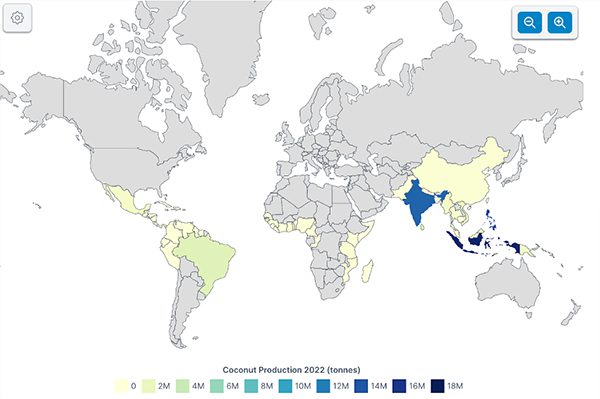
Indonesia’s coconut industry is a global powerhouse, ranking as the second-largest producer worldwide in 2023, just behind the Philippines. The nation achieved an impressive export volume of 2.83 million tons, generating a staggering $1.55 billion from coconut product exports and capturing 38.3% of the global market share. With a consistent annual total coconut production of approximately 17 million tons since 2018, Indonesia demonstrates significant strength in both domestic consumption and international trade.

Key Export Products and Dynamic Markets

Indonesia’s coconut exports are diverse, with major markets including China, Malaysia, and Singapore. The standout products in this booming industry include:

  • Coconut Oil and Processed Coconut Oil: Representing a significant portion of export revenue.
  • Coconut Shell Charcoal: Sought after for its various industrial applications.
  • Shredded Coconut: Popular in both culinary and snack sectors.
  • Coconut Fiber: Used extensively in eco-friendly products and gardening.

Despite its strengths, Indonesia’s fresh coconut exports are comparatively modest, with the total value of fresh and dried coconuts (classified under HS code 080110) reaching only $277 million in 2023. This accounts for a mere 18% of the nation’s overall coconut export turnover, highlighting a potential area for growth.

Production Landscape

Approximately 93% of Indonesia’s coconuts are cultivated by smallholder farmers. The Riau province is the heart of Indonesia’s coconut production, contributing 14.31% of the total coconut-growing area. Other notable provinces include:

  • North Sulawesi: 9.3%
  • East Java: 8.89%
  • North Maluku: 7.97%
  • Central Sulawesi: 6.02%
  • Central Java: 5.99%
  • Jambi: 3.66%
  • Maluku: 3.29%
  • Lampung: 3.24%
  • West Java: 3%

Leading Coconut Varieties

The Genjah coconut, or dwarf coconut, is Indonesia’s most exported coconut variety. This variety is highly valued for its fast growth, high productivity, and substantial oil content, making it ideal for producing coconut oil and dried coconut—both of which have a strong international market demand. A single Genjah coconut tree can yield an impressive 80-100 fruits per year, with a short harvest time of just 3-4 years.

In addition to Genjah coconuts, Pandan Wangi and Thai coconuts (Nam Hom) are also exported as fresh coconuts due to their unique flavours. However, their output is not as significant as that of Genjah coconuts, as the demand for fresh coconuts tends to be lower compared to the demand for coconut oil and dried coconut.

How does the Philippines contribute to the global coconut export market?

The Philippines is a leading player in the global coconut export market, engaged in a dynamic rivalry with Indonesia for top supremacy. The coconut industry is a vital component of the Philippine economy, contributing 35% to the nation’s total agricultural export turnover. In 2022, the country achieved a remarkable coconut export turnover of $3.2 billion, accounting for 43% of all agricultural exports, underscoring its significant contribution to the global market.

Philippine Agriculture Secretary Tiu Laurel aptly encapsulated the significance of this industry: “The coconut tree is not only a symbol of our rich agricultural heritage; it is a powerhouse of Philippine agriculture. Currently, we export more than 50% of our coconut products, generating over a billion dollars annually from crude coconut oil alone.” This highlights the essential role of coconuts not just as an economic asset, but as a cornerstone of Filipino culture and livelihoods.

Export Highlights

Coconut oil stands as the Philippines’ primary export product, showcasing the country’s prowess in the global coconut market. According to the Philippine Statistics Authority (PSA), the nation exported 1.129 million tons of coconut oil last year, a slight decline from 1.252 million tons in 2022. Despite this dip, export turnover fluctuated between $1.7 billion and $2.5 billion, solidifying the Philippines’ position as the second-largest exporter of coconut oil globally. In 2022, coconut oil ranked as the seventh-largest export product from the Philippines, highlighting its significance to the national economy.

The main destinations for Philippine coconut oil include:

  • Netherlands: $597 million
  • United States: $426 million
  • Malaysia: $198 million
  • China: $182 million
  • Germany: $167 million

Notably, exports to China have surged by 27% over the past three years, marking the highest growth rate among all countries and securing China’s place among the top five export markets.

Following coconut oil, the desiccated coconut sector contributes an impressive $350 to $400 million annually, while coconut oil cake adds about $67 million to export earnings. However, Philippine coconut water remains relatively niche, with an export turnover of just $11 million. According to EUROSTAT, the European Union imported 105,104 tons of coconut products from outside the EU, valued at €146 million in 2023. The Philippines plays a crucial role in this market, accounting for 40% of total coconut imports into the EU, underlining its importance as a key supplier on the global stage.

Coconut growing area

The Davao Region stands out as the leading coconut-producing area in the Philippines, contributing 487.10 thousand tons to the national yield, which accounted for 15% of the country’s total coconut production in the first quarter of 2023. Following closely are the Zamboanga Peninsula and Northern Mindanao, holding 14.9% and 13.6% of the market share, respectively. This highlights the critical role that Davao and its neighbouring regions play in the nation’s coconut industry.

To cater to various export needs, the Philippines utilizes distinct coconut varieties:

  • Tacunan Dwarf Coconut: Grows 6-8 meters tall, is known for its oily meat, and is primarily used for coconut water and oil.
  • Catigan Dwarf Coconut: Oval-shaped fruit ideal for coconut water, meat, and rich oil extraction.
  • Aromatic Sweet Dwarf Coconut: Produces sweet meat, commonly used for coconut sugar and coconut milk.

Recognizing the importance of coconuts to the economy and the livelihoods of millions, the Philippine government has initiated the 100 Million Coconut Planting Program. This effort aims to revitalize the coconut industry and support approximately 25 million Filipinos who rely on coconut cultivation, making it truly a national treasure.

What is the current status of India’s coconut industry?

India’s coconut industry holds a significant position as the third-largest producer globally, boasting an impressive annual output of approximately 21.5 billion tonnes. Coconuts are vital to India’s export economy, with total coconut exports experiencing a compound annual growth rate (CAGR) of 13% from 2015-16 to 2021-22. This robust growth trajectory led to India achieving $452 million in coconut product exports by 2023, highlighting its importance in the international market.

The primary coconut exports include coir, desiccated coconut, and fresh coconuts. India ships these products to over 140 countries, with Vietnam, the UAE, Bangladesh, Malaysia, and the United States as the top importers. In 2020-21, exports to these five countries totalled $77 million, comprising 66% of India’s total coconut exports. Vietnam is the largest importer, capturing a 25% market share, followed by the UAE (14%) and Bangladesh (12%).

Production Landscape

Coconut production is mainly concentrated in the southern states, including Kerala, Karnataka, Tamil Nadu, and Andhra Pradesh, which account for 89.4% of the coconut area and 90.9% of total production in FY 2022-23. Despite this concentration, production has only grown at a CAGR of 2.9% from 2001-02 to 2022-23, primarily due to productivity improvements. From 2011-12 to 2022-23, coconut production saw a decline of -1.1%, with productivity also dropping by -1.5%. This decline reflects the saturation of existing plantations without expansion. The highest coconut production was 16.5 million tonnes in 2016-17, but this figure has since decreased, hitting a decade low of 13.3 million tonnes in 2021-22.

According to the Coconut Development Board (CDB), approximately 12% of the total coconut harvest is consumed as young coconuts for drinking. The remaining coconuts are used as mature coconuts for both domestic and industrial purposes. Although the COVID-19 pandemic caused disruptions in supply chains and logistics, leading to a decline in the consumption of young coconuts, demand has begun to recover, although it remains below pre-pandemic levels. Additionally, less than 15% of coconuts are utilized for value-added products such as desiccated coconut, virgin coconut oil, coconut milk, and coconut water.

Desiccated coconut is a significant export product for India, primarily available in two forms: desiccated coconut and copra pellets. Desiccated coconut is commonly used for oil extraction, while copra pellets are consumed as a dry fruit and are also used in religious practices. According to CDB estimates, about 45.8% of total coconut production in India is allocated for making copra, with 33% used for grated coconut and 12.8% for copra pellets. The production of grated coconut is primarily concentrated in Kerala and Tamil Nadu, highlighting the regional significance of these states in the coconut industry.

How is Vietnam’s coconut industry growing in global production and exports?

Coconut is a vital industrial crop in Vietnam, ranking fourth globally among key agricultural plants alongside coffee, rubber, tea, cashew, and pepper. With about 194,286 hectares dedicated to coconut cultivation, primarily concentrated in the Mekong Delta, Vietnam ranks fifth worldwide in coconut growing area. The country’s high productivity, averaging 118 quintals per hectare, enables annual production of 1.9 to 2 million tons of coconuts.

Ben Tre is the largest coconut-growing province, covering nearly 80,000 hectares and accounting for about 42% of the national coconut area. This province produces approximately 700 million coconuts annually, with 85% processed for domestic consumption and export. Ben Tre hosts 32 cooperative groups and 34 cooperatives involved in value chain linkages, covering 13,297 hectares and comprising 6,556 members. Notably, around 20,400 hectares (25% of the province’s coconut area) is cultivated according to organic standards, with 13,000 hectares certified by international standards from the US, Japan, EU, China, Korea, and Taiwan.

Vietnam’s coconut products are exported to over 90 countries and territories, with coconut export turnover in 2023 reaching $420 million, making up 27.45% of the province’s total export revenue. The average annual export turnover for all coconut products stands at $1.065 billion, expected to rise to $1.2 billion by 2024, following the signing of an official export protocol with China.

Currently, Vietnam has approximately 854 enterprises engaged in the manufacturing and processing of coconut products, covering various types and scales. Key industries include:

  • Coconut shell processing: Production of coconut fibre, coco peat, and related products.
  • Coconut shell processing: Including activated carbon, sintered coal, and coconut handicrafts.
  • Coconut rice processing: Preliminary processing of desiccated coconut, coconut milk, coconut milk powder, coconut oil, coconut candy, and coconut cosmetics.
  • Coconut water processing: Including coconut jelly and canned coconut water.

The coconut industry represents 28.52% of all enterprises in Vietnam’s industrial production sector, providing employment for over 15,000 workers. The primary export products include desiccated coconut, fresh coconuts, activated carbon, and coconut candy.

Conclusion

The coconut industry is a critical agricultural sector in Vietnam, India, Indonesia, and the Philippines, each contributing uniquely to the global coconut market. Vietnam and the Philippines excel in fresh coconut and value-added products, while India and Indonesia leverage their extensive production capacities and established export channels. Trade agreements and a focus on sustainability and innovation across these countries will continue to drive growth and enhance competitiveness in the international coconut market, ensuring that coconuts remain a vital agricultural commodity worldwide.

November 8, 2024 0 comment
0 FacebookTwitterLinkedinWhatsapp
Fruit & Vegetable

The Outlook of the Global Jackfruit Market: Trends and Forecast

by Henry Truong November 8, 2024
written by Henry Truong

Jackfruit holds significant value, not just as a food source but across a range of practical uses. Its leaves are commonly used as livestock feed for goats, while the orange-hued bark is a natural dye for monks’ robes. The tree’s sap functions as an adhesive, and its durable wood is ideal for construction and crafting.

Despite this versatility, global jackfruit exports remain underdeveloped. Jackfruit’s struggle for market share contrasts with the rising prominence of other tropical fruits. Durian and dragon fruit, for example, have firmly established themselves due to their high consumer demand and efficient export chains. Jackfruit, while known for its nutritional benefits, has yet to tap into this momentum fully.

However, a shift in global consumer habits sparked by the COVID-19 pandemic has rekindled interest in health-conscious eating. Jackfruit, rich in fiber, vitamins, and antioxidants, fits well into this trend. Its use as a meat substitute in vegan and vegetarian diets has particularly driven demand in Western markets, where plant-based alternatives are on the rise. This is an opportunity for jackfruit to reposition itself as a premium, healthy product.

How Can Jackfruit Help Solve the Global Food Crisis?

Jackfruit is emerging as a crucial solution to the global food crisis, a pressing issue driven by rising food prices and increasing natural disasters like the El Niño phenomenon, which severely reduce crop yields. The escalating demand for biofuels also intensifies competition for agricultural resources, impacting exports from key regions. With global grain inventories at their lowest in a decade, according to the Food and Agriculture Organization (FAO), jackfruit offers a resilient and nutritious alternative to address these challenges.

Severe Food Insecurity

The Global Food Crisis Report 2024 indicates that over 282 million people across 59 countries and territories experienced severe food insecurity in 2023—an all-time high that is projected to continue into 2024. Weather anomalies have triggered a wave of natural disasters worldwide, including droughts in Africa, wildfires in North America, and the alarming drying up of the Amazon River, a crucial water source for millions of people and farms.

The impact on food prices is stark, with staple items such as rice and cereals witnessing price hikes of 40-45% in 2024. India, one of the world’s largest rice producers, has resorted to importing wheat for the first time in six years due to severe water shortages threatening agricultural output. This disruption affects not only domestic markets but also global food prices and supply chains.

Growing Population and Rising Food Demand

As the global population surpasses 8 billion and is projected to reach 9.7 billion by 2050, the demand for food will only intensify. Climate change exacerbates this challenge, impacting key agricultural areas and pushing the world closer to potential hunger crises. The growing disparity between demand and food production capacity poses significant risks of widespread hunger and deprivation.

Jackfruit: A Promising Food Solution

In this context of looming food shortages, jackfruit emerges as a viable alternative. Jackfruit trees are resilient and can thrive in harsh environmental conditions, thanks to their deep root systems that enable them to access moisture from deeper soil layers, allowing them to endure prolonged droughts. These trees are adaptable to various soil types, including clay, sandy, and humus soils. Moreover, jackfruit trees have an impressive lifespan of 20 to 200 years, yielding 35-40 fruits per crop and potentially 80-150 fruits annually.

One of the main strengths of jackfruit is its nutritional value. Adults only need 10-12 fresh jackfruit segments to meet their energy needs for each meal. Rich in vitamin C, fiber, and essential minerals, jackfruit supports immune function and digestive health. Additionally, young jackfruit can be processed into a meat substitute that mimics the texture of animal meat while being lower in cost and environmental impact.

Economic Potential and Jackfruit Products

Jackfruit’s versatility further solidifies its status as a potential solution to food insecurity. Ripe jackfruit can be consumed fresh or processed into popular snacks like dried jackfruit, which is gaining traction among consumers globally. Furthermore, jackfruit seeds can be ground into flour, providing a unique ingredient for baking and enhancing nutritional content. Recent studies indicate that products such as vegetarian jackfruit meat, dried jackfruit, and jackfruit seed flour are attracting interest from international consumers, paving the way for export opportunities for jackfruit-producing countries like Vietnam and Thailand.

In summary, as the world grapples with food insecurity, jackfruit stands out as a resilient, nutritious, and economically viable option that could play a significant role in addressing the global food crisis.

See further: Type of Jackfruit: Frozen, Fresh, Dried. Which is the best?

Why is Young Jackfruit Popular in the Global Vegan Market?

The global vegan meat market is experiencing remarkable growth, projected to surge from USD 5.2 billion in 2022 to USD 19.1 billion by 2032, with a compound annual growth rate (CAGR) of 14.3% between 2023 and 2033. This significant expansion is largely driven by evolving consumer habits, fueled by increasing health concerns, environmental awareness, and ethical considerations regarding animal welfare. Within this booming market, young jackfruit is gaining considerable popularity due to its unique properties that make it an ideal plant-based meat substitute.

In the United States, sales of plant-based foods have surged from USD 4.8 billion in 2018 to USD 8 billion in 2022, marking a 66% increase. While many consumers do not transition to a vegetarian diet overnight, they often replace familiar meat-based meals with plant-based alternatives. Their motivations for adopting a vegetarian lifestyle typically include health benefits, environmental sustainability, and ethical concerns. However, cravings for traditional meat dishes can make it challenging to maintain this lifestyle, making vegan meat products an appealing solution.

Vegan meat not only replicates the familiar textures and flavours of meat dishes but also aids vegetarians in sustaining their new lifestyle without completely sacrificing their preferred tastes. In the U.S., popular vegan meat products include vegan burgers and vegan chicken nuggets, which often feature plant-based protein sources such as soy, peas, wheat, mushrooms, and nuts. However, with the current food situation changing, the world is forced to find other solutions to make plant protein.

Young Jackfruit: A Potential Alternative

In this context, young jackfruit is emerging as a viable alternative to traditional meat ingredients. It offers several distinct advantages:

  • Meat-like Texture: When cooked, young jackfruit has a soft, chewy texture that closely resembles shredded chicken or pork, making it easier for consumers to transition to a vegetarian diet.
  • Neutral Flavor: With its mild taste, young jackfruit readily absorbs spices and sauces, allowing for creative culinary applications across various rich dishes.
  • Nutritional Benefits: Young jackfruit is a healthful choice, being low in calories, free of saturated fat and cholesterol, and rich in fiber, vitamin C, potassium, and magnesium.

Currently, young jackfruit is becoming an essential ingredient in vegetarian dishes at notable restaurants such as Karana, Jack & Annie’s, and The Jackfruit Company. Several fast food chains are also incorporating young jackfruit into their menus; for instance, McDonald’s has tested young jackfruit dishes, while Mexican restaurants are popularizing young jackfruit tacos.

According to the EU-America Market Department of Vietnam (Ministry of Industry and Trade), the growing trend of plant-based proteins is drawing attention to Vietnamese young jackfruit products from European importers. Vietnam benefits from free trade agreements that have reduced export taxes on young jackfruit to the U.S. and EU to 0%, presenting a significant opportunity for the country to expand its market for young jackfruit, especially since 90% of jackfruit exports are currently fresh and primarily directed to China.

Additionally, U.S. companies like The Jackfruit Company have established long-term contracts with Indian farmers for annual supplies of young jackfruit, opening avenues for Vietnamese farmers to engage in this supply chain. Enhancing young jackfruit production could empower farmers in Asian countries, including Vietnam, to escape poverty and restore areas that were previously cleared for agriculture.

Conclusion

The global jackfruit market holds significant potential, particularly in the context of rising food insecurity and shifting consumer preferences toward plant-based diets. As a versatile and nutritious fruit, jackfruit can serve as a viable solution to the challenges posed by climate change and increasing food demand. Its adaptability to harsh environmental conditions and high nutritional value position it as an alternative food source in the face of global food shortages.

Young jackfruit, in particular, is emerging as a promising ingredient in the growing vegan meat market, driven by health, environmental, and ethical motivations. Its meat-like texture, neutral flavor, and rich nutritional profile make it an ideal substitute for traditional meat products, catering to the demands of both vegetarian and flexitarian consumers.

Read more: Top Countries for Jackfruit Export: A Global Overview

November 8, 2024 0 comment
0 FacebookTwitterLinkedinWhatsapp
Newer Posts
Older Posts

Recent Posts

  • Import Vietnamese Coffee: Your Strategic B2B Playbook
  • Vietnam’s Coffee Economy: Market Trends, Export, and Sustainable Future
  • Vietnamese Coffee Brands: Your Definitive Guide to Authentic Flavors, Top Picks & Smart Buying
  • Vietnamese Coffee Taste: Your Sensory Guide to Bold Flavors
  • Vietnamese Coffee: Ultimate Guide to History, Brews & Global Impact

Follow Us

Facebook Linkedin Twitter

Recent Posts

  • Import Vietnamese Coffee: Your Strategic B2B Playbook

    December 17, 2025
  • Vietnam’s Coffee Economy: Market Trends, Export, and Sustainable Future

    December 15, 2025
  • Vietnamese Coffee Brands: Your Definitive Guide to Authentic Flavors, Top Picks & Smart Buying

    December 13, 2025
  • Vietnamese Coffee Taste: Your Sensory Guide to Bold Flavors

    December 12, 2025
  • Vietnamese Coffee: Ultimate Guide to History, Brews & Global Impact

    December 11, 2025

Categories

  • Food & Spicy Industry (30)
  • Free Trade Agreement (18)
  • Fruit & Vegetable (56)
  • Garment & Footwear (11)
  • Market Insights (29)
  • Others (4)
  • Seafood (4)
  • Vietnam Commodity Market Price (17)
  • Vietnam Export Data (15)
  • Vietnam Market (6)
  • Wood & Furniture (19)

Vietnam Commodity Export offers comprehensive and in-depth information on Vietnam’s sourcing market, highlighting opportunities and challenges across various industries. We help international businesses find quality manufacturers and reliable suppliers in Vietnam, providing the critical insights needed to connect with the best partners and resources in the market.

Newsletter Subscribe
    • Homepage
    • Market Insight
    • Sourcing Service
    • Vietnam Overview
    • Publication
    • About Us
    • Contact Us
  • Product Catalogue
    • Coconut Products
    • Tropical Fruits
    • Spicy Products
    • Food & Nuts Products
    • Dried Fruit

You are looking for suppliers in Vietnam!

Shop Now
Facebook Linkedin Twitter Email
VNCOMMEX Group Co. Ltd Address: 06 Vo Van Kiet, Nguyen Thai Binh Ward, District 1, HCMC
Email: info@vncommex.com

All rights reserved. Designed and developed by Vietnam Commodity Exports

Privacy Policy

FAQ

VnCommEx
  • VCE
  • Product Catalogue
  • Market Insight
    • Wood & Furniture
    • Garment & Footwear
    • Food & Spicy Industry
    • Fruit & Vegetable
    • Others
    • Market Insights
  • Vietnam Market
    • Vietnam Commodity Market Price
    • Vietnam Export Data
    • Vietnam in FTA
  • Publication
  • About Us
  • English
    • 中文 (中国)
    • Tiếng Việt
VnCommEx
  • VCE
  • Product Catalogue
  • Market Insight
    • Wood & Furniture
    • Garment & Footwear
    • Food & Spicy Industry
    • Fruit & Vegetable
    • Others
    • Market Insights
  • Vietnam Market
    • Vietnam Commodity Market Price
    • Vietnam Export Data
    • Vietnam in FTA
  • Publication
  • About Us
  • English
    • 中文 (中国)
    • Tiếng Việt
@2021 - All Right Reserved. Designed and Developed by PenciDesign
✕

Shopping Cart

Close
No products in the cart.
Close
 
Return to shop