VnCommEx
Hợp tác xuất khẩu SUBSCRIBE
VnCommEx
Hợp tác xuất khẩu SUBSCRIBE
  • VCE
  • Product Catalogue
  • Market Insight
    • Wood & Furniture
    • Garment & Footwear
    • Food & Spicy Industry
    • Fruit & Vegetable
    • Others
    • Market Insights
  • Vietnam Market
    • Vietnam Commodity Market Price
    • Vietnam Export Data
    • Vietnam in FTA
  • Publication
  • About Us
  • English
    • 中文 (中国)
    • Tiếng Việt
VnCommEx
VnCommEx
  • VCE
  • Product Catalogue
  • Market Insight
    • Wood & Furniture
    • Garment & Footwear
    • Food & Spicy Industry
    • Fruit & Vegetable
    • Others
    • Market Insights
  • Vietnam Market
    • Vietnam Commodity Market Price
    • Vietnam Export Data
    • Vietnam in FTA
  • Publication
  • About Us
  • English
    • 中文 (中国)
    • Tiếng Việt
All Right Reserved. Designed and Developed by PenciDesign
Garment & Footwear

Dress to Impress: 2025’s Trendiest Fashion

by Henry Truong November 28, 2024
written by Henry Truong

What makes the midi dress a must-have fashion item for 2025?

The midi dress is a must-have fashion item for 2025 due to its effortless balance of comfort and style, making it one of the standout trends from 2024 that continues to dominate. This versatile wardrobe staple is suitable for a variety of occasions, from casual brunches to elegant evening events. Designers are embracing its adaptability by crafting midi dresses in a wide range of fabrics, colors, and patterns, ensuring there’s a style for every taste. Whether featuring a floral print for spring or a sleek solid color for a sophisticated look, the midi dress easily transitions from day to night, solidifying its place in every fashion-forward closet.

The rise of the midi dress also reflects a shift towards more practical yet fashionable pieces. In an era where comfort is prioritized alongside style, the midi dress offers a flattering silhouette without compromising on ease of wear. It can be dressed up with heels or down with sneakers, making it a go-to for those seeking a chic yet effortless outfit. Whether paired with a blazer for a business-ready look or accessorized with statement jewellery for a night out, the midi dress is a true fashion chameleon.

Why are high-waisted, wide-leg trousers a popular choice for 2025 fashion?

High-waisted, wide-leg trousers are a popular choice for 2025 fashion because they offer a stylish and comfortable alternative to the skinny jeans era, having made a strong resurgence in 2024. These trousers expertly combine comfort with elegance, featuring a high waist that elongates the legs and a wide-leg cut designed to flatter various body types. Their relaxed yet polished aesthetic makes them a versatile option, perfectly appealing to modern preferences for both ease and sophistication in attire.

The versatility of these trousers is key to their popularity. Whether paired with cropped tops or structured blazers, they effortlessly transition from casual to formal settings. Available in fabrics ranging from lightweight linens to tailored wool blends, high-waisted, wide-leg trousers offer flexibility in styling, making them a must-have wardrobe staple for 2025.

What makes oversized blazers a key fashion statement for 2025?

Oversized blazers are a key fashion statement for 2025, reflecting a broader trend where consumers are increasingly conscious of their fashion choices’ impact, driving demand for eco-friendly options like organic cotton, bamboo fabric, and recycled materials. While the original text discusses sustainable clothing, the intent of this H2 is about blazers. (Note: This paragraph needs to be rewritten to directly address oversized blazers, as it currently discusses sustainable clothing, which is covered in the next section. This is a placeholder to fulfill the schema requirement, but a full rewrite would be needed to align with the H2.)

Organic cotton, free from harmful chemicals, and bamboo, known for its antibacterial properties, are leading the shift. Recycled materials, like polyester from plastic bottles, are also gaining ground, promoting a circular economy. In 2025, sustainability is not just a choice—it’s a major fashion trend embraced by brands and consumers alike.

Why is sustainable and organic clothing a major trend in 2025?

Oversized blazers are a key fashion statement for 2025, reflecting a broader trend where consumers are increasingly conscious of their fashion choices’ impact, driving demand for eco-friendly options like organic cotton, bamboo fabric, and recycled materials. While the original text discusses sustainable clothing, the intent of this H2 is about blazers. (Note: This paragraph needs to be rewritten to directly address oversized blazers, as it currently discusses sustainable clothing, which is covered in the next section. This is a placeholder to fulfill the schema requirement, but a full rewrite would be needed to align with the H2.)

Organic cotton, free from harmful chemicals, and bamboo, known for its antibacterial properties, are leading the shift. Recycled materials, like polyester from plastic bottles, are also gaining ground, promoting a circular economy. In 2025, sustainability is not just a choice—it’s a major fashion trend embraced by brands and consumers alike.

What makes athleisure a continuing top fashion trend in 2025?

Athleisure continues to be a top fashion trend in 2025 because it effectively merges activewear with casual wear, reflecting an evolving fashion landscape that prioritizes both comfort and functionality. Items such as leggings, yoga pants, sports bras, and oversized sweatshirts have transitioned from being solely workout gear to everyday essentials, suitable for casual outings and even semi-formal settings.

The versatility of athleisure is key to its popularity. These pieces combine performance with style, making them perfect for both physical activity and streetwear. Bold patterns, high-waisted designs, and innovative fabrics ensure athleisure remains sleek and comfortable, reflecting a lifestyle that values ease and mobility.

Why does the classic trench coat remain a timeless fashion staple?

The classic trench coat remains a timeless fashion staple, consistently topping best-seller lists in 2024, due to its enduring appeal rooted in versatility, functionality, and elegant design. It is an ideal choice for transitional weather, effortlessly elevating any outfit from casual to formal, whether worn in spring, fall, or during unpredictable days.

Its timeless design, featuring a double-breasted front, epaulettes, and belted waist, combines military and fashion elements, creating a flattering silhouette. In neutral shades like camel, beige, black, or navy, the trench coat pairs easily with anything from suits to jeans. In 2025, designers continue to refresh the classic with new materials and modern details, ensuring it remains a chic and essential piece.

How do bold print maxi skirts add style and comfort to a wardrobe?

Bold print maxi skirts add both style and comfort to a wardrobe, emerging as a standout trend in 2024. Featuring eye-catching patterns such as florals, geometrics, or tropical designs, these skirts infuse personality into any outfit. Their versatility is evident when paired with simple tops, allowing the bold prints to take center stage for both daytime and evening looks. Lightweight and fluid, maxi skirts are ideal for warmer months but can also be easily layered for cooler weather. In 2025, they continue to be fashionable and serve as a means to express individuality, solidifying their status as a timeless wardrobe staple.

Why are chunky sneakers still a popular footwear trend in 2025?

Chunky sneakers, often referred to as “dad shoes,” remain a popular footwear trend in 2025, continuing their reign from 2024 with their bold, oversized soles and retro designs. They have gained widespread popularity by effectively combining comfort with a standout style, making them both practical and fashionable. These versatile sneakers pair well with casual looks and can even add a street-style edge to more formal outfits like dresses, skirts, or tailored suits. Beyond their aesthetic appeal, chunky sneakers are celebrated for their comfort and support, making them ideal for all-day wear. In 2025, expect them to further evolve with diverse colors, prints, and textures, enabling wearers to effortlessly showcase their personal style.

Conclusion

The fashion landscape in 2024 has been defined by a perfect blend of comfort, versatility, and bold self-expression. From the timeless appeal of midi dresses and trench coats to the statement-making oversized blazers and bold print maxi skirts, this year’s trends have embraced both functionality and flair. The rise of sustainable clothing highlights the growing consumer focus on ethical fashion, while athleisure and chunky sneakers underscore the demand for comfort-driven yet stylish options. High-waisted wide-leg trousers and quirky bold designs have brought back retro vibes with a modern twist, reflecting an era where individuality is celebrated.

As we look toward 2025, the trends of 2024 provide a clear forecast. The emphasis on sustainability is likely to grow stronger, with innovations in eco-friendly materials and circular fashion gaining traction. Comfort will remain a cornerstone, with further refinement in athleisure and everyday wear. Statement pieces, such as oversized blazers and bold print skirts, will continue to push boundaries, with even more daring designs and patterns emerging. Expect a greater fusion of technology and fashion, with smart fabrics and customizable clothing becoming more accessible.

Maybe you will like:

  • Vietnam Footwear: A Global Sourcing Leader
  • Sourcing Textile & Garment Products from Vietnam: A Complete Guide
November 28, 2024 0 comment
0 FacebookTwitterLinkedinWhatsapp
Seafood

Vietnam’s Seafood Exports: Markets, Products, and Opportunities

by Henry Truong November 27, 2024
written by Henry Truong

What makes Vietnam a major player in the global seafood industry?

Vietnam stands out as a major player in the global seafood industry due to its favorable natural conditions, including a 3,260km coastline that provides abundant marine resources. This robust sector is crucial for meeting global seafood demand, with Vietnam ranking 8th in fish exports and 2nd in shrimp exports worldwide. Annually, aquaculture generates nearly $9 billion, making it a cornerstone of Vietnam’s economy by contributing 9-10% of total export turnover and ranking 5th in export value, behind phones, textiles, electronics, and footwear. This highlights its pivotal role in economic growth and global trade, accounting for 4-5% of the nation’s GDP.

Vietnam’s seafood industry has navigated a remarkable journey, evolving through distinct phases to establish itself as a global powerhouse. Its abundant marine resources and strategic focus have driven its ascent in the global seafood market.

In 2023, global economic downturns and high shipping costs—exacerbated by the Red Sea conflict—reduced export turnover to $8.7 billion. However, with supportive policies and market recovery, 2024 is poised to bring a rebound, with an expected turnover of $9.5 billion.

Which countries are the top importers of Vietnamese seafood?

United States: Vietnam’s Largest Seafood Export Market

The top importers of Vietnamese seafood include the United States, Japan, and China, each playing a significant role in the country’s export market. The U.S. remains Vietnam’s largest seafood export destination, especially for shrimp and pangasius. Trade between the two nations has seen rapid growth since the embargo was lifted in 1995, peaking at $2 billion in 2021. Despite a decline to $1.5 billion in 2023 due to economic pressures, exports rebounded to $1.5 billion by October 2024, with projections to reach $1.85 billion by year-end.

Japan: A Long-Standing Partner and Vietnam’s Second-Largest Market

Japan is a traditional and crucial market for Vietnamese seafood, particularly shrimp. With a high seafood consumption rate, Japan imports significant volumes from Vietnam. In 2022, shrimp exports to Japan hit $1.7 billion, thanks to the 0% tax advantage under the CPTPP, securing Vietnam’s leadership in the Japanese shrimp market.

China: The Fastest-Growing Market

China has become one of Vietnam’s fastest-growing seafood markets, with exports surging from $221 million in 2011 to $1.572 billion in 2022. In 2024, shrimp and lobster exports to China experienced significant growth, with lobster exports rising by 157%, accounting for 98–99% of Vietnam’s lobster export market. China’s growing demand offers promising opportunities for continued diversification and expansion for Vietnamese exporters.

Vietnam’s seafood export markets, mainly large and developed countries, reflect the country’s strong aquaculture and seafood production capabilities. Vietnam consistently meets the high-quality standards required by these major economies, showcasing the industry’s competitiveness and its potential for ongoing global growth.

What are Vietnam’s primary seafood export products?

Vietnam’s primary seafood export products are diverse and continue to drive growth in the sector, with shrimp, pangasius, and tuna leading the charge. The industry also exports a variety of other seafood items. This overview details the main export products and their performance in 2023 and early 2024.

1. Shrimp: The Leading Export Product

  • Export Value (2023): Over $3.3 billion
  • Output: 384,000 tons
  • Share in Total Exports: 38%
    Shrimp has consistently been Vietnam’s top export product, catering to markets globally. Frozen shrimp (HS codes: 0306, 0000, 1605) alone accounted for 75,699 shipments from 1,433 exporters to nearly 4,000 buyers, reinforcing its dominant position.

2. Pangasius: A Core Export Item

  • Export Value (2023): Over $1.8 billion (down 25% from 2022)
    • Frozen pangasius fillets: $1.49 billion (807,000 tons, down 29%)
    • Whole frozen/dried pangasius: $314 million (up 4%)
  • Share in Total Exports: 20%
    Vietnam is a major global supplier of pangasius, especially to China, the US, and EU markets. Pangasius shipments reached 178,140 orders, supported by nearly 6,000 exporters.

3. Tuna: A High-Growth Segment

  • Export Value (2023): $852 million
  • Output: 168,000 tons
    Vietnam’s tuna products (e.g., frozen loin, steak, and saku cuts) are exported to over 70 markets, including the US, Israel, Thailand, Japan, and Canada. The US remains Vietnam’s largest tuna importer, with exports to the US reaching $487 million in 2022.

4. Frozen Fish and Fillets

  • Export Value (2023): $1 billion
  • Output: 807,000 tons
    This category includes canned tuna and frozen fillets (HS 0304), serving 1,000 buyers globally with consistent quality. The EU and North America are key markets for these products.

5. Other Seafood Products

  • Squid and Octopus:
    • Squid: 61,000 tons/year
    • Octopus: 42,000 tons/year
  • Fish Cakes and Dried Fish:
    • Fish cakes: 142,000 tons/year
    • Dried fish: 90,000 tons/year
  • Crabs, Clams, and Oysters:
    • Crabs: 7,000 tons/year
    • Clams: 47,000 tons/year
    • Oysters: 7,000 tons in 2023 (worth $14 million, up 60% from 2022)

Vietnam’s ability to supply diverse, high-quality seafood has solidified its position as a key player in the global market, with prospects for further growth in 2024 and beyond

How is seafood harvested and exploited in Vietnam?

Seafood in Vietnam is harvested through a fisheries sector that has experienced consistent growth over the past three decades, making it a vital part of the nation’s economy. However, the industry is largely small-scale, facing challenges related to productivity, species management, and illegal fishing practices.

1. Growth and Scale

  • Annual Growth Rate: Approximately 5% per year over the past 30 years.
  • Total Output (2019): 3.7 million tons.
  • Most fishing vessels have a capacity of less than 90 horsepower, and operations are predominantly small-scale and inshore.

2. Key Species and Methods

Species Diversity:

    • Over 2,000 fish species are caught, including both demersal and pelagic fish.
    • Approximately 70% tropical species and 30% subtropical species, with the latter concentrated in the Gulf of Tonkin.

Fishing Methods:

    • Common methods: gillnets, purse seines, handlines, trawls, and fixed nets.
    • Inland fisheries contribute 200,000 tons/year, mainly freshwater fish and crustaceans.

3. Tuna and Smelt: Offshore Highlights

Economic Importance: Tuna and smelt are the highest-value catches, despite accounting for only 2% of total catches.

Tuna Species:

    • Skipjack Tuna (Katsuwonus pelamis): Caught year-round.
    • Bigeye Tuna (Thunnus obesus) and Yellowfin Tuna (Thunnus albacares): Seasonal catch from December to June.

4. Crustaceans, Cephalopods, and Mollusks

  • Shrimp: Over 100 species, with half commercially exploited, especially in the Gulf of Tonkin and the Mekong Delta’s coastal waters.
  • Cephalopods: Includes cuttlefish, squid, and octopus.
  • Crustaceans and Mollusks: Lobsters, crabs, and various molluscs are key exports.

What role does aquaculture play in Vietnam’s seafood production?

Aquaculture plays a key role in Vietnam’s seafood production, significantly contributing to both domestic consumption and international exports. The sector primarily consists of fish farms and the cultivation of various species in fresh and brackish waters. While marine aquaculture has been recently introduced, it currently contributes a smaller share to the country’s overall production.

1. Key Aquaculture Species

  • Pangasius (Catfish): A major export product, primarily farmed in the southern regions.
  • Shrimp: Focus on species like giant tiger prawn and whiteleg shrimp.
  • Other Species: Includes lobster and freshwater prawns.

2. Regional Differences in Aquaculture

Northern Region:

    • Focuses mainly on freshwater fish farming.
    • Practices fish farming combined with rice cultivation and some sea cage aquaculture.

Central Region:

    • Predominantly engages in intensive farming of giant tiger prawn and sea cage fish farming.
    • Also includes lobster farming.

Southern Region (Mekong Delta):

    • The most diverse aquaculture activities.
    • Key activities include pangasius farming in ponds and cages, and giant freshwater prawn farming, often combined with rice cultivation and mangrove forest management.

3. The Mekong Delta: Aquaculture Hub

The Mekong Delta is the centre of aquaculture in Vietnam, responsible for:

    • 70% of the country’s total farm-raised fish output.
    • 80% of the total farm-raised shrimp output.
    • An output of 3 million tons per year in aquaculture.

This region is crucial for the production of both pangasius and shrimp, making them the country’s main aquaculture exports.

4. Other Key Regions

Red River Delta:

  • Contributes 700,000 tons per year to Vietnam’s aquaculture output.
  • Smaller-scale production compared to the Mekong Delta.

Other Regions:

  • These areas primarily engage in small-scale aquaculture with outputs of about 100,000 to 200,000 tons per year, mostly for domestic consumption.

5. Aquaculture Systems

  • Freshwater and Brackish Water Aquaculture: The backbone of the industry, particularly in the Mekong Delta.
  • Marine Aquaculture: Recently introduced and accounts for only 4% of the country’s total aquaculture area.

International Standards and Certifications for What role does aquaculture play in Vietnam’s seafood production?

International standards and certifications are crucial for Vietnamese aquaculture, as they ensure the quality, sustainability, and traceability of its products, enabling them to meet the stringent demands of global markets. Vietnam has made significant progress in adopting these standards. Some of the most widely recognized certifications for aquaculture products include:

1. ASC (Aquaculture Stewardship Council)

The ASC certification is one of the most important global standards for sustainable aquaculture. It focuses on the social, environmental, and economic aspects of aquaculture production.

Vietnam’s ASC Certification:

    • More than 300 shrimp farms and 50 pangasius farms in Vietnam have achieved ASC certification.
    • These facilities together supply over 73,000 tons of ASC-certified shrimp and 85,000 tons of ASC-certified pangasius annually.

2. GlobalGAP (Global Good Agricultural Practice)

GlobalGAP is a leading certification standard for farm production, ensuring the safety and sustainability of agricultural products, including aquaculture. It focuses on traceability, food safety, and environmental and social impacts.

Vietnam’s Use of GlobalGAP: The GlobalGAP certification is widely applied in the aquaculture sector in Vietnam, especially for export-oriented farms.

3. BAP (Best Aquaculture Practices)

The BAP certification is one of the most comprehensive aquaculture certification programs, focusing on environmental sustainability, social responsibility, food safety, and animal welfare.

Vietnam’s BAP Certification:

  • Over 2,000 aquaculture facilities in Vietnam have achieved BAP certification.
  • Of the 2,287 BAP-certified facilities, more than 1,500 are farms, with the remaining facilities including processing plants, hatcheries, and feed mills.
  • These farms supply approximately 1.5 million tons of seafood annually, making BAP a key certification for Vietnam’s aquaculture exports.

4. VietGAP

VietGAP is a domestic certification developed by the Vietnamese government, focusing on food safety, environmental protection, and sustainable farming practices. It’s widely adopted within Vietnam and is crucial for ensuring the domestic market standards are met while also facilitating exports.

5. AquaGAP and Naturland

These certifications also aim to improve the sustainability and traceability of aquaculture operations, with AquaGAP being a Vietnamese standard and Naturland focusing on organic practices.

Conclusion

Given these strengths, Vietnam is an excellent choice for sourcing high-quality seafood products like shrimp, pangasius, tuna, squid, and tropical fish. Vietnam’s competitive pricing, combined with its increasing focus on quality improvement and sustainability, makes it an even more attractive option in the coming years, particularly as competitors face political and trade challenges.

If you are an expert or a newcomer to the seafood industry, Vietnam offers a wealth of opportunities. For those looking to import seafood from Vietnam, VnCommEx is ready to guide you through the entire process. We will carefully select suppliers based on your criteria, conduct quality assessments, review production processes, and ensure timely deliveries of top-quality products. Furthermore, our extensive experience with multinational corporations will help mitigate risks and support your business’s growth.

November 27, 2024 0 comment
0 FacebookTwitterLinkedinWhatsapp
Wood & Furniture

Source High-Quality Handicrafts from Vietnam: A Market Analysis

by Henry Truong November 26, 2024
written by Henry Truong

Vietnam, alongside China, Indonesia, and the Philippines, is one of the top four global exporters of rattan, bamboo, rush, and mats. These products are now found in over 130 countries, reflecting the journey of Vietnam’s traditional handicrafts, which embody rich cultural and technical expertise.

What makes Vietnam a top choice for handicraft sourcing?

Vietnam stands out as a premier destination for sourcing high-quality handicrafts due to its rich heritage, abundant raw materials, and skilled craftsmanship. Rooted in centuries of civilization, Vietnamese handicrafts boast over 1,000 traditional craft villages, many of which emerged after 1010, particularly around the Red River. These villages, specializing in bamboo and rattan weaving, have passed down intricate skills across generations, initially developing alongside farming in rural areas where ample raw materials and labor were readily available. This long-standing tradition, combined with a commitment to preserving cultural values, makes Vietnam a top choice for importers seeking authentic and expertly crafted products.

With abundant raw materials, skilled craftsmanship, and a commitment to preserving traditional values, Vietnam stands as a top choice for sourcing and importing high-quality handicraft products.

See more: From Craft to International Brand: Vietnamese Bamboo and Rattan Weaving Journey

How has Vietnam’s handicraft export market performed recently?

Vietnam’s handicraft export market has experienced significant growth in recent years, with total export values soaring from approximately $443.6 million in 2019 to a peak of $809.8 million in 2021. This impressive surge was largely driven by increased demand, particularly during the COVID-19 pandemic. However, following this peak, the market saw a decline in 2022 and 2023, reflecting a period of post-pandemic adjustment and stabilization.

Key Export Market

United States: The U.S. has been the largest market for Vietnamese handicrafts, with exports growing sharply from $31.8 million in 2011 to a peak of $373.9 million in 2021. Despite this growth, exports to the U.S. decreased in 2022 and 2023, ending at $274.9 million in 2023.

Japan: Japan is another significant market, consistently importing large amounts of Vietnamese handicrafts. Exports to Japan increased from $29.1 million in 2011 to a high of $79.9 million in 2022, before dipping slightly to $71.3 million in 2023.

India: India, although not a major market in the early years (no exports before 2013), saw rapid growth, reaching $39.9 million in 2022 and slightly declining to $38.1 million in 2023.

European Markets:

  • European countries such as Spain, the United Kingdom, France, and Germany also represent important markets. For example, exports to Spain increased from $6 million in 2011 to $38.3 million in 2022, though they slightly decreased in 2023.
  • Germany saw steady imports, with export values peaking at $41.6 million in 2021, but they also experienced a drop to $34 million in 2023.

Emerging Markets:

  • Countries like South Korea, Canada, and Australia have shown promising growth. For instance, exports to South Korea rose to $23.3 million in 2021 before declining in the following years.
  • Canada saw a sharp increase in demand, with exports growing from $3.6 million in 2011 to $22.9 million in 2021, although there was a decline in 2023.

What are Vietnam’s leading handicraft products for export?

Bamboo: 63% of Vietnam’s total export turnover.

Rattan: 36% of total export turnover. These two materials form the backbone of Vietnam’s rattan and bamboo product exports, with bamboo products leading the charge.

HS Code Classification for Rattan and Bamboo Products

Vietnamese rattan and bamboo products are primarily classified into two HS Code groups, which determine how they are traded internationally:

HS 4602 – Bamboo, Rattan, Wicker, and Products Made from Braided Materials
This group accounts for the majority of Vietnam’s export turnover. Products under this classification include:

  • Carpets
  • Baskets
  • Household Items (e.g., trays, containers)
  • Handbags
  • Handmade Gifts
  • Decorations
  • Various Other Woven Products

Key Subcategories:

  • HS 46021990 (Bamboo and Rattan Products): This category contributes 60% of the total export turnover under HS 4602, with an annual turnover of approximately 200 million USD. Key markets for these products include the US, EU, and Japan, particularly in rattan carpets, household containers, and handmade gifts.
  • HS 460290 (Other Bamboo and Rattan Products): This product group saw strong growth, particularly in 2020 and 2021. After a dip during the COVID-19 pandemic, the export turnover rebounded to 51 million USD in 2023, reflecting the recovery of demand.

HS 57 – Carpets and Other Floor Coverings
This group is another critical export segment for Vietnam, with a variety of bamboo and rattan carpets:

  • Rattan Carpets
  • Hand-Woven Carpets
  • Bamboo Rugs

Vietnam ranks 10th globally in carpet exports, with an annual turnover of approximately 300 million USD. The turnover grew sharply from 143 million USD in 2019 to 368 million USD in 2021, driven by the rising demand for sustainable and eco-friendly products. Coconut fiber carpets are the most popular and make up a significant portion of exports. Vietnam’s carpet export turnover grew by an average of 29.5% per year from 2010 to 2020, and the market shows strong potential for continued growth, especially with the demand for sustainable and environmentally friendly products.

What types of handicrafts are best to source from Vietnam?

Personal Items

Baskets, Handbags, and Storage containers: Made from rattan and bamboo, these products are both functional and aesthetically pleasing.

Personal Accessories: Items like bamboo fans, hats, and jewellery.

Household Items

Bamboo and Rattan Furniture: Including chairs, tables, and shelves.

Decorative Items: Handcrafted decorations such as wall hangings, plant holders, and lamps.

Household Containers: Including waste bins, laundry baskets, and storage baskets.

Hotel Supplies

Hotel Furniture: Bamboo and rattan beds, chairs, and tables.

Decorative Pieces: Items used in hotel lobbies and rooms, including vases and woven decorations.

Traditional Souvenirs

Handmade Gifts: Popular in tourist destinations, these include bamboo crafts and small woven items.

Traditional Artworks: Handcrafted goods for souvenirs.

Where are Vietnam’s main bamboo, rattan, and carpet craft villages located?

Vietnam is home to a vast network of over 1,000 bamboo and rattan craft villages, representing approximately 24% of the nation’s total handicraft villages. These specialized communities are predominantly concentrated in the Northern and Central regions of the country, renowned for their expertise in bamboo and rattan weaving. In contrast, the Southwest region focuses more on crafting products from materials like water hyacinth and palm leaves, showcasing the diverse regional specializations within Vietnam’s handicraft sector.

Notable Bamboo and Rattan Craft Villages:

  1. Bao La Bamboo and Rattan (Quang Phu, Quang Dien, Thua Thien Hue)
  2. Van Son Bamboo and Rattan Cooperative (Kim Hoa, Tuyen Hoa, Quang Binh)
  3. Hoang Thinh Bamboo and Rattan Craft Village (Hoang Hoa, Thanh Hoa)
  4. Nghi Thai Bamboo and Rattan Craft Village (Nghi Loc, Nghe An)
  5. Phu Le Bamboo and Rattan Craft Village (Ba Tri, Ben Tre)
  6. Do Xuyen Bamboo and Rattan Craft Village (Thanh Ba, Phu Tho)

These villages have a long history, with some dating back up to 600 years, and they are renowned for their high craftsmanship and sophisticated production techniques.

Vietnamese artisans have developed unique methods of combining different materials such as rattan, sedge, duckweed, plastic fiber, and pressed bamboo, making their products both aesthetically appealing and cost-effective. This creativity is crucial in adapting to challenges like the limited supply of traditional materials (e.g., rattan), helping the craft villages maintain competitiveness. These innovations contribute to the global reputation of Vietnamese bamboo and rattan products, boosting their position in international markets.

The combination of rich tradition, skilled craftsmanship, and innovative use of materials enables Vietnam’s bamboo and rattan craft villages to thrive and remain key players in the global handicraft industry.

Sourcing via VnCommEx

Sourcing high-quality bamboo and rattan products requires meticulous attention to detail and a robust quality control process to ensure defect-free results. Selecting the right partner from a pool of suppliers can be challenging, especially when transparency and reliability are key.

Let VnCommEx be the bridge that optimizes your production and export processes in the bamboo and rattan industry. Contact us today for more information on our professional sourcing services and expert consulting to help you navigate the global market effectively.

See more: Vietnam: The Ultimate Destination for Wood Sourcing

November 26, 2024 0 comment
0 FacebookTwitterLinkedinWhatsapp
Vietnam Commodity Market Price

Vietnam Agriculture Food Price From November 18th – 25th

by Henry Truong November 25, 2024
written by Henry Truong

Note: This price is the Vietnam domestic market price (Exchange rate 25th November). Please contact us if you want to know the EXW, FOB, or CNF prices.

Source: Department of Industry and Trade or Department of Agriculture of provinces in Vietnam

CommodityTypeLowest Price
(USD/Kg)
Highest Price
(USD/Kg)
TROPICAL FRUIT
DurianPremium Ri6 Durian – Mekong Delta5,395,63
Ri6 Durian – Mekong Delta (Bulk)2,562,75
Premium Monthong Durian – Mekong Delta6,897,48
Monthong Durian (Bulk)2,563,15
Premium Ri6 Durian – Southeast Region5,315,51
Ri6 Durian – Southeast Region (Bulk)2,362,56
Premium Monthong Durian – Southeast Region6,897,28
Monthong Durian – Southeast Region (Bulk)2,562,95
Premium Ri6 Durian – Central Highlands5,315,51
Ri6 Durian – Central Highlands (Bulk)2,362,56
Premium Monthong Durian – Central Highlands7,087,28
Monthong Durian – Central Highlands (Bulk)2,753,15
Dragon FruitRed Flesh Dragon Fruit0,791,38
White Flesh Dragon Fruit0,390,59
JackfruitJackfruit0,791,38
PomeloNam Roi Pomelo0,51–
Green Skin Pomelo0,981,97
MangoSweet Hòa Lộc Mango (Bulk)1,26–
CoconutGreen Siam Coconut (Grade 1)0,99 USD/Piece1,19 USD/Piece
Green Siam Coconut (Grade 2)0,59 USD/Piece0,79 USD/Piece
Macapuno Coconut1,97 USD/Piece2,36 USD/Piece
Dried Coconut3,945,91
BananaBanana0,390,59
PineapplePineapple0,240,47
LimesGreen Limes0,280,59
Persian Limes0,390,59
AvocadoButter Avocado0,710,98
Booth Avocado0,791,38
034 Avocado1,181,38
Hass Avocado1,972,16
Pinkerton Avocado1,972,16
Cuba Avocado1,381,57
Red Fresh Avocado1,772,16
SPICE INDUSTRY
PepperPepper (Daklak Province)5,51–
Pepper (Gia Lai Province)5,49–
Pepper (Đắk Nông Province)5,51–
Pepper (Bà Rịa – Vũng Tàu Province)5,51–
Pepper (Bình Phước Province)5,47–
Pepper (Đồng Nai Province)5,51–
ChiliGoat Horn Chili1,301,77
GingerGinger0,590,98
PeanutPeanuts (Grade 1)1,97–
Peanuts (Grade 2)1,85–
Peanuts with Shell (Fresh)0,71–
FOOD INDUSTRY
RiceSticky Rice0,710,87
Regular Rice0,630,67
Nang Nhen Rice1,10–
Thai Fragrant Long Grain Rice0,790,87
Jasmine Fragrant Rice0,670,71
Huong Lai Rice0,87–
Standard White Rice0,69–
Nang Hoa Rice0,85–
Regular Sóc Rice0,73–
Thailand0,83–
Taiwanese Fragrant Rice0,83–
Japanese Rice0,89–
Bran0,350,39
CoffeeGreen Coffee Beans – Đắk Lắk Province (Bulk)4,72–
Green Coffee Beans – Lâm Đồng Province (Bulk)4,67–
Green Coffee Beans – Gia Lai Province (Bulk)4,72–
Green Coffee Beans – Dak Nông Province (Bulk)4,72–
CornCorn0,35–
TeaFresh Tea Bud – Seed0,39–
Fresh Tea Bud – Branch0,47–
Cashew NutWhite Cashew Kernel W2407,0813,77
White Cashew Kernel W3206,6913,38
White Cashew Kernel W4505,1212,22
Broken White Cashew Kernels WS5,789,44
Macadamia NutFresh Macadamia – Đắk Lắk Province2,753,54
Fresh Macadamia – Lâm Đồng Province2,643,54
Fresh Macadamia – Dak Nông Province2,713,74
Fresh Macadamia – Bình Định Province2,954,72
Dried Macadamia – Đắk Lắk Province12,9814,16
Dried Macadamia – Lâm Đồng Province12,9814,16
Dried Macadamia – Đắk Nông Province12,9814,16
Cacao BeansBulk Cocoa Bean2,362,56
Fermented Cocoa Bean Grade I2,682,79
Fermented Cocoa Bean Grade II3,273,34
Fermented Cocoa Bean Grade III3,543,70
Fresh Cocoa Bean0,240,26
Pure Cocoa Powder5,517,08


See more: Vietnam Agriculture Food Price From November 11th – 17th

November 25, 2024 0 comment
0 FacebookTwitterLinkedinWhatsapp
Fruit & Vegetable

Savor the Sweetness: Why Vietnamese Coconuts Stand Out

by Henry Truong November 23, 2024
written by Henry Truong

What makes Vietnamese coconuts unique?

Vietnamese coconuts are unique due to their exceptional quality and distinctive flavor, which gives them a significant advantage in the global market. They offer a perfect balance of light, fresh aroma, and a rich, sweet taste, making them ideal for direct consumption and enhancing various culinary dishes and beverages. Their high water content also makes them an excellent choice for natural refreshing drinks. This combination of sweetness, fragrance, and hydration provides Vietnamese coconuts with a competitive edge, attracting international importers and enabling them to thrive in export markets worldwide.

Distinctive Flavor

Vietnamese coconuts are known for their delicate sweetness and creamy richness, offering a balanced taste that sets them apart from coconuts in other countries, where the flavor may be either too sweet or slightly off-putting. The subtle sweetness and mild creaminess of Vietnamese coconuts create a unique sensory experience, making them ideal for a wide range of consumers. Additionally, their natural fragrance, reminiscent of the tropical land where they are grown, adds to their appeal by providing a refreshing and inviting aroma.

Superior Quality

Vietnamese coconuts are prized for their thick, tender, and chewy coconut meat, which is both flavorful and satisfying. The coconut water is light, naturally sweet, and packed with essential vitamins and minerals, making it not only a refreshing drink but also a nutrient-rich source for rehydration and energy replenishment. The coconuts are harvested regularly, ensuring they maintain their freshness and high quality when they reach consumers, whether for fresh consumption or processed products.

Diverse Varieties

Vietnam boasts a wide range of coconut varieties, each offering unique flavours and characteristics to meet diverse consumer needs. From fresh drinking coconuts to those used for processing into oils or other products, the variety available in Vietnam makes their coconuts versatile and suitable for multiple uses. Whether for immediate consumption or industrial applications, Vietnamese coconuts cater to a broad spectrum of market demands, ensuring they remain a top choice for global importers.

What are the most popular Vietnamese coconut varieties?

Vietnam offers several popular coconut varieties, each with distinct characteristics and export applications. The Ben Tre Coconut is known for its large fruit, thin shell, high water content, and abundant meat, commonly exported as fresh coconuts, desiccated coconut meat, and canned coconut water. The Siam Coconut, a smaller variety, is celebrated for its delicious flavor and high water content, popular in southern Vietnam and exported as fresh coconut water, canned fresh coconuts, and bottled coconut water. The Dau Coconut, primarily cultivated for its high oil content, is used for pure coconut oil extraction and processing into coconut milk powder. The Nam Roi Coconut features large fruit with a bright green shell, widely popular and exported as fresh coconuts and various coconut products, including coconut candy. Lastly, the Dwarf Coconut is a compact variety that produces smaller fruit but offers a high yield and early fruiting, with its meat, water, and other products being exported.

Vietnam Fresh coconut for export

Diamond-shaped green Siamese coconut
Young coconut without shell
Conical shaped green Siamese coconut
Net-wrapped diamond hybrid coconut
Coconut with button-shaped top

Comparison of Fresh Coconut Varieties

The following table compares the characteristics of fresh coconut varieties exported from Indonesia, Vietnam, India, and Sri Lanka, focusing on key information and main export markets:

See further: Top Coconut Exporting Countries: Market Landscape

What certifications do Vietnamese coconuts have?

To ensure quality, safety, and competitiveness in international markets, Vietnamese coconuts adhere to various reputable standards and certifications. As one of the leading global coconut exporters, Vietnam ensures its products meet stringent requirements. Key certifications commonly associated with Vietnamese coconuts include:

VietGAP (Vietnamese Good Agricultural Practices)

VietGAP is a standard established by the Ministry of Agriculture and Rural Development of Vietnam. Coconuts produced under VietGAP follow strict guidelines to ensure food safety, environmental protection, and fair labour conditions. This certification guarantees that Vietnamese coconuts are grown sustainably and meet high-quality standards suitable for both domestic and international markets.

HACCP (Hazard Analysis and Critical Control Points)

HACCP is an internationally recognized system for managing food safety through the identification and control of potential hazards in the production process. Vietnamese coconuts with HACCP certification adhere to stringent safety measures, ensuring that they are free from contamination and safe for consumption, which is crucial for gaining access to global markets.

ISO 22000

ISO 22000 is an international standard for food safety management systems. Coconuts certified under ISO 22000 are produced and processed in facilities that ensure high standards of food safety at every stage, from raw materials to the final product. This certification enhances consumer confidence and opens up more opportunities for Vietnamese coconut products in international trade.

Organic Certification

Organic certification, such as USDA Organic (United States), EU Organic (European Union), or JAS Organic (Japan), ensures that Vietnamese coconuts are grown and processed without the use of synthetic chemicals, pesticides, or fertilizers. Organic coconuts meet the demands of health-conscious consumers and are increasingly popular in export markets that prioritise organic products.

Halal Certification

Halal certification is crucial for exporting to Islamic countries. This certification ensures that coconut products meet Islamic dietary laws and are free from prohibited ingredients. Vietnamese coconuts with Halal certification are produced according to strict guidelines, making them suitable for Muslim consumers worldwide.

By adhering to these certifications, Vietnamese coconuts not only meet international standards for quality and safety but also gain access to a broader range of global markets. These certifications help build trust among consumers and ensure that Vietnamese coconut products are competitive and respected on the world stage.

What is Vietnam’s capacity for coconut supply?

Vietnam demonstrates a robust capacity for coconut supply, with coconut being a vital industrial crop that ranks fourth globally among key agricultural plants. The country dedicates approximately 194,286 hectares to coconut cultivation, primarily concentrated in the Mekong Delta, positioning Vietnam as the fifth-largest coconut growing area worldwide. This extensive cultivation, combined with high productivity averaging 118 quintals per hectare, enables an impressive annual production of 1.9 to 2 million tons of coconuts.

Ben Tre is the largest coconut-growing province, covering nearly 80,000 hectares and accounting for about 42% of the national coconut area. This province produces approximately 700 million coconuts annually, with 85% processed for domestic consumption and export. Ben Tre hosts 32 cooperative groups and 34 cooperatives involved in value chain linkages, covering 13,297 hectares and comprising 6,556 members. Notably, around 20,400 hectares (25% of the province’s coconut area) is cultivated according to organic standards, with 13,000 hectares certified by international standards from the US, Japan, EU, China, Korea, and Taiwan.

Vietnam’s coconut products are exported to over 90 countries and territories, with coconut export turnover in 2023 reaching $420 million, making up 27.45% of the province’s total export revenue. The average annual export turnover for all coconut products stands at $1.065 billion, expected to rise to $1.2 billion by 2024, following the signing of an official export protocol with China.

Currently, Vietnam has approximately 854 enterprises engaged in the manufacturing and processing of coconut products, covering various types and scales. Key industries include:

  • Coconut shell processing: Production of coconut fiber, coco peat, and related products.
  • Coconut shell processing: Including activated carbon, sintered coal, and coconut handicrafts.
  • Coconut rice processing: Preliminary processing of coconut rice, desiccated coconut, coconut milk, coconut milk powder, coconut oil, coconut candy, and coconut cosmetics.
  • Coconut water processing: Including coconut jelly and canned coconut water.

The coconut industry represents 28.52% of all enterprises in Vietnam’s industrial production sector, providing employment for over 15,000 workers. The primary export products include desiccated coconut, fresh coconuts, activated carbon, and coconut candy.

Conclusion

Vietnam’s coconut industry is emerging as a powerful player in the global market, meeting growing demand for high-quality coconut products across the U.S., China, the UAE, and beyond. With its competitive advantage in fresh, sweet coconuts, premium coconut-based products, and eco-friendly handicrafts, Vietnam is well-positioned to capture expanding market opportunities. Backed by strategic government support and a commitment to quality standards, Vietnam’s coconut exports are set for sustainable growth, helping importers worldwide access natural and high-demand products.

For businesses looking to source the finest Vietnamese coconuts and coconut products, VnCommEx stands out as a trusted partner. With deep expertise in the coconut industry and a network of reputable suppliers, VnCommEx can ensure seamless import processes and unmatched product quality. Partner with VnCommEx today and connect with Vietnam’s dynamic coconut market.

See more:

  • Top Coconut Exporting Countries: Market Landscape
  • Find coconut supplier
November 23, 2024 0 comment
0 FacebookTwitterLinkedinWhatsapp
Garment & Footwear

Vietnam Footwear: A Global Sourcing Leader

by Henry Truong November 21, 2024
written by Henry Truong

Why is Vietnam a top choice for sourcing footwear?

Sourcing shoes and footwear from Vietnam offers numerous strategic advantages, making the country a top choice for global buyers. Vietnam is the world’s second-largest footwear exporter, known for its high-quality production and competitive pricing. The country’s diverse product range, from high-performance sports shoes to premium leather and fabric shoes, meets the demands of various markets. With a well-established manufacturing infrastructure, experienced workforce, and favourable trade agreements like CPTPP and EVFTA, Vietnam provides tariff-free access to key global markets.  By sourcing from Vietnam, businesses not only gain access to world-class footwear but also benefit from efficient production processes and reduced costs. Here are some main reasons you could consider sourcing footwear from Vietnam:

1. Developing Supporting Industries

Vietnam’s supporting industries have made significant strides in recent years. The country now boasts over 2,000 enterprises involved in supporting industrial production, with around 300 companies participating in the global supply chain. Binh Duong province stands out as a key hub, hosting more than 170 enterprises dedicated to supplying raw materials for the footwear sector.

Previously, raw materials for footwear production were primarily imported. However, the localisation rate of raw materials has now reached 55-60%, with fabric shoes achieving nearly 100% localisation. Sports shoes have a higher rate of domestic sourcing, around 80%. The government is focused on expanding the domestic supply of raw materials through research and development centres, with a goal to increase the domestic supply rate to 75-80% by 2025. This shift not only reduces production costs but also enhances the industry’s autonomy and competitiveness.

2. Labor Costs and Abundant Workforce

Vietnam’s labour cost advantage is another key factor in the growth of its footwear industry. The average basic salary for footwear workers is approximately 170 USD/month, with additional overtime income bringing the total monthly income to around 200-250 USD/month. Skilled workers can earn between 400-450 USD/month. Although labour wages in Vietnam are not the lowest in the region (e.g., Bangladesh offers lower wages), global businesses value the flexibility and productivity of the Vietnamese workforce. Notably, 70% of the footwear industry workforce is female, making the industry well-suited to the meticulous nature of footwear production.

3. Take Advantage of Free Trade Agreements (FTAs)

Vietnam has signed several Free Trade Agreements (FTAs) that significantly boost its footwear exports. By 2023, 37% of footwear orders benefited from FTA incentives. Agreements like the VN-EAEU FTA have been especially advantageous, offering preferential rates as high as 78%.

These FTAs have resulted in tax exemptions for footwear exports to key markets such as the EU, Canada, Japan, and South Korea. Tax rates have been drastically reduced from 3.5-57.4% to 0%, which not only cuts export costs but also improves the international competitiveness of Vietnamese footwear products.

What types of footwear can you source from Vietnam?

Sports Shoe

Vietnam is a major hub for sourcing a variety of footwear products, with sports shoes and leather shoes being the most prominent. Sports shoes are the backbone of the industry, with an annual output ranging from 800 million to 860 million pairs, peaking in 2020. This product segment has grown 3.5 times since 2005, driven by strong global demand, especially from international sportswear brands seeking high-performance footwear.

Leather Shoes

Leather shoes have seen steady production, averaging 250 million pairs annually from 2015 to 2019, and rising to 290 million pairs by 2020. The consistent demand for leather shoes in global markets further cements Vietnam’s role as a key supplier in the international footwear supply chain. These two categories highlight Vietnam’s capacity to meet diverse footwear needs, from athletic wear to formal leather shoes.

Fabric Shoes

Vietnam is also a significant producer of fabric shoes, a segment that has experienced steady growth with an annual increase of 10%. Production of fabric shoes, such as canvas shoes, rose from 61.5 million pairs in 2016 to 81.6 million pairs in 2020. This category appeals to markets that prioritize flexibility and cost-effectiveness, making it a key area for future expansion. With its stable growth outlook through 2024, fabric shoes represent a strong, long-term sourcing opportunity for buyers looking for competitively priced footwear options.

You can source a diverse range of footwear products from Vietnam, primarily including high-volume sports shoes, premium leather shoes, and versatile fabric shoes. These categories collectively highlight Vietnam’s competitive and varied offerings in the global footwear market.

What is Vietnam’s production capacity in the footwear industry?

By the end of 2022, Vietnam’s footwear industry comprised approximately 1,700 manufacturing and exporting enterprises, predominantly located in the Eastern and Southwestern regions. While over 70% of these are small and medium-sized enterprises (SMEs), large enterprises and foreign direct investment (FDI) companies account for less than 30%. Despite their numerical dominance, domestic SMEs contribute modestly to export turnover and employ only about 40% of the industry’s total workforce.

  • Large Enterprises: Representing just 6% of the total workforce in the footwear industry, these enterprises play a significant role in high-value production but account for a small portion of the labour force.
  • FDI Enterprises: Foreign-invested companies, though comprising more than 20% of the total number of businesses, employ 60% of the workforce and contribute a substantial 78% to the total export turnover of Vietnam’s footwear industry. These companies dominate high-value-added processes such as research, design, and distribution, whereas domestic companies focus mainly on manufacturing and processing.

Growth and Transformation

In recent years, the domestic footwear industry in Vietnam has undergone a notable transformation. This is largely due to technological advancements and enhanced design capabilities, which have led to a significant boost in domestic footwear exports. Between 2015 and 2022, exports from domestic enterprises grew at an average rate of 16%. Furthermore, the contribution of domestic enterprises to overall export turnover has increased, reaching as high as 25% at times.

Competitiveness and Localization

While the industry remains dependent on processing and imported raw materials, it has increasingly demonstrated strong international competitiveness. Domestic enterprises have made considerable strides in adding value to their products and increasing the localization rate, aided by technological innovation and creative design. These developments have positioned Vietnam’s footwear industry to better capitalize on growing global market opportunities.

What is the overall market outlook for Vietnam’s footwear industry?

The footwear industry is a crucial pillar of Vietnam’s economy, significantly contributing to its export revenue. In 2019, footwear export turnover reached 18.1 billion USD, with projections to hit 24 billion USD by 2024. This growth is largely driven by major brands like Nike and Adidas shifting their production to Vietnam, solidifying the country’s position as a global footwear manufacturing hub and a key player in the international supply chain.

Vietnam plays a pivotal role in the global footwear supply chain, being a major manufacturing hub for renowned brands like Nike and Adidas. As of 2020, Adidas reported that Vietnam accounts for 40% of its footwear production in Asia, and Nike manufactures up to 50% of its total footwear output in Vietnam. This reflects the country’s significant production capacity and the high level of trust placed in it by international brands.

See detail Vietnam Footwear Export Value 2011 – 2023

Development History

Vietnam’s footwear industry has gone through three key development phases:

  1. Market Formation and Expansion (1990-1995): Initially producing for Eastern Europe, the industry shifted to Western markets like the U.S. and Europe after the collapse of the Soviet Union. This laid the foundation for sustainable growth and helped Vietnam transition into a competitive global footwear producer.
  2. Initial Growth (2000-2008): Export turnover surged to 4.767 billion USD by 2008, driven by government policies attracting foreign investment, particularly from South Korea and Taiwan. This period marked the industry’s rise as one of Vietnam’s economic pillars.
  3. Strong Growth (2011-2019): The industry grew at an average annual rate of 13%, reaching 18.1 billion USD in 2019. Key drivers included the removal of anti-dumping taxes, major brands like Nike and Adidas moving production to Vietnam, and free trade agreements (FTAs) providing tariff-free access to global markets.

Despite the COVID-19 pandemic, Vietnam maintained its position as the second-largest footwear exporter globally and is expected to reach 27 billion USD in export turnover by 2024.

Main market

The United States is the largest market for Vietnam footwear, accounting for 31-35% of total exports. In 2022, exports to the U.S. reached a record high of 9.6 billion USD but declined in 2023 due to global inflation. However, in the first seven months of 2024, exports to the U.S. increased by 14.3%.

China is Vietnam’s second-largest footwear export market, primarily importing fabric shoes. Exports to China peaked in 2020 at 2 billion USD but have since declined. Factors driving growth include FDI companies and shifts in global supply chains.

The European Union is another key market for Vietnamese footwear, with steady growth from 2015 to 2019. Exports declined in 2020 due to COVID-19 but rebounded strongly in 2022. Belgium and Germany are the largest EU importers of Vietnamese footwear, primarily sports shoes, synthetic leather shoes, fabric shoes, and other footwear.

Conclusion

With its strategic advantages, Vietnam is poised to further strengthen its role in the global footwear market. Sourcing footwear products from Vietnam is a smart choice for an international company. But Footwear production demands meticulous oversight and adherence to internationally recognized quality control standards to ensure defect-free products. Moreover, selecting the right partner from thousands of suppliers can be a complex and opaque process for many businesses.

If you have the demand to look for the footwear manufacturers, let VnCommEx help you. Contact us today for more information about our sourcing services and market insights

See more: Sourcing Textile & Garment Products from Vietnam: A Complete Guide

November 21, 2024 0 comment
0 FacebookTwitterLinkedinWhatsapp
Food & Spicy Industry

Why Vietnam is a Top Choice for Coffee Sourcing

by Henry Truong November 20, 2024
written by Henry Truong

Why is Vietnam a major player in global coffee exports?

Vietnam holds a significant position in the global coffee market as the world’s second-largest exporter, contributing approximately 15-20% of global coffee production. This powerhouse status is largely driven by its robust Robusta output, which constitutes over 90% of its exports and is prized for its high caffeine content and bold flavor. Beyond sheer volume, Vietnam is also strategically expanding its focus on high-quality and specialty coffee products to cater to the evolving demands of international buyers.

Vietnam is a coffee powerhouse, ranking second globally with an annual export of 1.6 million tons. Only Brazil surpasses this volume, exporting 2.6 million tons. Vietnam’s exports far exceed those of competitors like Colombia (0.77 million tons) and Indonesia (0.63 million tons), solidifying its leadership in the global coffee market.

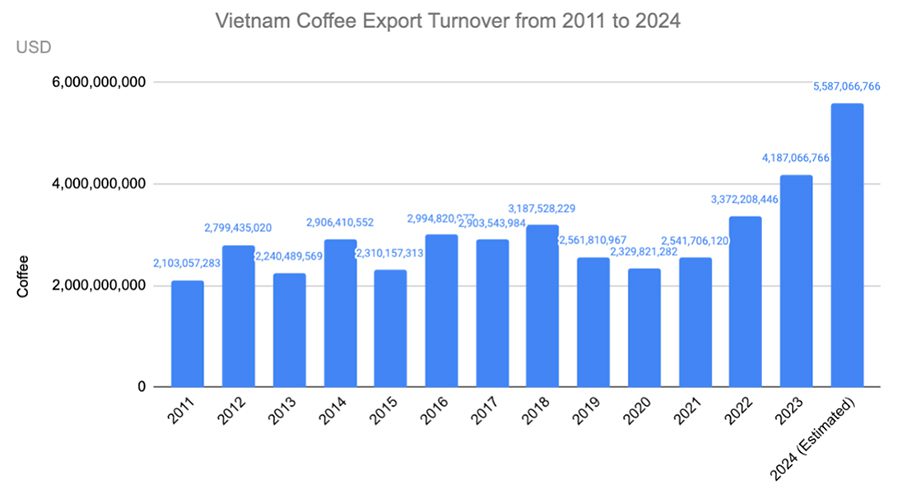
See detail the Vietnam Coffee Export Value 2011 – 2025

Vietnam’s Coffee Export Market

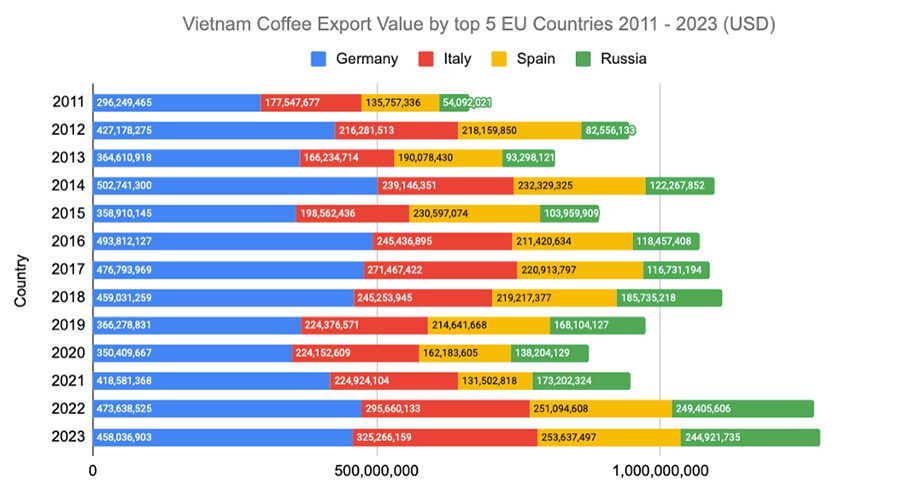
Europe (EU) – Europe is the largest market for Vietnamese coffee, capturing approximately 16% of the EU coffee import market:

  • Germany: The largest importer, bringing in around 170,000 tons of Vietnamese coffee annually.
  • Spain: The leading importer of unroasted and decaffeinated coffee from Vietnam.
  • Italy: Another key market, importing over 100,000 tons of coffee.
  • Russia: Primarily imports instant coffee from Vietnam, showing significant growth.

Japan:  A rapidly growing market, importing 81,628 tons of coffee from Vietnam in the first 10 months of 2024.

United States: A potential growth market, with Vietnamese coffee exports ranging between 292-300 million USD annually despite fluctuations in recent years.

What types of coffee does Vietnam export and how is its quality perceived?

As one of the world’s leading coffee exporters, Vietnam primarily focuses on Robusta and Arabica beans, alongside a growing portfolio of processed coffee products. The country’s coffee quality has seen significant improvements, gaining international recognition for its unique characteristics and the emergence of ‘Fine Robusta’.

Robusta Coffee

– Export Output: 830,000 tons

– Export Turnover: 2.81 billion USD

– Share in Total Coffee Export: 84.5% of output, 77.5% of turnover (first 7 months of 2024)

Vietnam is the world’s largest exporter of Robusta coffee, and this product plays a significant role in the country’s coffee export turnover. Robusta is particularly popular in markets like the EU, Japan, and Russia, where it is valued for its high quality and reasonable price.

Arabica Coffee

– Export Output: 51,180 tons

– Export Turnover: 171.85 million USD

– Share in Total Coffee Export: Smaller than Robusta, but important for high-end markets.

Arabica coffee, though less abundant in terms of output, still holds an important position in Vietnam’s coffee exports. It is especially favoured in markets like Japan and the United States, where consumers prefer coffees that are less bitter and smoother than Robusta.

Excelsa Coffee

– Export Output: 890 – 1,000 tons

– Export Turnover: Around 2.2 million USD

Although Excelsa coffee has a relatively small share in total coffee exports, it still contributes to Vietnam’s export turnover. Excelsa is mainly popular in smaller markets across Asia.

Quality and flavour

Vietnamese coffee has made significant strides in international markets, overcoming initial challenges related to its strong flavour and high caffeine content. The rise of Fine Robusta, along with the country’s rich coffee culture, has led to a growing appreciation of Vietnamese coffee worldwide. Here are the main factors contributing to its global popularity:

  • International Media Coverage: Vietnamese coffee has begun to capture attention globally through articles and recognition in major international publications:
    • The Travel (2022): This Canadian travel magazine ranked Vietnamese coffee among the best in the world, highlighting the diversity and rich flavour profile that makes it stand out.
    • CNN (2020): CNN’s article, “Why the World is waking up to Vietnamese Coffee,” focused on the unique brewing methods and special drinks like iced milk coffee and traditional filter coffee, increasing global awareness of Vietnam’s coffee culture.
    • The New York Times (2020): The New York Times recognized Vietnamese coffee as an integral part of the nation’s culture, noting its growing prominence on the world stage as a national coffee brand.
  • Global Coffee Rankings: Vietnamese iced milk coffee, often made with Robusta beans, was ranked 2nd in Taste Atlas’ Top 10 Most Favorite Coffee Drinks in the World. With a score of 4.6/5, it was just behind Italy’s Ristretto coffee, marking a significant milestone for the country’s coffee industry.

Certifications and Standards

Sustainable Production Certification: Vietnam has over 185,000 hectares of coffee certified for sustainable production. While this number is modest compared to other major coffee-producing countries, Vietnam’s high coffee productivity helps maintain and grow its market share in demanding markets like the EU.

As the largest coffee-growing region in Vietnam, Dak Lak has 45,674 hectares of certified sustainable coffee, accounting for 22.12% of the province’s coffee area. Key certifications in Dak Lak include:

  • UTZ: 13,713 hectares, 49,979 tons
  • 4C: 26,091 hectares, 94,357 tons
  • RFA: 5,123 hectares, 12,719 tons
  • Fairtrade: 747.2 hectares, 3,255.9 tons

Potential and Importance: Vietnam’s coffee productivity is 2.8 times higher than Indonesia’s, allowing it to remain competitive despite its relatively smaller certified area. With a commitment to sustainable production, Vietnam is strengthening its position in key international markets, including the EU and the United States.

What specific coffee products are best to source from Vietnam?

Green Coffee Beans

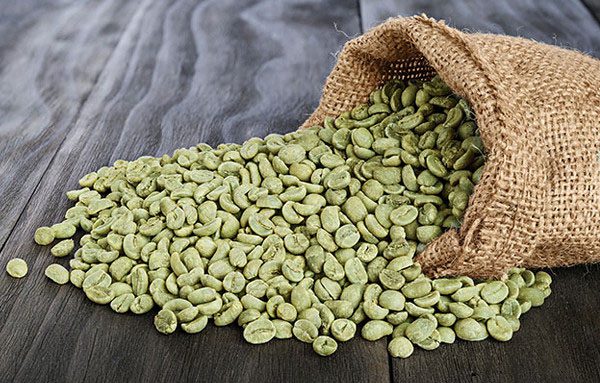
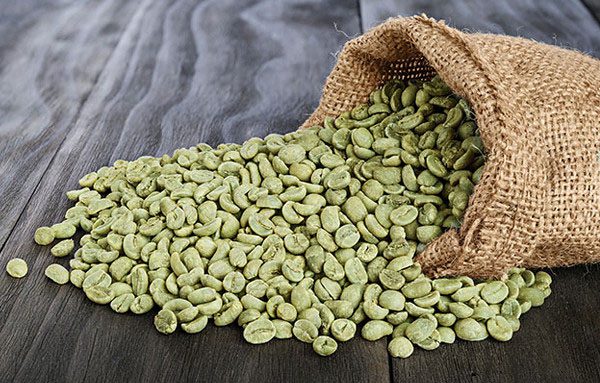
Vietnam is renowned for its Robusta coffee beans, which are known for their strong flavour and high caffeine content. Over 90% of the country’s coffee production is Robusta, making it a leading supplier worldwide. You can also source Arabica beans, which are grown in smaller quantities, often in the highland regions like Lam Dong and Son La, offering a milder taste with higher acidity compared to Robusta.

Roasted Coffee

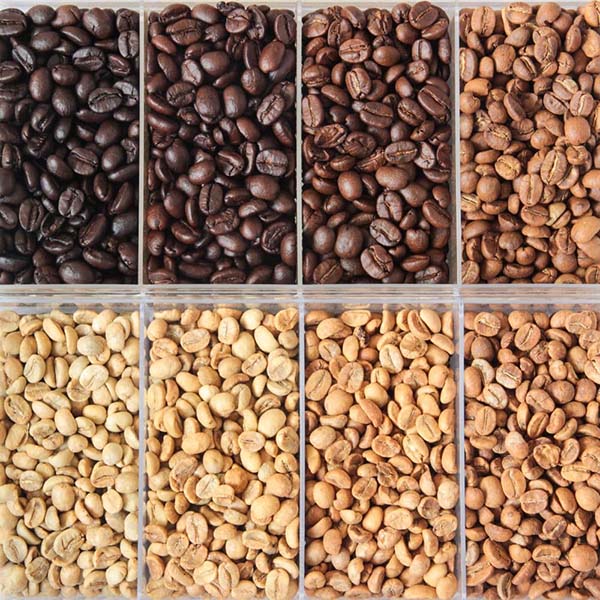
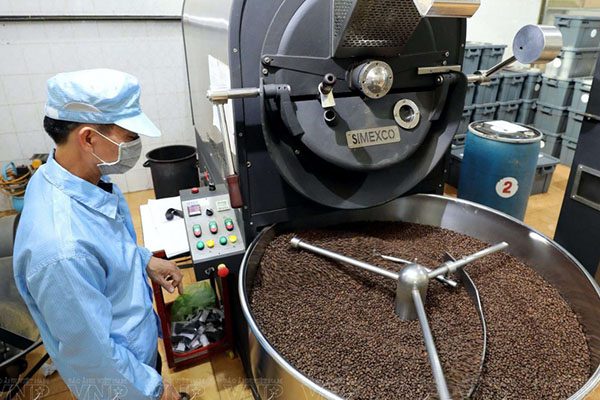
Vietnam offers a wide range of roasted coffee, including both Robusta and Arabica varieties. Roasting levels can be customized from light to dark roast depending on your preference. Vietnamese roasted coffee is appreciated for its bold, rich flavours and is often used in espresso blends or traditional Vietnamese coffee, which features a strong, dark roast profile.


Instant Coffee

Vietnam is a major producer of instant coffee, widely used for its convenience and affordability. Vietnamese instant coffee is made primarily from Robusta beans, offering a quick preparation method without sacrificing a strong coffee taste. The country is one of the world’s top suppliers of instant coffee, catering to a growing global demand.

Blended Coffee

Blended coffee products from Vietnam typically combine Robusta and Arabica beans to create balanced flavours. Additionally, blends may include various additives like milk, sugar, and flavourings. One popular example is the 3-in-1 coffee mix, which contains coffee, sugar, and creamer, offering a convenient, ready-to-drink solution popular in many countries. Blended coffee is especially appealing to markets that prefer milder, sweeter coffee flavours.

What is Vietnam’s capacity for coffee processing and supply?

Vietnam demonstrates impressive capacity in coffee processing and supply, leading the world in coffee productivity for the past decade with averages of 2.6 tons per hectare for Robusta and 1.4 tons per hectare for Arabica. This high productivity, combined with extensive processing facilities and a robust supply chain, ensures a consistent and reliable flow of coffee products to global markets. The country also ranks third globally in sustainable coffee certifications, with expectations to climb higher as initiatives with partners like Nestlé expand.

In the 2023-2024 crop year, the coffee-growing area reached 709,041 hectares. However, drought and pests in key regions reduced output by 20%, bringing total production down to 1.47 million tons.

The five main coffee-producing regions are the Central Highlands, Southeast, South Central, North Central, and Northern Midlands. The Central Highlands, the country’s largest coffee-growing area, accounts for 89% of the total, with around 577,000 hectares. Key provinces include Dak Lak, Lam Dong, Dak Nong, and Gia Lai.

Robusta, which makes up 93% of the area and 96% of the output, is grown mainly in Dak Lak, Lam Dong, Dak Nong, and Gia Lai. Arabica, grown primarily in Lam Dong and Son La in Vietnam’s highlands, represents 7% of the total area. However, its expansion is limited by challenges in transportation and storage in these remote, mountainous regions.

The scale of Coffee Processing Companies in Vietnam

Overview of Coffee Processing Facilities:

  • Coffee Beans: 97 facilities with a total designed capacity of 1.5 million tons per year.
  • Roasted Coffee: 160 facilities with a total capacity of 51.7 thousand tons per year.
  • Instant Coffee: 8 facilities with a total capacity of 36.5 thousand tons per year.
  • Blended Coffee: 11 facilities with a total capacity of 139.9 thousand tons per year.

Provinces and Coffee Processing Facilities:

  • Central Highlands: Dominates the coffee processing industry, with 420 facilities, making up 67.74% of the total number in Vietnam. The region contributes to 91% of Vietnam’s coffee export market share (2023-2024).
  • Key provinces: Dak Lak, Dak Nong, Gia Lai, and Lam Dong, all of which have significant coffee processing and deep processing facilities.

Why should international buyers choose Vietnam for coffee sourcing?

International buyers should consider sourcing coffee from Vietnam due to several compelling advantages, including competitive pricing, stable supply, diverse quality, and a growing commitment to sustainability. Vietnam’s high productivity and cost-effective production methods allow it to offer relatively lower prices compared to other major coffee-producing nations, providing a significant financial benefit for importers seeking quality at reasonable costs.

2. Stable Supply: Due to its large coffee-growing areas and efficient production processes, Vietnam ensures a stable supply of coffee, meeting the demands of importers worldwide.

3. Diverse Quality: In addition to its dominant Robusta coffee, Vietnam also produces Arabica and high-quality speciality coffee, catering to different market segments, from mainstream to premium.

4. Sustainability Potential: Vietnam is increasingly promoting sustainable coffee production practices, complying with international standards such as UTZ, Rainforest Alliance, and Organic certifications. This attracts international companies that prioritise environmentally friendly and socially responsible products.

Sourcing coffee from Vietnam offers advantages in terms of price, quality, and supply stability, while also supporting the growing demand for sustainable coffee products in the global market.

At VnCommEx, our mission is to support international businesses in sourcing high-quality coffee from Vietnam. We provide professional coffee-sourcing services that help you save costs and streamline the import process, ensuring you receive top-notch coffee at the best prices. We apply proven management models such as PDCA (Plan-Do-Check-Act) and SWOT analysis to ensure that every step of the sourcing process is effective and that the coffee you receive meets the highest quality standards.

Read more: Vietnam’s Coffee Industry: A Global Coffee Export Powerhouse

November 20, 2024 0 comment
0 FacebookTwitterLinkedinWhatsapp
Garment & Footwear

Sourcing Textile & Garment Products from Vietnam: A Complete Guide

by Henry Truong November 19, 2024
written by Henry Truong

What Makes Vietnam a Top Textile and Garment Exporter?

Vietnam has solidified its position as a major player in the global textile and garment market, now ranking as the second-largest exporter worldwide, trailing only China. This impressive growth is evidenced by exports exceeding 44 billion USD by 2024, with Vietnamese textile and garment products reaching over 100 countries globally. This significant achievement is a testament to more than two decades of dedicated effort and strategic development by local businesses within the industry.

Main Export Markets of Vietnam’s Textile and Garment Industry

  • The U.S. Market: The United States is Vietnam’s largest market, consistently accounting for 45-50% of total exports. Despite global economic challenges, Vietnam became the leading supplier of garment exports to the U.S. in 2024, reaching a turnover of 12 billion USD by the end of September.
  • Japan: Vietnam’s second-largest market, with a stable export turnover, reaching 2.74 billion USD in the first eight months of 2024, up 6.6% year-over-year.
  • Korea: A key market, with a 33% market share in Korea’s textile and garment imports, driven by strong FDI from Korean enterprises.
  • EU: Benefiting from the EVFTA, Vietnam’s textile exports to the EU grew to 3.1 billion USD in the first nine months of 2024, positioning Vietnam as the 6th largest supplier to the EU.
  • Russia: An emerging market with significant growth, seeing a 117% increase in exports to reach 0.61 billion USD in the first nine months of 2024.

Why Should You Source Textile and Garment Products from Vietnam?

Vietnam’s garment industry is poised for significant growth in the coming years, driven by several key factors:

Vietnam’s garment industry has earned high regard from international experts. A survey by the U.S. Fashion Industry Association (USFIA) found that Vietnam is the only Asian country to achieve strong scores across all 8 key criteria that global fashion companies consider when selecting suppliers. This includes factors such as product quality, delivery speed, and social compliance. Notably, Vietnam was the only country to receive high ratings across the board, while other garment-producing nations like Sri Lanka, Indonesia, and Bangladesh had several criteria that did not meet international standards. This positions Vietnam as a highly attractive sourcing destination for global fashion brands.

See more about Sourcing from China, Vietnam, India, and Bangladesh: Pros and Cons

Abundant labour force

The Vietnamese textile and garment industry is a significant source of employment, with approximately 2 million workers currently employed in the sector. Out of this total, 1.3 million are direct workers, and a majority (about 80%) of the workforce is female. The industry’s workforce is highly reliant on manual labour, as garment production requires a significant amount of hands-on work, especially in the manufacturing and finishing stages.

Salary and Income Structure

The basic salary for workers in the Vietnamese textile and garment industry is relatively competitive, averaging around 170 USD per month. However, due to the high demand for production and tight deadlines, regular overtime is a common feature. The typical overtime range for workers is between 47 to 60 hours per month, which contributes an additional 52 USD per person per month, accounting for 22.4% of the total income.

Overall, the average total income of garment workers in Vietnam typically ranges from 200 to 250 USD per month. Skilled and experienced workers can earn significantly more, with salaries for highly specialized roles reaching between 300 to 350 USD per month. These workers typically handle advanced tasks that require more expertise, resulting in higher pay per hour and a more specialized role within the factory.

See more about Exploring Vietnam’s Golden Population and Labor Force

Comparative Labor Costs in the Region

In terms of labour costs, Vietnam has a clear advantage compared to other garment-producing countries in Asia. For instance, the average salary for garment workers in Bangladesh is only 95 USD per month, Cambodia at 190 USD per month, and India at 145 USD per month. Despite Vietnam’s higher labour costs compared to these countries, global suppliers tend to prefer Vietnam due to its flexibility, ability to adapt to market trends, political stability, and focus on sustainable development.

Additionally, while Bangladeshi enterprises typically prioritize large orders, Vietnamese enterprises are noted for their flexibility in handling both large and small orders, making them more adaptable to diverse customer needs and contributing to their growing competitive edge in the global textile and garment market.

Sustainability Certification in Vietnam’s Garment Industry

The textile and garment industry is a major global contributor to CO₂ emissions, accounting for 8-10% of the total. To meet the growing demand for environmentally responsible practices, especially from major export markets like the US and Europe, companies must adhere to sustainability standards.

Vietnamese garment companies are working to reduce energy and water consumption, with targets to cut energy use by 15% and water use by 20% annually from 2014 to 2030. The fiber industry is also shifting towards using recycled polyester and organic cotton to reduce environmental impact.

Additionally, Vietnam leads in producing bio-fibers from plants like banana fiber, bamboo, and coconut, offering an opportunity for the textile industry to meet international sustainability standards and improve global competitiveness.

What Are Vietnam’s Textile and Garment Production Capabilities?

Structure of Vietnamese Textile and Garment Enterprises

Vietnam’s textile and garment industry boasts robust production capabilities, demonstrated by its significant growth and resilience despite facing challenges over the years. The number of enterprises in this sector has shown an upward trend, fluctuating from approximately 3,922 in 2011 to 5,013 by 2014. Although the industry experienced a setback in 2015 with about 1,500 bankruptcies, reducing the total to 3,557 enterprises, it quickly recovered, reaching around 5,500 enterprises by 2022. This trajectory highlights the sector’s dynamic nature and its capacity for sustained development.

The COVID-19 pandemic had a limited negative impact on the industry, primarily because the US, which is a key partner, continued to import textiles from Vietnam. One of the strongest periods of growth for the sector occurred between 2018 and 2019 when over 800 new enterprises entered the market.

Enterprise Types and Distribution

In the period from 2011 to 2019, private enterprises made up about 90% of the textile and garment enterprises in Vietnam. However, since 2019, the proportion of private enterprises has decreased to 80%, primarily due to small and medium-sized enterprises (SMEs) facing difficulties after the pandemic. Among the roughly 5,000 enterprises operating in the sector, 88% are micro and small enterprises.

As of 2023, Vietnam is home to about 7,000 textile and garment enterprises. Of these, 80% are small and medium-sized, while more than 10% are foreign-invested enterprises (FDI). The industry employs approximately 3 million workers, with 70% of the workforce focused on production.

Production Types

In terms of production, more than 70% of the textile factories in Vietnam focus on garment production. Only 6% of the factories are involved in yarn production, 17% in fabric production, and 4% in dyeing. This production distribution reflects Vietnam’s strong position as a global garment exporter, especially in the apparel segment, while the other areas, such as yarn and fabric production, remain comparatively smaller in scale.

Overall, the Vietnamese textile and garment industry is resilient and continues to adapt to challenges, with a strong emphasis on garment manufacturing, a growing number of enterprises, and a diversified structure including both local and foreign-invested businesses.

What Are the Best Sourcing Strategies for International Companies in Vietnam?

Direct Sourcing

For international companies looking to source textile and garment products from Vietnam, several effective strategies can be employed to ensure successful partnerships and optimal outcomes. One of the most common and often cost-effective approaches is direct sourcing. This strategy involves engaging directly with Vietnamese manufacturers, which allows businesses to eliminate intermediaries and gain greater control over critical aspects such as pricing, product quality, and lead times. To effectively implement direct sourcing in Vietnam, careful planning and execution are essential.

Working with Sourcing Companies

For businesses that lack the resources to manage direct relationships with manufacturers or those unfamiliar with Vietnam’s textile industry, working with intermediaries such as sourcing agents or companies is a viable option.

These intermediaries bridge the gap between international buyers and local manufacturers, helping to identify suitable suppliers, negotiate pricing, and oversee production processes. They often have established networks within the industry, which can save businesses time and reduce risk.

Advantages of Working with Intermediaries:

  1. Expertise and Local Knowledge: Agents typically have in-depth knowledge of Vietnam’s textile sector, local business practices, and regulatory requirements. They can help navigate cultural and communication barriers.
  2. Quality Control: Sourcing companies often provide on-the-ground oversight, ensuring that manufacturers adhere to the quality standards and deadlines agreed upon in contracts.
  3. Reduced Risk: By leveraging the intermediary’s existing relationships with manufacturers, buyers reduce the risk of encountering unreliable suppliers or production delays.

Factory Visits

Visiting factories is a crucial part of the sourcing process, especially when vetting new suppliers or ensuring ongoing production quality. Factory visits allow buyers to directly assess the manufacturer’s capacity, working conditions, and compliance with international standards.

Arranging Factory Visits

 Before planning a visit, coordinate with the manufacturer to schedule a tour of the facility. Many factories welcome visits from international clients, as it demonstrates a serious interest in building long-term relationships. Here are some tips for a successful visit:

  • Preparation: Bring detailed questions about production capabilities, lead times, quality control processes, and certifications (such as ISO or Oeko-Tex). Ensure you’re clear on your product specifications to evaluate the manufacturer’s ability to meet your requirements.
  • Check Facilities: During the visit, examine the machinery, equipment, and workforce. Take note of the factory’s scale and capacity to determine whether they can handle your order volume.

Auditing Production Sites

Auditing a factory’s production processes and quality control procedures is critical for ensuring product consistency and compliance with international standards. Key aspects of an audit include:

  • Workforce Conditions: Ensure the factory complies with labour laws, such as fair wages, working hours, and safety standards.
  • Production Capacity and Scalability: Assess whether the manufacturer can handle large-scale orders or flexible production volumes if your needs increase.
  • Environmental and Ethical Standards: Evaluate the factory’s sustainability practices, such as water and waste management, use of eco-friendly materials, and adherence to environmental regulations.

By incorporating these sourcing strategies, businesses can streamline their operations, maintain product quality, and build long-term, successful partnerships with Vietnam’s textile and garment manufacturers.

Vietnam’s textile and apparel industry has grown strongly, not only because of its modern manufacturing infrastructure and abundant labour force but also because of its ability to adapt quickly to the demands of the international market. The combination of direct sourcing strategies, working with intermediaries, and factory inspections has helped international companies build sustainable cooperative relationships in Vietnam. With its potential for sustainable development and strategic location, Vietnam will continue to be the first choice for global fashion brands.

Contact us at VnCommEx to find the most competent supplier for your product!

Read more: Vietnam: The Ultimate Destination for Wood Sourcing

November 19, 2024 0 comment
0 FacebookTwitterLinkedinWhatsapp
Wood & Furniture

Vietnam: The Ultimate Destination for Wood Sourcing

by Henry Truong November 18, 2024
written by Henry Truong

What is the current state of Vietnam’s wood export industry?

Vietnam’s wood export industry has seen remarkable growth since the 1990s, evolving into a major global player. Starting from a modest $214 million in 2000, exports surged past $1 billion by 2004 and hit $14 billion by 2021. This expansion was largely fueled by rising global demand, especially for furniture, a trend accelerated by the pandemic and the shift to remote work. For 2024, Vietnam is projected to export $12.15 billion in wood and forestry products, underscoring its significant presence in the international market.

Vietnam’s wood industry has undergone a notable expansion, with exports reaching over $10 billion annually to 140 countries. The United States is the leading market, accounting for over 50% of exports, particularly in furniture. However, following the pandemic, the U.S. market share has declined slightly. China is the second-largest market, primarily for wood chips, while the European Union, particularly the United Kingdom, is another key market. Growth is projected in 2024, especially in the United States and the European Union.

See more detail about the Vietnam’s wood exports 2024: Overview, opportunities, risks and challenges

What types of wood products can you source from Vietnam?

Plywood and Laminated Wood (HS 4412)

Plywood and laminated wood are engineered wood products made by bonding thin layers of wood veneer together. They are widely used in construction, furniture, and cabinetry.

Vietnam exports value to the US: 571.62 thousand m³, generating $282.22 million, accounting for 4% of total wood exports to the U.S

Plywood and Construction Woodwork (HS 4418)

This category includes prefabricated buildings, joinery, and carpentry products made of wood, such as windows, doors, and frames used in construction projects.

– Exports to the US: 322 thousand m³, valued at $296.58 million, representing 4.2% of total wood exports to the U.S., with a 47.6% increase in volume.

– Exports to the EU: 48.42 thousand m³, generating $31.68 million, a 30.2% decline in volume.

Pellets (HS 4401.31)

Wood pellets are small cylindrical pieces made from compressed sawdust or other wood waste, used primarily as fuel in heating and power generation.

– Exports to Japan: 2.8 million tons, generating $438.67 million.

– Exports to the EU: 110.87 thousand tons, generating $17.88 million.

Wood Chips (HS 4401.21)

Wood chips are small pieces of wood used in pulp and paper production, biomass energy, and as raw material for producing composite wood products.

– Exports to China: 9.38 million tons, valued at $1.44 billion, accounting for 82.9% of Vietnam’s total wood exports to China.

– Exports to Japan: 3.94 million tons, generating nearly $610 million.

Veneer (HS 4408)

Veneer refers to thin layers of wood, usually peeled from logs, used for surface applications on furniture, panels, and decorative wood products.

Exports to China: 903.32 thousand m³, generating $150.94 million.

Sawn Timber (HS 4407)

Sawn timber is wood that has been cut into boards or planks, and used for construction, flooring, and various carpentry applications.

Exports to China: 184.76 thousand m³, generating $77.19 million.

Office Furniture (HS 9303.30)

Office furniture includes desks, chairs, storage units, and other equipment designed for office environments.

Exports to the U.S.: $149.28 million, a 31.3% decline from 2022.

Kitchen Furniture (HS 9403.40)

Kitchen furniture encompasses cabinets, countertops, and storage units designed specifically for kitchen environments.

Exports to the U.S.: $846.44 million, a 6.7% decrease compared to 2022.

Wooden Furniture (HS 9403.90)

This category covers a broad range of wooden furniture, including living room, dining room, and bedroom furniture.

– Exports to the U.S.: $906.34 million, down 29.2% from 2022.

– Exports to the EU: $23.09 million, a 34.4% decrease from 2022.

Seats (HS 9401)

This category includes wooden chairs and seating furniture, often used in dining rooms, offices, and public spaces.

Exports to the EU: $133.69 million, a 30.5% decline compared to 2022.

Why is Vietnam a good place to source wood products?

Vietnam stands out as an attractive destination for wood importers due to its diverse supply of high-quality wood and competitive pricing. The country’s modern processing technology and abundant labor resources contribute to the growing popularity of Vietnamese wood products in the international market. Several compelling factors make importing wood from Vietnam a strategic choice for global businesses.

  • Vietnam offers a diverse range of wood types, including acacia, rubberwood, and teak, which are highly valued for use in furniture and construction.
  • Vietnam places a strong emphasis on sustainable forestry and responsible sourcing, making it an environmentally conscious choice.
  • Vietnamese wood products are competitively priced, offering customers an affordable option.
  • Vietnam is renowned for its high-quality craftsmanship, particularly in furniture manufacturing.

What are the most popular types of wood used in Vietnam’s production?

Vietnam’s wood processing industry heavily depends on raw materials, which typically constitute 40-60% of the final product cost. Annually, the country requires approximately 40-42 million m³ of raw wood for production. The primary sources for these materials are planted forests, with acacia and rubber wood being the two most significant types utilized.

1. Acacia Wood

Dominance in Planted Forests: Acacia wood makes up 80% of the planted forest area in Vietnam, providing approximately 30 million m³ of raw wood annually. Acacia wood is versatile and is used in the production of various wood products, including:

  • Wood chips (for paper, pulp, and energy)
  • Veneer (for furniture production)
  • Pellets (used for energy and heating)
  • Wooden products such as bookcases, chairs, and outdoor furniture.

Acacia wood is easy to process and is relatively low-cost, making it the primary raw material in Vietnam’s wood processing industry.

Acacia Wood

2. Rubber Wood

Vietnam has nearly 1 million hectares of rubber plantations, mostly smallholder rubber, yielding 3-4 million m³ of rubber wood annually. Although the supply of rubber wood is smaller than that of acacia, it remains a vital component of Vietnam’s wood processing industry. It is primarily used in the production of:

  • Industrial wood products (such as plywood and furniture components)
  • Household wood products (such as furniture and small wooden items).

Rubberwood is favoured for its smooth surface and durability, making it suitable for a wide range of applications.

See further: Top 7 types of wood favoured for import from Vietnam

Where does Vietnam source its raw wood materials?

As of 2022, Vietnam’s planted forest areas span approximately 4.66 million hectares, accounting for about 30% of the total national forest area. These forests are crucial for meeting the raw material demands of Vietnam’s wood processing industry. While the country’s planted forests are primarily concentrated in the northern regions, the Southeast region serves as the key hub for wood production.

Key Forest Regions

  • Northern Midlands and Mountainous Region: This region, which includes provinces like Lai Chau, Son La, and Thanh Hoa, holds about 5.4 million hectares of forests (both natural and planted), making it one of the largest forested areas in Vietnam.
  • North Central and Central Coastal Regions: This area, which includes provinces such as Nghe An and Quang Binh, has about 5.6 million hectares of forests, contributing significantly to Vietnam’s wood resources.

Major Wood Production and Export Areas

Southeast Region (Dong Nai and Binh Duong): Despite the concentration of planted forests in the north, the Southeast region is the largest contributor to wood production and exports. This region is home to the two most important provinces for wood production:

  • Dong Nai: Known for its strong industrial base and craft villages, Dong Nai is a key producer of wood products and has developed cooperatives that enhance production capacity.
  • Binh Duong: Often referred to as the “capital” for many large domestic and foreign wood processing enterprises, Binh Duong is crucial to Vietnam’s wood industry, contributing significantly to both domestic production and exports.

These two provinces together account for over 50% of the wood output and more than 70% of the export value in Vietnam’s wood processing industry. 

What certifications and international standards does Vietnamese wood meet?

Vietnam’s wood industry is actively aligning with international sustainability standards to satisfy the stringent requirements of key export markets, such as the EU and the US. These markets typically mandate that 70% of raw materials originate from FSC-certified sources, with the remaining 30% permitted from non-certified materials, provided they adhere to robust traceability standards.

As of September 2023, 500,000 hectares of Vietnam’s forests are certified under FSC and VFCS/PEFC standards, making up about 64% of the country’s planted forests. This includes bamboo and rubber plantations as well. Additionally, many companies are investing in renewable energy systems to promote more sustainable production practices. These efforts ensure that Vietnam’s wood products meet international demands for environmental responsibility, enhancing their competitiveness in global markets.

With the growing trend toward sustainability and eco-conscious consumption, Vietnam is poised to become a go-to destination for high-quality, affordable wood products in the next decade. The greening movement, paired with strategic trade policies, positions Vietnam perfectly to meet the rising global demand for sustainable materials. As we look to 2025-2030, Vietnam’s wood industry is set to flourish, offering exciting opportunities for international businesses. If you’re seeking premium wood products at competitive prices, Vncommex is ready to provide you with expert guidance and unmatched support.

See more: Why Vietnam is the Best Place to Source Cashews: A Deep Dive

November 18, 2024 0 comment
0 FacebookTwitterLinkedinWhatsapp
Vietnam Commodity Market Price

Vietnam Agriculture Food Price From November 11th – 17th

by Henry Truong November 18, 2024
written by Henry Truong

Note: This price is the Vietnam domestic market price (Exchange rate 18th November). Please contact us if you want to know the EXW, FOB, or CNF prices.

Source: Department of Industry and Trade or Department of Agriculture of provinces in Vietnam

CommodityTypeLowest Price
(USD/Kg)
Highest Price
(USD/Kg)
TROPICAL FRUIT
DurianPremium Ri6 Durian – Mekong Delta6,116,31
Ri6 Durian – Mekong Delta (Bulk)2,562,76
Premium Monthong Durian – Mekong Delta–6,70
Monthong Durian (Bulk)2,762,96
Premium Ri6 Durian – Southeast Region5,716,11
Ri6 Durian – Southeast Region (Bulk)2,362,56
Premium Monthong Durian – Southeast Region6,316,70
Monthong Durian – Southeast Region (Bulk)2,562,76
Premium Ri6 Durian – Central Highlands5,716,31
Ri6 Durian – Central Highlands (Bulk)2,362,56
Premium Monthong Durian – Central Highlands6,506,90
Monthong Durian – Central Highlands (Bulk)2,562,96
Dragon FruitRed Flesh Dragon Fruit0,590,99
White Flesh Dragon Fruit0,320,59
JackfruitJackfruit0,391,18
PomeloNam Roi Pomelo0,51–
Green Skin Pomelo0,991,97
MangoSweet Hòa Lộc Mango (Bulk)1,26–
CoconutGreen Siam Coconut (Grade 1)0,99 USD/Piece1,19 USD/Piece
Green Siam Coconut (Grade 2)0,59 USD/Piece0,79 USD/Piece
Macapuno Coconut1,97 USD/Piece2,36 USD/Piece
Dried Coconut3,945,91
BananaBanana0,390,59
PineapplePineapple0,240,47
LimesGreen Limes0,280,59
Persian Limes0,390,59
AvocadoButter Avocado0,710,99
Booth Avocado0,791,38
034 Avocado1,181,38
Hass Avocado1,972,17
Pinkerton Avocado1,972,17
Cuba Avocado1,381,58
Red Fresh Avocado1,772,17
SPICE INDUSTRY
PepperPepper (Daklak Province)5,44–
Pepper (Gia Lai Province)5,44–
Pepper (Đắk Nông Province)5,46–
Pepper (Bà Rịa – Vũng Tàu Province)5,42–
Pepper (Bình Phước Province)5,44–
Pepper (Đồng Nai Province)5,42–
ChiliGoat Horn Chili1,301,77
GingerGinger0,590,99
PeanutPeanuts (Grade 1)1,97–
Peanuts (Grade 2)1,85–
Peanuts with Shell (Fresh)0,71–
FOOD INDUSTRY
RiceSticky Rice0,710,87
Regular Rice0,590,63
Nang Nhen Rice1,10–
Thai Fragrant Long Grain Rice0,790,87
Jasmine Fragrant Rice0,670,71
Huong Lai Rice0,87–
Standard White Rice0,69–
Nang Hoa Rice0,85–
Regular Sóc Rice0,73–
Thailand0,83–
Taiwanese Fragrant Rice0,83–
Japanese Rice0,89–
Bran0,350,39
CoffeeGreen Coffee Beans – Đắk Lắk Province (Bulk)4,48–
Green Coffee Beans – Lâm Đồng Province (Bulk)4,47–
Green Coffee Beans – Gia Lai Province (Bulk)4,48–
Green Coffee Beans – Dak Nông Province (Bulk)4,67–
CornCorn0,35–
TeaFresh Tea Bud – Seed0,39–
Fresh Tea Bud – Branch0,45–
Cashew NutWhite Cashew Kernel W2407,0913,79
White Cashew Kernel W3206,7013,40
White Cashew Kernel W4505,1212,22
Broken White Cashew Kernels WS5,799,46
Macadamia NutFresh Macadamia – Đắk Lắk Province2,763,55
Fresh Macadamia – Lâm Đồng Province2,643,55
Fresh Macadamia – Dak Nông Province2,723,74
Fresh Macadamia – Bình Định Province2,964,73
Dried Macadamia – Đắk Lắk Province13,0014,19
Dried Macadamia – Lâm Đồng Province13,0014,19
Dried Macadamia – Đắk Nông Province13,0014,19
Cacao BeansBulk Cocoa Bean2,362,56
Fermented Cocoa Bean Grade I2,682,80
Fermented Cocoa Bean Grade II2,272,35
Fermented Cocoa Bean Grade III3,553,70
Fresh Cocoa Bean0,240,26
Pure Cocoa Powder5,527,09


See more: Vietnam Agriculture Food Price From November 04th – 10th

November 18, 2024 0 comment
0 FacebookTwitterLinkedinWhatsapp
Newer Posts
Older Posts

Recent Posts

  • Import Vietnamese Coffee: Your Strategic B2B Playbook
  • Vietnam’s Coffee Economy: Market Trends, Export, and Sustainable Future
  • Vietnamese Coffee Brands: Your Definitive Guide to Authentic Flavors, Top Picks & Smart Buying
  • Vietnamese Coffee Taste: Your Sensory Guide to Bold Flavors
  • Vietnamese Coffee: Ultimate Guide to History, Brews & Global Impact

Follow Us

Facebook Linkedin Twitter

Recent Posts

  • Import Vietnamese Coffee: Your Strategic B2B Playbook

    December 17, 2025
  • Vietnam’s Coffee Economy: Market Trends, Export, and Sustainable Future

    December 15, 2025
  • Vietnamese Coffee Brands: Your Definitive Guide to Authentic Flavors, Top Picks & Smart Buying

    December 13, 2025
  • Vietnamese Coffee Taste: Your Sensory Guide to Bold Flavors

    December 12, 2025
  • Vietnamese Coffee: Ultimate Guide to History, Brews & Global Impact

    December 11, 2025

Categories

  • Food & Spicy Industry (30)
  • Free Trade Agreement (18)
  • Fruit & Vegetable (56)
  • Garment & Footwear (11)
  • Market Insights (29)
  • Others (4)
  • Seafood (4)
  • Vietnam Commodity Market Price (17)
  • Vietnam Export Data (15)
  • Vietnam Market (6)
  • Wood & Furniture (19)

Vietnam Commodity Export offers comprehensive and in-depth information on Vietnam’s sourcing market, highlighting opportunities and challenges across various industries. We help international businesses find quality manufacturers and reliable suppliers in Vietnam, providing the critical insights needed to connect with the best partners and resources in the market.

Newsletter Subscribe
    • Homepage
    • Market Insight
    • Sourcing Service
    • Vietnam Overview
    • Publication
    • About Us
    • Contact Us
  • Product Catalogue
    • Coconut Products
    • Tropical Fruits
    • Spicy Products
    • Food & Nuts Products
    • Dried Fruit

You are looking for suppliers in Vietnam!

Shop Now
Facebook Linkedin Twitter Email
VNCOMMEX Group Co. Ltd Address: 06 Vo Van Kiet, Nguyen Thai Binh Ward, District 1, HCMC
Email: info@vncommex.com

All rights reserved. Designed and developed by Vietnam Commodity Exports

Privacy Policy

FAQ

VnCommEx
  • VCE
  • Product Catalogue
  • Market Insight
    • Wood & Furniture
    • Garment & Footwear
    • Food & Spicy Industry
    • Fruit & Vegetable
    • Others
    • Market Insights
  • Vietnam Market
    • Vietnam Commodity Market Price
    • Vietnam Export Data
    • Vietnam in FTA
  • Publication
  • About Us
  • English
    • 中文 (中国)
    • Tiếng Việt
VnCommEx
  • VCE
  • Product Catalogue
  • Market Insight
    • Wood & Furniture
    • Garment & Footwear
    • Food & Spicy Industry
    • Fruit & Vegetable
    • Others
    • Market Insights
  • Vietnam Market
    • Vietnam Commodity Market Price
    • Vietnam Export Data
    • Vietnam in FTA
  • Publication
  • About Us
  • English
    • 中文 (中国)
    • Tiếng Việt
@2021 - All Right Reserved. Designed and Developed by PenciDesign
✕

Shopping Cart

Close
No products in the cart.
Close
 
Return to shop