

Why is Vietnam a top pepper exporter?
Vietnam’s fertile landscape and favorable climate provide ideal conditions for cultivating various perennial crops, with pepper emerging as a dominant force alongside coffee, rubber, tea, cashew, and coconut. Significant investment in these crops, particularly pepper, has propelled Vietnam’s agricultural exports, establishing the country as a global leader in pepper production and trade.
Since the country opened its markets in 1986, pepper quickly became one of Vietnam’s most iconic exports. By 1997, Vietnam had already surpassed Brazil, securing the third spot in global pepper production. Just five years later, in 2002, it overtook India, and by 2007, Vietnam proudly claimed the title of the world’s number one producer and exporter of pepper. From modest beginnings with only 50,000 tons in 2001, the sector has grown exponentially, with exports now exceeding 200,000 tons and accounting for over 60% of the global pepper trade.

Where are Vietnam’s main pepper growing regions?
As one of the world’s largest producers and exporters of pepper, Vietnam concentrates its production in two primary regions: the Southeast region and the Central Highlands. These two areas are crucial, contributing approximately 94% of the country’s total pepper-growing area and 97% of its overall pepper output. Below, we detail the major pepper-growing regions and their distinct characteristics.
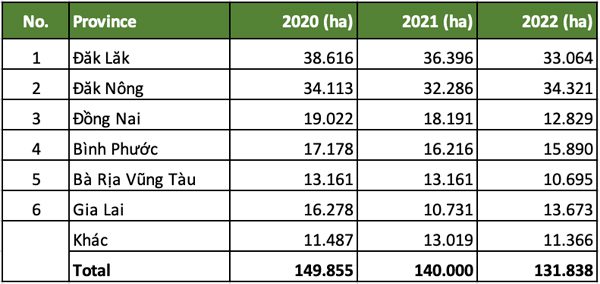
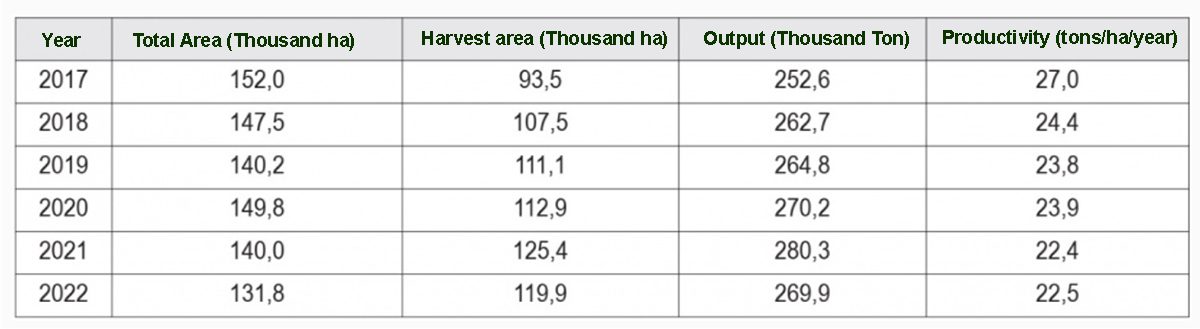
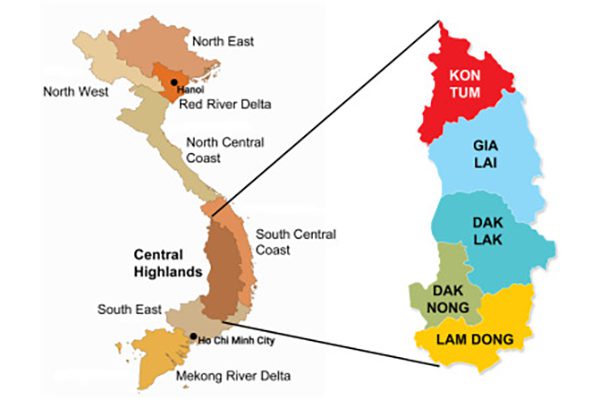
Central Highlands (Dak Lak, Dak Nong, Gia Lai)
- 2020: 88,007 ha (58.7%)
- 2021: 79,413 ha (56.7%)
- 2022: 81,058 ha (61.5%)
The Central Highlands is the region with the largest proportion of pepper growing area in Vietnam, especially Dak Nong and Dak Lak provinces. Although the area decreased slightly in 2021, this region still plays a key role in pepper production, and the area increased again in 2022. Gia Lai had a significant recovery in 2022, helping to increase the region’s share.
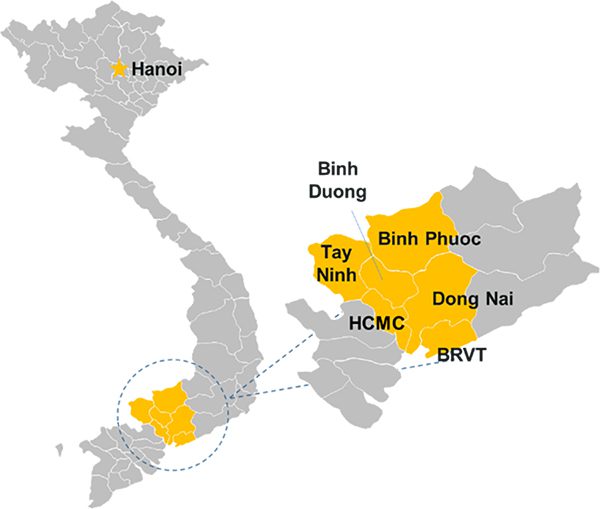
Southeast Region (Dong Nai, Binh Phuoc, Ba Ria Vung Tau)
- 2020: 49,361 ha (32.9%)
- 2021: 47,568 ha (34%)
- 2022: 39,414 ha (29.9%)
Pepper growing area in the southeast tends to decrease sharply, especially in Dong Nai and Ba Ria Vung Tau, so the proportion of this region will gradually decrease. Binh Phuoc plays an important role in a stable area, but the sharp decline in Dong Nai and Ba Ria Vung Tau has affected the total area of this region.
What are the current prices for Vietnamese pepper?
Vietnamese pepper prices are highly competitive globally, particularly for black pepper, making it an attractive option for international buyers. However, it’s important to note that prices can fluctuate based on the specific type of pepper (black or white), its quality grade, and the timing of the purchase.
In 2024, Vietnam’s FOB pepper prices ranged from USD 6,000 to USD 6,500/ton for Black Pepper (500g/l), reflecting significant growth compared to previous years.
As of October 2024, the price of Vietnamese pepper is highly competitive, making it an attractive option for international buyers:
- Black Pepper: 500 g/l is priced at approximately 6,200 USD/ton.
- White Pepper: Priced at 9,400 USD/ton.
In comparison:
- Indonesian Black Pepper: Costs around 6,500 USD/ton.
- Indonesian White Pepper: Priced at 9,177 USD/ton.
- Malaysian Black Pepper: Can cost up to 8,400 USD/ton.
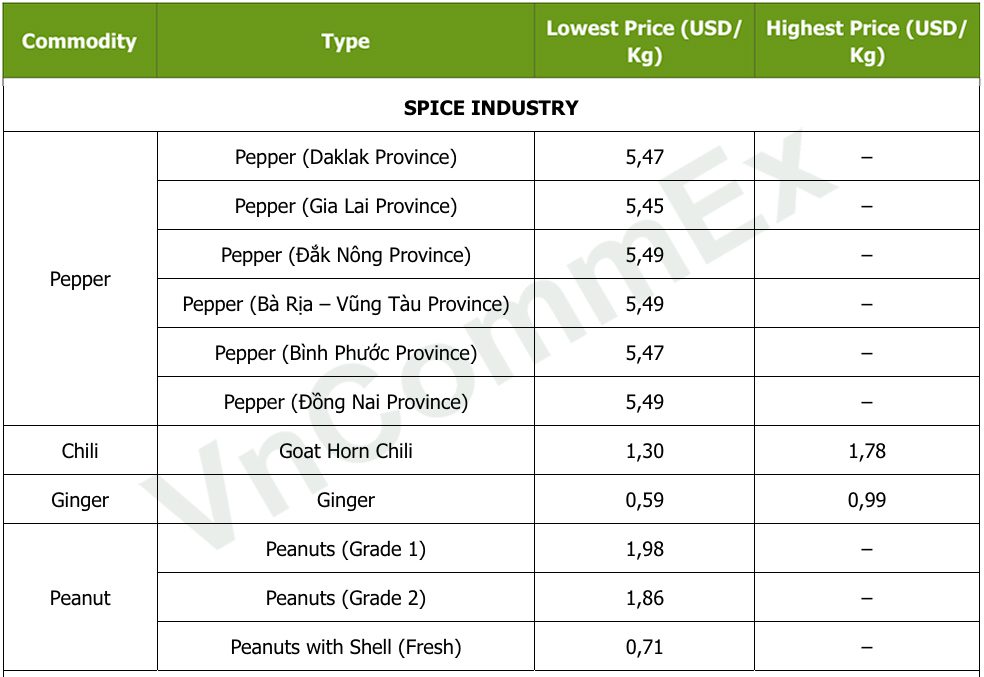
There is the pepper price in Vietnam internal, see the pepper price update by week here
What are the main types of pepper grown in Vietnam?
Vinh Linh Pepper
Originating from Quang Tri, the Vinh Linh variety is known for its robust growth and high yield. With medium-sized, long, dark green leaves, Vinh Linh pepper produces large, densely packed fruits that grow on medium-length flower spikes. This variety thrives with proper care, yielding up to 4-5 tons per hectare, and even reaching 7 tons in optimal conditions. The fruits are large, shiny black, and highly aromatic, making them ideal for both dry and ground pepper products. This variety’s superior productivity and excellent quality have made it the most widely cultivated pepper in Vietnam.
- Spike length: 8.9 cm
- Density: 584.9 g/l
- Dry yield/pillar: 4.25 kg
Lada Belangtoeng Pepper
This Indonesian variety was introduced to Vietnam in 1947. Lada Belangtoeng is known for its strong growth, making it relatively resistant to root rot. However, it is less productive and slower to flower in less intensive farming conditions, resulting in lower yields.
- Spike length: 8.5 cm
- Density: 474.6 g/l
- Dry yield/pillar: 3.36 kg
- While not widely grown due to its relatively low productivity, this variety offers resilience in specific growing conditions.
Split Pepper Varieties
These varieties feature small, slightly wavy leaves and early fruiting. They produce dense clusters of large fruits but are vulnerable to quick death disease. Despite this, they are stable in the early years of growth and produce abundantly.
- Spike length: 8.3 cm
- Density: 497.9 g/l
- Dry yield/pillar: 2.63 kg
- Varieties like Loc Ninh, Ba Ria red soil pepper, and Dak Lak fat pepper fall under this category.
Indian Pepper
Introduced to Vietnam in 1995, the Indian variety is particularly notable for its large fruit clusters and early fruiting. This variety grows well in regions like Ba Ria red soil, Binh Phuoc, Daklak, and Gia Lai. Its long fruit clusters yield large, flavorful fruits, making it a valuable export variety.
- Spike length: 13.7 cm
- Density: 537.4 g/l
- Dry yield/pillar: 3.93 kg
Phu Quoc Pepper
Originating from Cambodia, Phu Quoc pepper is famous for its high quality and aromatic taste. Its medium-sized leaves and early fruiting make it a sought-after variety, though it is susceptible to root diseases. Phu Quoc pepper’s premium quality has made it a favourite in the international market for decades.
- Spike length: Medium
- Density: High
- Dry yield/pillar: Moderate
- Its resilience and flavour have earned it international recognition, despite its susceptibility to root diseases.
Buffalo Pepper
Grown in many regions, Buffalo pepper has large, dark green leaves and produces long fruit clusters. Although it is resistant to quick wilt disease, its yield remains inconsistent and relatively low.
- Spike length: 9.7 cm
- Density: 525.7 g/l
- Dry yield/pillar: 2.78 kg
- Known for its resilience to diseases, Buffalo pepper is less widely grown due to its lower yield.
What makes Vietnamese pepper a top choice for importers?
Vietnamese pepper is highly regarded globally, earning its reputation as one of the best due to a combination of factors that ensure superior quality and competitive pricing. These key advantages make it a preferred choice for international importers.
Ideal Climate Conditions
Vietnam’s humid tropical climate provides the perfect environment for pepper cultivation. The country experiences regular rainfall and consistently warm temperatures, both of which are essential for pepper plants. Pepper thrives in temperatures between 25°C to 30°C, and the average annual rainfall of about 2,000 mm aligns perfectly with the plant’s needs. This climate is especially beneficial for regions in southern Vietnam, such as Binh Phuoc, Ba Ria-Vung Tau, and Tay Ninh, where most of the country’s pepper is cultivated.
Fertile and Nutrient-Rich Soil
The land in Vietnam is rich in natural nutrients, thanks to the presence of alluvial soils, red basalt soils, and loose clay. These soils are excellent for growing pepper as they provide both good drainage and moisture retention, which is essential for pepper plants to thrive. The rich soil ensures that the plants have the necessary nutrients for robust growth and high yields, leading to high-quality peppercorns.
High Productivity and Competitive Prices
Vietnamese pepper stands out in terms of productivity, with yields significantly higher than many other pepper-producing countries. The country’s well-established farming practices, coupled with favourable climate and soil, ensure that pepper production remains highly efficient.
The pricing advantage of Vietnamese pepper, especially when compared to other major producers, gives it a significant edge in the global market. Only Brazilian pepper, with its competitive pricing, can rival Vietnamese pepper in terms of cost.
Sourcing in Vietnam is a smart choice for international businesses, but finding high-quality suppliers at reasonable costs is not always easy. B2B transactions are complex and involve risks for both parties. Understanding this, VnCommEx offers a sourcing service that connects international businesses with reliable suppliers in Vietnam. With a clear and transparent process, we aim to balance the interests of both sides to foster long-term cooperation. Contact us for Pepper sourcing today!


