

Jackfruit holds significant value, not just as a food source but across a range of practical uses. Its leaves are commonly used as livestock feed for goats, while the orange-hued bark is a natural dye for monks’ robes. The tree’s sap functions as an adhesive, and its durable wood is ideal for construction and crafting.
Despite this versatility, global jackfruit exports remain underdeveloped. Jackfruit’s struggle for market share contrasts with the rising prominence of other tropical fruits. Durian and dragon fruit, for example, have firmly established themselves due to their high consumer demand and efficient export chains. Jackfruit, while known for its nutritional benefits, has yet to tap into this momentum fully.
However, a shift in global consumer habits sparked by the COVID-19 pandemic has rekindled interest in health-conscious eating. Jackfruit, rich in fiber, vitamins, and antioxidants, fits well into this trend. Its use as a meat substitute in vegan and vegetarian diets has particularly driven demand in Western markets, where plant-based alternatives are on the rise. This is an opportunity for jackfruit to reposition itself as a premium, healthy product.
How Can Jackfruit Help Solve the Global Food Crisis?
Jackfruit is emerging as a crucial solution to the global food crisis, a pressing issue driven by rising food prices and increasing natural disasters like the El Niño phenomenon, which severely reduce crop yields. The escalating demand for biofuels also intensifies competition for agricultural resources, impacting exports from key regions. With global grain inventories at their lowest in a decade, according to the Food and Agriculture Organization (FAO), jackfruit offers a resilient and nutritious alternative to address these challenges.
Severe Food Insecurity
The Global Food Crisis Report 2024 indicates that over 282 million people across 59 countries and territories experienced severe food insecurity in 2023—an all-time high that is projected to continue into 2024. Weather anomalies have triggered a wave of natural disasters worldwide, including droughts in Africa, wildfires in North America, and the alarming drying up of the Amazon River, a crucial water source for millions of people and farms.
The impact on food prices is stark, with staple items such as rice and cereals witnessing price hikes of 40-45% in 2024. India, one of the world’s largest rice producers, has resorted to importing wheat for the first time in six years due to severe water shortages threatening agricultural output. This disruption affects not only domestic markets but also global food prices and supply chains.
Growing Population and Rising Food Demand
As the global population surpasses 8 billion and is projected to reach 9.7 billion by 2050, the demand for food will only intensify. Climate change exacerbates this challenge, impacting key agricultural areas and pushing the world closer to potential hunger crises. The growing disparity between demand and food production capacity poses significant risks of widespread hunger and deprivation.
Jackfruit: A Promising Food Solution
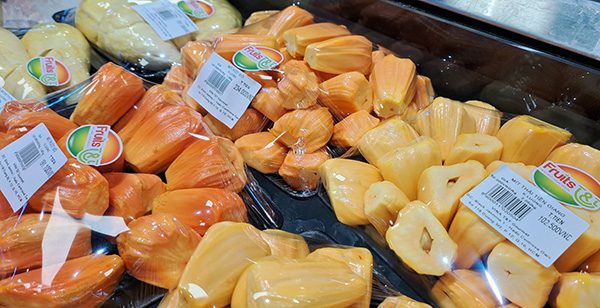
In this context of looming food shortages, jackfruit emerges as a viable alternative. Jackfruit trees are resilient and can thrive in harsh environmental conditions, thanks to their deep root systems that enable them to access moisture from deeper soil layers, allowing them to endure prolonged droughts. These trees are adaptable to various soil types, including clay, sandy, and humus soils. Moreover, jackfruit trees have an impressive lifespan of 20 to 200 years, yielding 35-40 fruits per crop and potentially 80-150 fruits annually.
One of the main strengths of jackfruit is its nutritional value. Adults only need 10-12 fresh jackfruit segments to meet their energy needs for each meal. Rich in vitamin C, fiber, and essential minerals, jackfruit supports immune function and digestive health. Additionally, young jackfruit can be processed into a meat substitute that mimics the texture of animal meat while being lower in cost and environmental impact.
Economic Potential and Jackfruit Products
Jackfruit’s versatility further solidifies its status as a potential solution to food insecurity. Ripe jackfruit can be consumed fresh or processed into popular snacks like dried jackfruit, which is gaining traction among consumers globally. Furthermore, jackfruit seeds can be ground into flour, providing a unique ingredient for baking and enhancing nutritional content. Recent studies indicate that products such as vegetarian jackfruit meat, dried jackfruit, and jackfruit seed flour are attracting interest from international consumers, paving the way for export opportunities for jackfruit-producing countries like Vietnam and Thailand.
In summary, as the world grapples with food insecurity, jackfruit stands out as a resilient, nutritious, and economically viable option that could play a significant role in addressing the global food crisis.
See further: Type of Jackfruit: Frozen, Fresh, Dried. Which is the best?
Why is Young Jackfruit Popular in the Global Vegan Market?
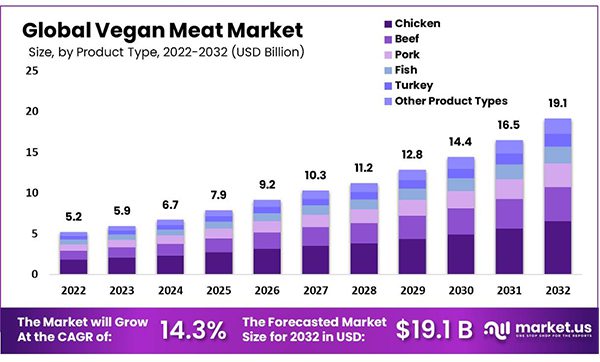
The global vegan meat market is experiencing remarkable growth, projected to surge from USD 5.2 billion in 2022 to USD 19.1 billion by 2032, with a compound annual growth rate (CAGR) of 14.3% between 2023 and 2033. This significant expansion is largely driven by evolving consumer habits, fueled by increasing health concerns, environmental awareness, and ethical considerations regarding animal welfare. Within this booming market, young jackfruit is gaining considerable popularity due to its unique properties that make it an ideal plant-based meat substitute.
In the United States, sales of plant-based foods have surged from USD 4.8 billion in 2018 to USD 8 billion in 2022, marking a 66% increase. While many consumers do not transition to a vegetarian diet overnight, they often replace familiar meat-based meals with plant-based alternatives. Their motivations for adopting a vegetarian lifestyle typically include health benefits, environmental sustainability, and ethical concerns. However, cravings for traditional meat dishes can make it challenging to maintain this lifestyle, making vegan meat products an appealing solution.
Vegan meat not only replicates the familiar textures and flavours of meat dishes but also aids vegetarians in sustaining their new lifestyle without completely sacrificing their preferred tastes. In the U.S., popular vegan meat products include vegan burgers and vegan chicken nuggets, which often feature plant-based protein sources such as soy, peas, wheat, mushrooms, and nuts. However, with the current food situation changing, the world is forced to find other solutions to make plant protein.
Young Jackfruit: A Potential Alternative
In this context, young jackfruit is emerging as a viable alternative to traditional meat ingredients. It offers several distinct advantages:
- Meat-like Texture: When cooked, young jackfruit has a soft, chewy texture that closely resembles shredded chicken or pork, making it easier for consumers to transition to a vegetarian diet.
- Neutral Flavor: With its mild taste, young jackfruit readily absorbs spices and sauces, allowing for creative culinary applications across various rich dishes.
- Nutritional Benefits: Young jackfruit is a healthful choice, being low in calories, free of saturated fat and cholesterol, and rich in fiber, vitamin C, potassium, and magnesium.
Currently, young jackfruit is becoming an essential ingredient in vegetarian dishes at notable restaurants such as Karana, Jack & Annie’s, and The Jackfruit Company. Several fast food chains are also incorporating young jackfruit into their menus; for instance, McDonald’s has tested young jackfruit dishes, while Mexican restaurants are popularizing young jackfruit tacos.

According to the EU-America Market Department of Vietnam (Ministry of Industry and Trade), the growing trend of plant-based proteins is drawing attention to Vietnamese young jackfruit products from European importers. Vietnam benefits from free trade agreements that have reduced export taxes on young jackfruit to the U.S. and EU to 0%, presenting a significant opportunity for the country to expand its market for young jackfruit, especially since 90% of jackfruit exports are currently fresh and primarily directed to China.

Additionally, U.S. companies like The Jackfruit Company have established long-term contracts with Indian farmers for annual supplies of young jackfruit, opening avenues for Vietnamese farmers to engage in this supply chain. Enhancing young jackfruit production could empower farmers in Asian countries, including Vietnam, to escape poverty and restore areas that were previously cleared for agriculture.
Conclusion
The global jackfruit market holds significant potential, particularly in the context of rising food insecurity and shifting consumer preferences toward plant-based diets. As a versatile and nutritious fruit, jackfruit can serve as a viable solution to the challenges posed by climate change and increasing food demand. Its adaptability to harsh environmental conditions and high nutritional value position it as an alternative food source in the face of global food shortages.
Young jackfruit, in particular, is emerging as a promising ingredient in the growing vegan meat market, driven by health, environmental, and ethical motivations. Its meat-like texture, neutral flavor, and rich nutritional profile make it an ideal substitute for traditional meat products, catering to the demands of both vegetarian and flexitarian consumers.
Read more: Top Countries for Jackfruit Export: A Global Overview


