VnCommEx
Hợp tác xuất khẩu SUBSCRIBE
VnCommEx
Hợp tác xuất khẩu SUBSCRIBE
  • VCE
  • Product Catalogue
  • Market Insight
    • Wood & Furniture
    • Garment & Footwear
    • Food & Spicy Industry
    • Fruit & Vegetable
    • Others
    • Market Insights
  • Vietnam Market
    • Vietnam Commodity Market Price
    • Vietnam Export Data
    • Vietnam in FTA
  • Publication
  • About Us
  • English
    • 中文 (中国)
    • Tiếng Việt
VnCommEx
VnCommEx
  • VCE
  • Product Catalogue
  • Market Insight
    • Wood & Furniture
    • Garment & Footwear
    • Food & Spicy Industry
    • Fruit & Vegetable
    • Others
    • Market Insights
  • Vietnam Market
    • Vietnam Commodity Market Price
    • Vietnam Export Data
    • Vietnam in FTA
  • Publication
  • About Us
  • English
    • 中文 (中国)
    • Tiếng Việt
All Right Reserved. Designed and Developed by PenciDesign
Fruit & Vegetable

Desiccated Coconut: Uses in Food Industry & Health Benefits

by Henry Truong January 12, 2025
written by Henry Truong

Desiccated coconut is made from coconut meat, ranking as one of the top coconut products produced and exported, second only to coconut oil. The production process involves the following key stages:

  1. Cleaning: Removal of the hard shell, thin skin, and any impurities.
  2. Grating: Coconut meat is shredded into fine, medium, or coarse particles.
  3. Drying: Moisture is extracted through drying, enhancing shelf life.
  4. Processing: Retaining the natural flavour, colour, and nutritional value.

This product is known for its distinct aroma, rich taste, and nutritional content, including fiber, vegetable fats, vitamin E, and minerals. It is commonly used in cooking, confectionery, and processed foods.

How is Desiccated Coconut Classified?

Desiccated coconut is primarily classified based on its particle size and its intended application, allowing for diverse uses across various industries and culinary practices.

By Size:

  • Fine: Small, smooth particles ideal for the confectionery industry, including cakes, candies, and jams.
  • Medium: Larger particles, suited for cooking or cake and dessert decoration.
  • Coarse: Larger pieces, commonly used in food processing or as toppings in bulk kitchens.

By Use:

  • Household: Typically used as a cooking ingredient or in desserts.
  • Industrial: Widely used in confectionery, jams, and processed food production.
  • Food Service: Provided to collective kitchens, restaurants, and catering services.

Desiccated coconut continues to play a significant role in both domestic and international markets, thanks to its versatility and growing demand for natural, healthy ingredients.

What are the Main Uses of Desiccated Coconut?

How is Desiccated Coconut Used in Confectionery?

Desiccated coconut is a highly versatile ingredient with extensive applications across the food industry, from enhancing the flavor and texture of confectionery to enriching savory dishes and beverages.

  • Confectionery Fillings: Desiccated coconut is often used as a key ingredient in fillings for cakes, candies, moon cakes, and coconut jam. Its natural flavor adds richness and aroma to these products, enhancing the overall sensory experience.
  • Coconut Candy: This product relies on desiccated coconut for its crunchy texture and mild sweetness. It is particularly popular in tropical regions and has a long-standing tradition in many countries.
  • Cakes and Sponge Cakes: In cakes, desiccated coconut is either mixed into the dough or used as a decorative topping, contributing to a unique fat profile and adding aromatic depth.
  • Jam Products: Desiccated coconut is included in jams, such as coconut jam or fruit jams, providing a chewy texture while boosting the product’s nutritional content and flavor.

What are the Food Processing Applications of Desiccated Coconut?

Desiccated coconut is not only essential for sweet treats but also finds a place in savory dishes and diverse food products.

  • Asian Cuisine: In various traditional Asian dishes, desiccated coconut is used in curries, coconut rice, and stir-fries. It imparts a rich coconut flavor and additional fats that enhance the overall taste and texture.
  • Middle Eastern Cuisine: Desiccated coconut is a popular ingredient in Middle Eastern desserts like halva and coconut ice cream, as well as in fillings for sweets such as baklava, contributing to a sweet, chewy texture.
  • Processed Foods: It is a versatile addition to processed foods such as soups, salads, puddings, and sweet soups, where it improves the flavor profile and provides a nutritional boost.
  • Coconut Milk and Alternatives: Desiccated coconut is a key ingredient in the production of coconut milk, as well as dairy substitutes suitable for vegans or those following specific dietary regimes.

Can Desiccated Coconut Be Used in Beverages?

Yes, desiccated coconut is increasingly used in a variety of beverages, where it adds a unique flavor profile and nutritional value. It can be found in products like canned coconut water, smoothies, and cocktails, imparting a creamy texture and natural fats that enrich the drink’s overall flavor and mouthfeel.

What Other Processed Products Use Desiccated Coconut?

Desiccated coconut is a valuable ingredient in a wide range of other processed food products, extending its utility beyond traditional culinary applications by offering both flavor enhancement and beneficial fiber content.

  • Bread and Cereals: It is used in bread, breakfast cereals, and baked goods like granola, boosting flavor, fiber content, and contributing to a more satisfying texture.
  • Snacks and Processed Foods: Desiccated coconut is also a popular ingredient in snacks, such as cereal bars and energy bars, where it adds a crunchy, nutrient-rich coating.

What are the Nutritional Benefits of Desiccated Coconut?

Desiccated coconut offers a wealth of nutritional benefits, making it a valuable addition to a healthy diet. It is particularly known for being a significant source of healthy fats, dietary fiber, essential vitamins, and minerals.

Natural Fiber: Desiccated coconut is an excellent source of dietary fiber, which supports digestive health by strengthening the digestive system, enhancing bowel function, and preventing constipation. The fiber also helps maintain satiety, promoting weight control and stable blood sugar levels.

Vitamins and Minerals: Desiccated coconut contains essential vitamins and minerals, including:

  • Vitamin C: An immune booster and antioxidant, vitamin C helps protect the body from oxidative stress and cell damage.
  • Vitamin E: Known for its antioxidant properties, it supports skin health and fights aging.
  • Calcium and Magnesium: These minerals are crucial for the development and maintenance of strong bones and joints.
  • Potassium: Helps regulate blood pressure, supporting overall heart health.

Antioxidants: Desiccated coconut contains antioxidants such as polyphenols, which help protect cells from damage caused by free radicals. These antioxidants are important for fighting aging and reducing the risk of chronic diseases.

Gluten-Free and Suitable for Vegetarians: As a naturally gluten-free product, desiccated coconut is suitable for those following vegetarian or vegan diets. This broadens dietary options, making it a versatile ingredient for people with specific dietary needs.

Desiccated coconut offers a rich combination of healthy fats, fiber, vitamins, minerals, and antioxidants, providing numerous health benefits and making it a valuable addition to a balanced diet.

Why Should You Use Desiccated Coconut in Recipes?

Using desiccated coconut in recipes offers numerous advantages, from enhancing flavor and texture to providing significant health benefits and convenience. Its versatility makes it a valuable ingredient for a wide array of culinary creations.

Versatility in Cooking: Desiccated coconut is incredibly versatile and can be used in a wide range of dishes, from sweet treats to savoury meals and vegetarian dishes. It can be incorporated into fillings, coconut milk, soups, salads, and even used as a topping for desserts like coconut pudding. It’s also a great addition to ready-to-eat meals or fast foods like smoothies, granola, and cereals, making it a convenient ingredient for quick, healthy meals.

Convenient and Easy to Store: One of the key advantages of desiccated coconut is its convenience. With a long shelf life due to the drying process, it doesn’t require refrigeration and can be stored for extended periods without compromising its quality. Using desiccated coconut saves time in cooking since it eliminates the need to process fresh coconut, such as grating or squeezing out water, making it a time-efficient ingredient.

Benefits for Diets: Desiccated coconut is rich in healthy fats, particularly medium-chain triglycerides (MCTs), making it an excellent choice for low-carb and ketogenic diets. It provides stable calories and a source of vegetable fat, which is ideal for replacing animal fats. Additionally, coconut’s high fiber content promotes satiety, helping to control appetite and support weight management.

Making Vegetarian and Vegan Dishes: For vegetarians and vegans, desiccated coconut is a valuable ingredient that provides healthy fats and essential nutrients without the need for animal products. It can be used in a variety of vegetarian dishes, including coconut rice, vegan coconut ice cream, or coconut milk, adding richness and flavour to plant-based meals.

Incorporating desiccated coconut into recipes not only enhances flavour and texture but also provides numerous health benefits, making it a versatile and nutritious addition to any diet.

Conclusion

Coconut meat is the primary and most valuable part of the coconut, offering significant nutritional benefits and added value. While products like virgin coconut oil and coconut milk command the highest market value, desiccated coconut meat—though not as valuable—has a substantial market presence and relatively high added value compared to many other coconut-based products.

Desiccated coconut meat plays an important role in enhancing product value within the coconut industry. It contributes to the growth of the coconut value chain, boosting the overall value of coconuts, and providing broader economic and social benefits.

January 12, 2025 0 comment
0 FacebookTwitterLinkedinWhatsapp
Fruit & Vegetable

Desiccated Coconut Production: Ensuring Quality and Safety

by Henry Truong January 10, 2025
written by Henry Truong

Producing high-quality desiccated coconut involves a meticulous, multi-stage process, from selecting fresh, mature coconuts to precise drying and packaging, all while adhering to strict food safety standards. Each step is carefully managed to preserve the natural flavor and nutritional value of the coconut, ensuring a safe and premium product for global markets. This article details the entire production journey, covering material inspection, crushing, sterilization, drying, and final packaging and storage.

How are raw coconuts selected and prepared for desiccated coconut production?

  • Coconut Meat Selection: The coconut meat must be carefully chosen to ensure it is fresh, clean, and free from damage or signs of contamination. Only mature, high-quality coconuts are selected for processing.
  • Cleaning: After selection, the coconut meat undergoes a thorough cleaning process to remove any dirt or impurities.
  • Microbiological Treatment: The coconut meat is bleached and soaked in a microbiological treatment solution to eliminate any bacteria or pathogens that could affect product quality.
  • Final Washing: After the treatment, the coconut meat is washed again to ensure that no chemicals or bacteria remain.

What happens during the coconut crushing stage?

  • After thorough cleaning and treatment, the coconut meat is precisely crushed into particles. The size of these particles—whether large, medium, or small—is determined by specific customer requirements and the intended application of the desiccated coconut in various food industries.

Why are sterilization and drying crucial for desiccated coconut?

  • Sterilization: The coconut meat is sterilized at a temperature of 100°C to kill bacteria, fungi, and harmful agents, ensuring the product is safe for consumption.
  • Drying: After sterilization, the coconut is placed into a drying system where its moisture content is reduced to 3% or less. This drying process extends the shelf life of the desiccated coconut without compromising its quality.

How many raw coconuts are needed to produce desiccated coconut?

  • To produce one ton of desiccated coconut, a significant amount of raw material is needed, typically requiring approximately 2.3 to 2.5 tons of raw coconuts. This translates to about 4,500 to 5,000 dry coconuts, as 1,000 dry coconuts generally yield around 500 kg of coconut meat. The recovery rate can vary based on factors like the age, hardness, thickness, and freshness of the coconut meat, as well as the efficiency of peeling and pre-processing.
  • The recovery rate depends on factors like the age, hardness, thickness, and freshness of the coconut meat. Proper peeling and pre-processing also impact the overall recovery rate.

What are the key quality standards for desiccated coconut?

After the production process, desiccated coconut must meet stringent technical standards to ensure its quality, safety, and suitability for various applications. These standards cover particle size, chemical and microbiological properties, color, flavor, and packaging specifications, all designed to deliver a premium product to the market.

  • Particle Size: Can be adjusted to large, medium, or small particles depending on customer specifications.
  • Chemical and Microbiological Properties:
    • Fat Content: 65% ± 5%
    • Moisture Content: Maximum 3%
    • Fatty Acids: Maximum 0.3%
    • E. Coli and Salmonella: Both should be negative.
    • Aflatoxin: None present.
  • Color: Natural white with no spots or foreign agents.
  • Flavor: Sweet, mild, characteristic coconut flavour with no off-putting smell.
  • Packaging: Desiccated coconut is packaged in PE, Kraft paper, or PP bags. Branding and coding can be customized according to customer or importing country requirements. Common packaging weights include 5 kg, 10 kg, 25 kg, and 50 kg.

How is desiccated coconut packaged and transported to maintain quality?

  • Packaging: Once desiccated coconut meets all required quality standards, it is carefully packaged under strict hygienic conditions to prevent any contamination. The packaging is specifically designed to protect the product from moisture and other environmental factors, ensuring its integrity during storage and transportation. For transportation, desiccated coconut is kept in dry, cool conditions, away from direct sunlight, to maintain its quality over long periods.
  • Transportation: Desiccated coconut is transported in dry, cool conditions, avoiding direct sunlight to maintain quality during long-term storage and transport.

How can you choose and store desiccated coconut for the best quality?

  • Check the Color: High-quality desiccated coconut should have a natural white or ivory color. Avoid products that are yellow, gray, or spotted, as these colors may indicate spoilage or prolonged exposure to light.
  • Check the Smell: The coconut should have a characteristic mild and slightly sweet coconut aroma. If there is a musty or strange smell, it could indicate that the coconut has been poorly stored or gone rancid.
  • Check the Humidity: The moisture content of desiccated coconut should be very low, ideally less than 3%. If the coconut feels too soft, sticky, or wet, it may not have been dried properly, which can affect its quality and shelf life.
  • Note the Production and Expiry Dates: Always check the production date and expiry date on the packaging to ensure you are purchasing a fresh product. Desiccated coconut typically has a shelf life of 12-18 months from the production date.

What are the best ways to store desiccated coconut at home?

  • Store in a Cool, Dry Place: Store desiccated coconut in a cool, dry place at room temperature (around 20-25°C). Avoid exposing it to direct sunlight or placing it in areas with high humidity, such as near the stove or in a damp refrigerator.
  • Store in an Airtight Container: After opening the package, transfer the desiccated coconut to an airtight container or ziplock bag. This will help protect it from moisture, air, and bacteria, preserving its freshness and flavor. If you don’t use it all, pack it tightly to minimize exposure to contaminants.
  • Store in the Refrigerator (If Necessary): If you live in a humid or hot climate, storing desiccated coconut in the refrigerator can help maintain its dryness and freshness. However, ensure the package is tightly sealed to prevent moisture from entering. Keep in mind that refrigerated desiccated coconut may not last as long as when stored at room temperature.
  • Use Within a Short Time After Opening the Package: Even though desiccated coconut has a long shelf life, it is best to use it within 2-3 weeks after opening to ensure the best quality and flavour.

The production process of desiccated coconut requires precision and strict adherence to quality standards. Proper selection, processing, and storage ensure the product is not only safe but also retains the unique flavour and nutritional benefits of coconut. By following key tips for selecting and storing desiccated coconut, consumers can enjoy a high-quality product that maintains its freshness and quality for an extended period.

See more:

  • Refined and Virgin Coconut Oil: A Comprehensive Comparison
  • Top Coconut Exporting Countries: Market Landscape
January 10, 2025 0 comment
0 FacebookTwitterLinkedinWhatsapp
Garment & Footwear

Tech Packs: The Essential Guide for Garment Manufacturers

by Henry Truong January 9, 2025
written by Henry Truong

The rise of technology has levelled the playing field, allowing small and medium-sized enterprises (SMEs) to break free from the pressure of price and market domination by larger players. Tools like e-commerce, social media, KOLs, and livestreams enable these businesses to compete on creativity rather than size.

However, the ease of reaching users brings new challenges to production. Today’s product development requires balancing speed, quality, and cost—a complex task. In the garment industry, creating a product goes beyond design; it involves a detailed, coordinated process that requires input from multiple departments and specialized skills. Without clear agreements between buyers and factories, it’s tough to ensure the final product meets all brand standards. To address this, businesses must rely on precise technical specifications and production documents to ensure every detail aligns with the original vision.

This article will help you better understand Tech Packs, how to create them, and how to use them effectively when working with garment factories in Vietnam.

Why did Tech Packs become so important in garment manufacturing?

Tech Packs became a vital part of the garment industry in the 1990s, coinciding with the surge in outsourcing in the fashion sector. This shift to international production, driven by cost reduction, introduced complex communication challenges due to language, cultural, and operational differences between designers and factories. The Tech Pack emerged as a crucial solution to streamline communication, ensuring consistency and efficiency between designers and manufacturers in a global production environment, where face-to-face discussions were no longer feasible for resolving issues.

Today, Tech Packs are not only essential for large fashion brands but are also widely used by small businesses and independent designers. Thanks to advances in technology, creating and sharing Tech Packs has become easier through design software like Adobe Illustrator, CLO 3D, and platforms like Techpacker.

What are the main benefits of using Tech Packs in fashion production?

Tech Packs play an indispensable role in the garment and fashion production process, offering several key benefits that enhance efficiency, accuracy, and communication across the supply chain.

Ensures Clarity and Accuracy

A Tech Pack is a comprehensive document containing all the essential details about a product, including design, materials, color, size, technical specifications, and finishing methods. It minimizes misunderstandings between designers and manufacturers, ensuring the final product aligns with the original concept.

Saves Time and Costs

An accurate and complete Tech Pack helps prevent production errors, reducing the need for revisions and additional costs. Factories can use the document to standardize the process, making each stage more efficient.

An Effective Communication Tool

Tech Packs serve as a “common language” between design teams and factories, especially when the parties are located in different countries. This document offers precise information, enabling teams to coordinate effectively with fewer exchanges.

Supports Production and Quality Management

Tech Packs enable businesses to track every stage of the production process and assess product quality based on established standards. This ensures consistency in quality, particularly during large-scale production runs.

What essential information should a Tech Pack include?

A Tech Pack (Technical Package) is a comprehensive document that provides all the essential information and detailed instructions for manufacturing a garment or fashion product. To ensure clarity and precision throughout the production process, a Tech Pack typically includes the following key sections:

1. General Information

  • Product Name: Used for easy identification of the product.
  • Product Code: A unique code to track the product in the management system.
  • Season and Year: Specifies the launch time of the product (e.g., Spring/Summer 2024, Fall/Winter 2024).
  • Designer Information: Includes the name and contact details of the designer or company responsible for the design.
  • Manufacturing Contact Information: Details of the factory or party responsible for manufacturing the product.

2. Flat Sketch

  • Technical Sketch: A 2D flat drawing of the product that shows all key angles (front, back, side) to provide a clear visual representation of the garment.
  • Additional Details: Close-up views of specific areas such as the collar, pockets, buttons, zippers, or any unique design elements, offering a more detailed explanation of the construction and design features.

3. Measurement Specs

A detailed size chart for the product, including:

  • Overall Dimensions: Key measurements such as length and width of the garment.
  • Specific Parts: Measurements for individual areas like sleeve length, shoulder width, waist, chest, and hem.
  • Tolerance: Tolerance levels (e.g., ±0.5 cm) to account for small variances during production.

Since there is no universal size standard for clothing (as different brands and demographic groups require different sizes), size charts based on body measurements aim to streamline the selection process but are not perfectly accurate due to variations in individual body types. To ensure maximum customer satisfaction, it is important to provide body measurement-based specifications, including:

  • Clothing Length
  • Outseam Length (for pants)
  • Shoulder Width
  • Chest Width
  • Waist Width
  • Hip Width
  • Front and Back Height (for pants)
  • Sleeve Hole Width
  • Wrist Width
  • Neck Width

4. Material Specifications

  • Fabric Type: Specifies the type of fabric used, such as cotton, polyester, denim, etc.
  • Weight: Indicates the fabric weight in GSM (grams per square meter), which helps in understanding the fabric’s thickness and durability.
  • Color: Provides the color code in Pantone, RGB, or CMYK to ensure consistency in color matching during production.
  • Sourcing: Includes the name of the fabric supplier, if available, to track the origin of the material.

5. Colorways & Print Details

  • Colors: Different color versions of the product, with specific color codes.
  • Printing Details: Type of print (silkscreen, heat transfer, digital), along with print location and size on the garment.
  • Patterns: Attach design files of patterns if available to ensure print alignment.

6. Trims & Accessories

  • Accessories List: Includes items like buttons, zippers, labels, tags, and hang tags.
  • Size and Material: Specifications for each accessory, including its size and material composition.
  • Location: Specifies where each accessory will be applied on the product.

7. Construction Details

  • Sewing Instructions: Specifies the stitch type to be used, such as double stitch, hidden thread, or overlock.
  • Special Techniques: Any special requirements such as gluing, folding edges, or unique stitching techniques.
  • Lining: Description of the lining fabric and how it should be attached to the garment.

8. Labels & Tags

  • Main Label: Contains brand name, size, and material.
  • Secondary Labels: Includes washing instructions and the place of manufacture.
  • Hangtags: Design and details on where the hangtags should be attached on the product.

9. Packaging Instructions

  • Folding Method: Instructions on how the product should be folded (e.g., straight fold, roll, or hang).
  • Packaging Material: Specifies the type of packaging material, such as nylon bags, paper boxes, or cardboard.
  • Packaging Size: Ensures that the packaging is the appropriate size for shipping and storage.

10. Illustrative Image Materials

  • Mockups: Digital illustrations or actual photos of the finished product.
  • Reference Images: Images from similar products, used for comparison or to provide visual reference for construction and design.

Conclusion

While it’s possible to begin garment production without a Tech Pack, manufacturers can proceed without it. However, doing so means you lack a crucial “map” to guide the production process. Think of the Tech Pack as a project checklist: when everything runs smoothly, it may seem unnecessary, but when issues arise, it becomes the essential tool for safeguarding quality and ensuring manufacturers uphold their commitments. A well-detailed Tech Pack serves not only as the foundation for quality control but also as the key to executing an efficient production strategy. It helps you create products quickly, maintain high quality, and achieve cost-effectiveness—all while keeping production aligned with the original vision.

See more:

  • 5 Ways to Reduce Manufacturing Risks in Vietnam
  • Vietnam’s textile & garment export situation before President Trump took office
January 9, 2025 0 comment
0 FacebookTwitterLinkedinWhatsapp
Vietnam Commodity Market Price

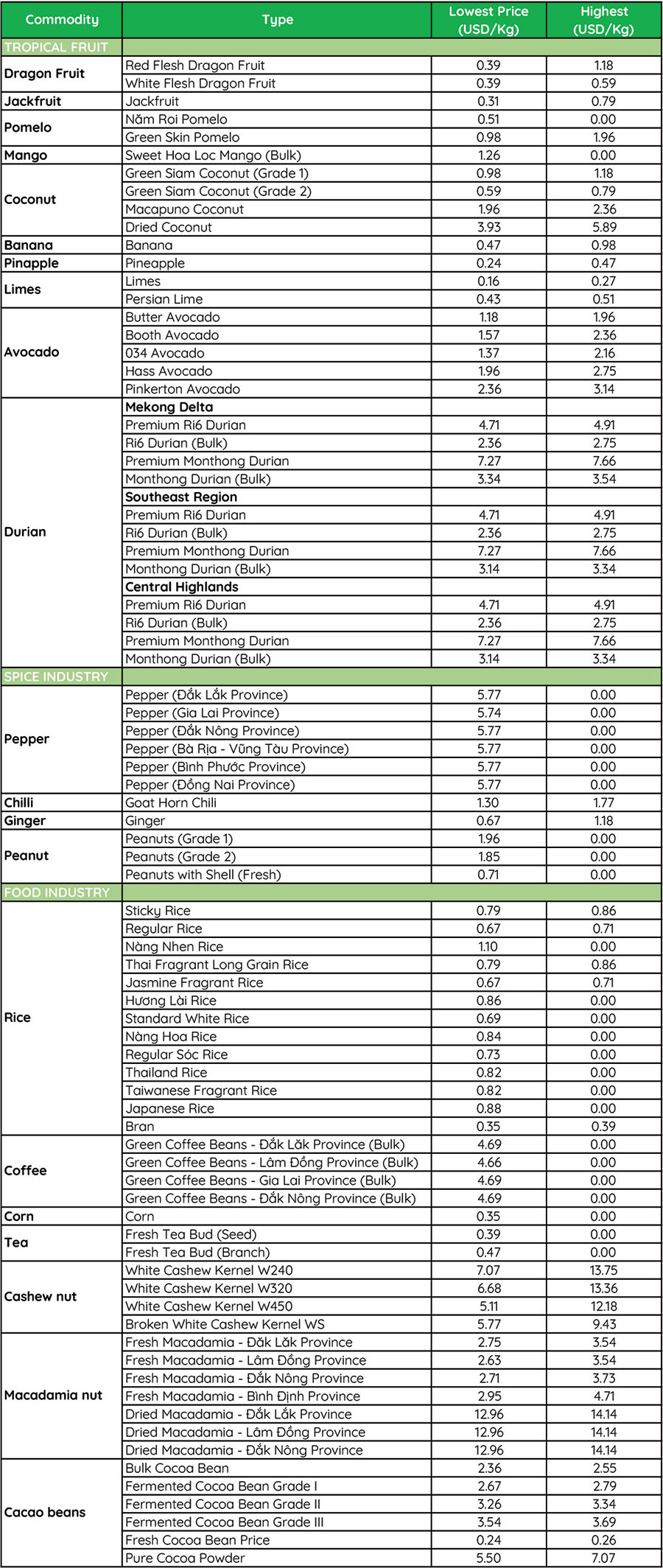
Vietnam Agriculture Food Price From January 2nd – 7th, 2025

by Henry Truong January 7, 2025
written by Henry Truong

Note: This price is the Vietnam domestic market price (Exchange rate January 7th, 2025). Please contact us if you want to know the EXW, FOB, or CNF prices.

Source: Department of Industry and Trade or Department of Agriculture of provinces in Vietnam


See more:

  • Vietnam Agriculture Food Price From December 23th, 2024 – January 2nd, 2025
  • Vietnam Agriculture Food Price From December 16th – 22nd
  • Vietnam Agriculture Food Price From November 18th – 25th
  • Vietnam Agriculture Food Price From November 11th – 17th
January 7, 2025 0 comment
0 FacebookTwitterLinkedinWhatsapp
Fruit & Vegetable

Refined and Virgin Coconut Oil: A Comprehensive Comparison

by Henry Truong January 6, 2025
written by Henry Truong

Coconut oil, extracted from the meat of the coconut, has long been a staple in coconut-growing cultures. It is an efficient and valuable product with an extraction rate of 620-625 kg of oil per ton of coconut meat. Known for its high content of saturated fatty acids, particularly 50% lauric acid, coconut oil offers several potential health benefits.

What are the main uses and applications of coconut oil? 

Coconut oil is a highly versatile product, serving diverse needs across multiple industries due to its unique properties. It comes in various forms, each tailored for specific applications.

  1. Beauty and Body Care: Coconut oil’s moisturizing and antibacterial properties make it a favourite in natural cosmetics.
  2. Food: It is widely used in cooking, especially for traditional dishes and health-conscious eating.
  3. Industrial Use: Coconut oil is a key ingredient in soaps, lubricants, and other industrial products.

In the 2022/23 period, global coconut oil exports reached 2.18 million tons, reflecting a 0.20 million ton increase from the previous year. Countries like the Netherlands import coconut oil not only for consumption but also for refining and re-exporting, while most other nations use it for industrial or food purposes.

How is coconut oil extracted and what types are available? 

Coconut oil is extracted using various techniques, each yielding oils with distinct properties and applications. These methods influence the final product’s characteristics, from its purity to its nutritional content.

  • Dry Extraction (Dry Process): This method uses dried coconut meat and is typically used for industrial applications.
  • Wet Extraction (Wet Process): This method extracts oil from fresh coconut milk, producing high-quality oil suitable for food and cosmetics.

The main types of coconut oil on the market include:

  • Traditional Coconut Oil: Commonly used for cooking and beauty.
  • Virgin Coconut Oil is known for its health benefits and is used in wellness products.
  • Coconut Oil from Dried Shredded Coconut: Ideal for industrial applications.
  • Refined Coconut Oil: Widely used in food processing.

This article explores the differences between these types of coconut oil and helps determine which is best suited for your business and needs.

What are the key differences between refined and unrefined coconut oil?

The primary distinction in coconut oil lies between its refined and unrefined forms, each offering unique benefits and ideal uses across food, cosmetics, and industrial applications. Understanding these differences is crucial for businesses to select the most suitable type for their specific needs.

1. Extraction and Processing Process

  • Unrefined Coconut Oil (Virgin Coconut Oil – VCO): Unrefined coconut oil is extracted from fresh coconut meat through cold pressing or hot pressing methods, without any chemical treatments. This process preserves the natural nutrients found in the coconut, such as vitamin E, lauric acid, antioxidants, and essential fatty acids. As a result, unrefined coconut oil retains its distinctive coconut aroma and has an opaque, slightly cloudy appearance. This type of oil is considered to be of higher quality due to its minimal processing, making it rich in beneficial compounds.
  • Refined Coconut Oil: Refined coconut oil is made by extracting oil from either fresh or dried coconut meat. It undergoes a series of processing steps, including filtering, bleaching, deodorizing, and deacidification. These processes remove impurities, colour, and the characteristic coconut scent. The final product is a clear, odourless oil that has a neutral flavour, making it ideal for cooking and use in products where the coconut flavour is not desired. While this oil has fewer natural nutrients due to the refining process, it is still a stable and versatile option.

2. Properties and Composition

Unrefined Coconut Oil:

    • Odour and Color: Unrefined coconut oil is typically pale yellow or clear, with a strong, natural coconut aroma.
    • Nutrients: It is rich in vitamins, minerals, and antioxidants, particularly lauric acid, known for boosting the immune system and reducing inflammation. The oil retains many of the coconut’s natural nutrients.
    • Quality: Unrefined coconut oil is prone to oxidation and decomposition when exposed to heat. It may contain impurities if not stored properly, as it is not chemically processed.

Refined Coconut Oil:

    • Odour and Color: Clear or pale yellow, refined coconut oil is odourless, making it ideal for use in food and cosmetic products where the coconut flavour or smell is unwanted.
    • Nutrients: While it maintains basic benefits, some natural nutrients like vitamin E and phenolic compounds are reduced during processing.
    • Quality: Refined coconut oil is more stable, resistant to oxidation, and can be stored for longer periods without deterioration. It is more suitable for food processing and cosmetic production, where stability is important.

3. Applications

Unrefined Coconut Oil:

    • Food: Ideal for cooking dishes where a coconut flavour is desired, particularly in vegetarian or organic food processing.
    • Cosmetics and Body Care: Frequently used in skin care products, shampoos, and conditioners due to its moisturizing, antibacterial, and anti-inflammatory properties.
    • Health Care: Popular in folk remedies for skin issues such as dermatitis, burns, and dry skin.

Refined Coconut Oil:

    • Food: Widely used in the food industry for frying, baking, and processed foods, where its lack of flavour is beneficial.
    • Cosmetics: Common in lotions, sunscreens, soaps, and hair care products because of its stability and non-irritating properties.
    • Industry: Utilized in industrial soap production and biodiesel manufacturing due to its sustainability and biodegradability.

4. Advantages and Disadvantages

Unrefined Coconut Oil:

    • Advantages:
      • Retains natural nutrients and health benefits.
      • Strong coconut aroma, perfect for organic or natural products.
    • Limitations:
      • Strong odour and colour may not suit all applications.
      • Prone to oxidation and has a shorter shelf life, requiring careful storage.

Refined Coconut Oil:

    • Advantages:
      • High stability, long shelf life, and odourless.
      • Ideal for processed foods and industrial products.
    • Limitations:
      • Loses some nutrients and its characteristic aroma.
      • The refining process reduces the nutritional value of the oil.

Both unrefined and refined coconut oil offer unique benefits tailored to different applications. If you seek a natural, nutrient-rich product with a strong coconut aroma, unrefined coconut oil is the ideal choice. It retains the full spectrum of nutrients, making it perfect for personal care products and health-related uses. On the other hand, if stability, odorlessness, and suitability for industrial applications are your priorities, refined coconut oil is the best option. It is more stable, has a longer shelf life, and is favoured for processed foods and cosmetic formulations.

Ultimately, the decision between unrefined and refined coconut oil depends on your specific needs, personal preferences, and the requirements of your industry.

Criteria

Refined Coconut Oil

Virgin Coconut Oil

Production Process

Refined through heat and chemical treatments to remove impurities

Cold pressed from fresh coconut meat, preserving natural smell and nutrients

Odor and Color

Odorless with a bright, transparent colour

Retains the characteristic coconut aroma, light yellow or opaque colour

Applications

Ideal for cooking, industrial food processing

Primarily used in health care, beauty products, and food processing

Nutrient Ingredients

Some loss of nutrients during the refining process

Retains most of its nutrients, including vitamins and natural fatty acids

Storage Time

Highly stable with a long shelf life, easy to store

Requires careful storage as it can oxidize and go rancid more quickly if not used properly

How do I choose between refined and virgin coconut oil for my business?

Choosing between refined and virgin coconut oil for your business depends on several key factors, including the desired production process, odor and color preferences, specific applications, nutrient content requirements, and storage considerations. Each type offers distinct advantages tailored to different industry needs.

Conclusion

Each type of coconut oil has unique applications across different industries:

  • Refined coconut oil is ideal for food processing, particularly for frying and cooking, due to its high heat resistance and neutral flavour. It is also widely used in industrial applications where odour and colour are not critical.
  • Virgin coconut oil is favoured in the cosmetics and healthcare sectors due to its natural benefits for skin, hair, and overall health. It retains most of its nutrients, making it a premium choice for personal care products.
  • Coconut oil pressed from dried grated rice is an excellent option for industrial uses such as soaps, cosmetics, and pharmaceuticals, as it offers high stability and easy storage, making it highly suitable for mass production.

For businesses looking for high-quality coconut oil at competitive prices, Vncommex stands out as a trusted partner. With a commitment to providing pure and safe coconut oil, Vncommex collaborates with 16 large factories in Vietnam to offer solutions tailored to the specific needs of each industry. Whether for food, cosmetics, or pharmaceuticals, we ensure optimal solutions and the best market quotes. Contact Vncommex today to find out how we can help your business succeed with top-quality coconut oil products at competitive prices.

See more: Top Coconut Exporting Countries: Market Landscape


January 6, 2025 0 comment
0 FacebookTwitterLinkedinWhatsapp
Vietnam Commodity Market Price

Vietnam Agriculture Food Price From December 23th, 2024 – January 2nd, 2025

by Henry Truong January 2, 2025
written by Henry Truong

Note: This price is the Vietnam domestic market price (Exchange rate January 2nd, 2025). Please contact us if you want to know the EXW, FOB, or CNF prices.

Source: Department of Industry and Trade or Department of Agriculture of provinces in Vietnam


See more:

  • Vietnam Agriculture Food Price From December 16th – 22nd
  • Vietnam Agriculture Food Price From November 18th – 25th
  • Vietnam Agriculture Food Price From November 11th – 17th
January 2, 2025 0 comment
0 FacebookTwitterLinkedinWhatsapp
Garment & Footwear

5 Ways to Reduce Manufacturing Risks in Vietnam

by Henry Truong January 2, 2025
written by Henry Truong

Small and medium-sized businesses usually focus heavily on finding and developing marketable products. They often choose the most competitive supplier, place an order, and proceed with production without thoroughly addressing potential risks. Many rely on a trip to Vietnam, costing $500–$1,000, to inspect the goods personally. While this approach may help verify quality before shipment and oversee logistics, what happens if the goods don’t meet expectations? Correcting design flaws delays market entry incurs significant opportunity costs, and risks customer trust. Worse, defective products can result in lost payments in advance and the need to restart with a new supplier.

Maybe you will like:

  • Vietnam’s textile & garment export situation before President Trump took office
  • Which countries import the most Vietnamese shoes?

How do DVT, EVT, PVT, and DFM reduce manufacturing risks?

Understanding Key Terms in Product Development

DVT, EVT, PVT, and DFM are critical steps in product development, particularly in electronics and industrial manufacturing. Here’s what each term means:

  • EVT (Engineering Verification Testing): Ensures the concept or idea is viable.
  • DVT (Design Verification Testing): Confirms the design meets specifications.
  • PVT (Production Validation Testing): Validates readiness for mass production.
  • DFM (Design for Manufacturing): Optimizes the design for efficient manufacturing.

Why These Steps Are Game-Changers

Jumping straight into full-scale production is a recipe for disaster. Instead, start small: produce just 3-10% of your units during trial runs (EVT, DVT, PVT) to identify flaws before they snowball into major problems. Early batches often reveal design glitches or uneven quality, especially with inexperienced production teams.

DFM: The Make-or-Break Formula

Here’s a simple rule: Manufacturing – DFM = Failure.
DFM is the foundation of efficient production, reducing errors and saving time. When your design team considers manufacturing constraints upfront, you’ll see fewer defects rolling off the production line.

Never Fully Trust the System

Even the most experienced manufacturers—whether with 5 years or 50—are not immune to mistakes. New staff, changes in equipment, or shifting priorities can compromise quality. On top of that, markets like Europe and the U.S. demand sustainable, eco-friendly practices, adding another layer of complexity.

Stay in Control

  • Test and Verify: Conduct EVT, DVT, and PVT to catch issues early.
  • Design Smartly: Use DFM to optimize for scale and reliability.
  • Keep Watch: Never hand over full control—hire experts or stay involved.

When done right, these processes transform manufacturing chaos into a well-oiled machine. Don’t let preventable mistakes derail your success—master these steps and make your product vision a reality.

What are the best quality control methods for manufacturing in Vietnam?

The best quality control methods for manufacturing in Vietnam begin with a robust Pre-Production Inspection (PPI), which is essential before mass production starts. This step ensures that the supplier’s capabilities, including raw materials, components, and the overall manufacturing process, align precisely with your product requirements. By catching potential issues at this early stage, you can make timely adjustments, saving significant time and money while ensuring your product is built to last from the outset.

Next, as production moves forward, In-Process Production Inspection (DUPRO) comes into play. Conducted when 20-50% of the production is complete, DUPRO is a proactive approach that identifies and addresses errors in real time, preventing defects from snowballing. It’s about refining the process as the product takes shape, ensuring that when the final batch is ready, it meets all required standards.

But what makes a robust quality control process truly effective? The application of established industry standards like ISO, ASTM, HACCP, and national regulations is crucial. But don’t stop there—consider integrating principles from IT project management, where even the smallest glitch can disrupt an entire system. Just as software projects demand meticulous attention to detail, so too should your product manufacturing process. Applying these modern, precise standards to your supply chain ensures every component of your product is carefully vetted and optimized for quality.

Beyond that, you can elevate your process with proven frameworks like PDCA (Plan-Do-Check-Act), Total Quality Management (TQM), Six Sigma, and ISO 9001. These methodologies aren’t just buzzwords—they’re the backbone of continuous improvement, driving quality and consistency across every stage of production.

At the heart of this is the humble checklist—the unsung hero of quality control. Whether in UAT (User Acceptance Testing) or routine production checks, a checklist ensures no step is missed. If even one of the 100 steps is overlooked, the product is far from complete. That’s why your checklists must be meticulously developed from day one, grounded in the insights gained during the design and development phases. And remember: if something gets missed, don’t point fingers—take ownership. Quality control starts with you, and missing a detail can be a costly mistake.

Why shouldn’t I solely trust factory promises in Vietnam?

You shouldn’t solely trust factory promises in Vietnam because, despite claims of robust internal quality control and 0% defect rates, many factories—especially in developing countries—struggle to consistently meet these high standards. Such promises are often competitive tactics used to secure business. For example, a client experienced this firsthand when a supplier promised flawless silk garments but delivered an order with 60% inaccurate prints and fading colors after a single wash, despite the buyer’s advance payment and on-site inspection. This highlights the critical need for buyers to rely on verifiable data and strong contractual safeguards rather than just verbal assurances.

One of my clients experienced this firsthand. They ordered a container of silk garments from a supplier who promised flawless quality, but when the order was completed, 60% of the prints were inaccurate, and the colours faded after a single wash. Despite the buyer visiting Vietnam to inspect the goods and paying 40% in advance, the supplier refused to offer compensation, opting only to reprint the order. This left my client with defective goods that they had to sell at a loss. To make matters worse, the supplier had offered an unbeatable price and the sample garments were perfect. However, once the final product was delivered, it was a completely different story. The factory had lured my client into a false sense of trust, especially since they were so far away, which led to significant problems down the line.

So, how can you minimize the risk and protect your business from similar situations?

Strong Contracts with Payment Protection

One of the most effective ways to safeguard against potential issues is by creating strong, clear contracts that include payment protections. A key strategy is to withhold at least 40% of the payment until User Acceptance Testing (UAT) is completed. This ensures that the delivered product meets your agreed-upon specifications. Additionally, if there are delays, any extensions should be mutually agreed upon with penalties for non-compliance. This forces the supplier to be accountable and minimizes your risk of receiving subpar products.

Rigorous Sample Testing and Ongoing Inspections

The sample testing process is essential and should not be rushed. For instance, if you’re producing 10,000 T-shirts and the factory produces the first 300 with a defect rate of 10% (30 shirts), don’t just accept it. Demand the factory to fix the issue and inspect an additional 200 shirts to ensure the problem is resolved. If the defect rate remains the same, you should ask the factory to revise the process and recheck an additional 100 shirts. If the factory is unwilling or unable to correct the issue in the short term, they might offer to reduce the final invoice by 10%, which shows they acknowledge their fault and are willing to sacrifice some profit to make things right. This gesture reflects goodwill. On the other hand, if the factory resists inspection or refuses to correct defects, don’t hesitate to inspect every item before shipment. Accepting defective goods could cause irreparable damage to your brand, complicate future product development, and make it impossible to claim compensation later.

Negotiation Is Key

Your negotiations with the factory play a crucial role in determining the outcome. Clear and transparent communication, supported by a strong contract and a thorough inspection process, serves as your best defence against the risks of defective products.

While no process is completely foolproof, staying vigilant and relying on data ensures you don’t fall for misleading promises. Always trust the numbers and documented results—not just the factory’s word. This approach helps ensure you get the quality you’ve paid for and minimizes the risk of unexpected issues during production.

Why is it important to use multiple suppliers in Vietnam?

It is important to use multiple suppliers in Vietnam because it offers significant benefits, as demonstrated by global giants like Nike, Decathlon, and Uniqlo, who work with numerous factories. Supplier diversification enhances negotiating power, leading to competitive pricing and continuous improvement from suppliers motivated to secure your business. It also critically mitigates risks, preventing your entire supply chain from being disrupted by issues affecting a single supplier, such as political instability or unforeseen factory stagnation. Furthermore, working with multiple suppliers allows for easier comparison of quality, ensuring consistency and enabling you to choose partners that meet specific criteria like ethical standards or environmental responsibility.

Why Supplier Diversification Is Essential

The idea of working with multiple suppliers is not new, and it’s a strategic approach that helps large companies stay competitive in several ways:

  1. Negotiating Power and Competitive Pricing: When suppliers know they’re not your sole provider, they’re motivated to offer the best prices and continually improve their processes to remain competitive. This encourages cost optimization and helps your business secure the best deals in terms of both pricing and quality.
  2. Risk Mitigation: Relying on a single supplier is risky. If anything happens—political instability, legal changes, or even unforeseen disruptions—that causes one supplier’s factory to stagnate, your entire supply chain could be at risk. Diversifying your supplier base ensures you’re not overly dependent on one source, reducing potential operational disruptions.
  3. Quality and Compliance Assurance: With multiple suppliers, it becomes easier to compare quality and ensure consistency. It also gives you flexibility to choose suppliers that meet specific criteria, such as ethical standards, environmental responsibility, or manufacturing capabilities.

How Decathlon Evaluates Its Suppliers

For large businesses like Decathlon, supplier evaluation goes beyond just price or delivery times. Their comprehensive supplier evaluation system includes:

  • Social Responsibility Evaluation: Ensuring ethical practices, fair labour, and respect for workers’ rights.
  • Environmental Evaluation: Commitment to sustainable and eco-friendly manufacturing processes.
  • Quality Evaluation: Consistency in product quality to meet high standards.
  • Supplier Supply Evaluation: Assessing the reliability and scalability of the supplier’s ability to meet demands.
  • Decathlon Process Requirements: Ensuring suppliers align with Decathlon’s own operational processes and standards.
  • Technical Sharing Projects: Encouraging innovation and technical collaboration.
  • Operational Excellence: Looking for suppliers who demonstrate continuous improvement in efficiency and effectiveness.

For Small and Medium Enterprises (SMEs)

While large enterprises like Decathlon may have a comprehensive evaluation system, SMEs can still benefit from supplier diversification by focusing on three key areas:

  • Technical Capacity: Ensure suppliers have the necessary expertise and technology to meet your production needs.
  • Quality Control: Make quality assurance a non-negotiable part of your supplier contracts.
  • Production Processes: Look for suppliers with well-established, efficient, and scalable processes that align with your needs.

By working with a diverse range of suppliers, small and medium-sized businesses can protect themselves from risks, ensure consistent quality, and leverage competitive pricing, all of which are crucial for long-term success.

How can I build strong, respectful relationships with Vietnamese suppliers?

Building strong, respectful relationships with Vietnamese suppliers requires a balanced approach: maintaining a vigilant, neutral stance while fostering collaboration, rather than outright distrust. It’s crucial to be mindful of how you apply pressure, especially with factories, as this can have unintended consequences. For instance, if your order is small and you appear overly demanding, a factory might prioritize larger clients, leading to delays or corner-cutting. Understanding and respecting cultural nuances, particularly in Asian business settings where social interactions often build trust, is also vital. Participating in invitations for drinks or meals, even briefly, can signal goodwill and strengthen connections, demonstrating your commitment to a long-term partnership.

If your order is small relative to a factory’s larger, more established orders, and if you come across as demanding or unapproachable, the factory may start cutting corners or even push you aside. They might accept your order initially but prioritize a larger, more lucrative one, delaying your shipment for reasons tied to their production priorities—reasons you may not fully understand or have grounds to dispute, especially when it comes to technical constraints.

Cultural considerations are also crucial in building strong relationships with Asian suppliers, especially in Korea, China, Vietnam, and Japan. In these cultures, business discussions often take place over drinks, typically beer or wine, and it’s believed that these social settings foster sincerity. Men in these settings tend to open up more, allowing for deeper conversations. If you’re invited to such gatherings, be ready to join them, even if just for a small drink, to show your goodwill and respect for the relationship. This is not mandatory, but it can create stronger connections and may help you gather useful information.

Factories often extend these invitations to demonstrate their goodwill, so it’s important to reciprocate. Promise to invite them for a meal in return, signalling your intent to build a long-term partnership. By doing so, you can create a positive, collaborative environment that benefits both parties.

Conclusion

Vietnam offers some of the lowest manufacturing costs in the region, positioning it as a potential hub for becoming one of Southeast Asia’s largest manufacturing centres. However, the majority of factories here are small and medium-sized, making quality control a crucial factor when sourcing products. Given the complexity and variety of situations that arise in manufacturing, this is a broad topic that can’t be fully covered in one article. Among the 5 rules discussed, which do you find the most challenging to implement in your case?

See more: Sourcing from China, Vietnam, India, and Bangladesh: Pros and Cons

If you need such a partner, Vncommex is here to help. With our expertise in the local market, marketing, and management, we can assist in streamlining your sourcing process in Vietnam, ensuring you get the best quality at the most cost-effective prices.

January 2, 2025 0 comment
0 FacebookTwitterLinkedinWhatsapp
Vietnam Commodity Market Price

Vietnam Agriculture Food Price From December 16th – 22th

by Henry Truong December 23, 2024
written by Henry Truong

Note: This price is the Vietnam domestic market price (Exchange rate 23rd December). Please contact us if you want to know the EXW, FOB, or CNF prices.

Source: Department of Industry and Trade or Department of Agriculture of provinces in Vietnam

See more:

  • Vietnam Agriculture Food Price From November 18th – 25th
  • Vietnam Agriculture Food Price From November 11th – 17th
December 23, 2024 0 comment
0 FacebookTwitterLinkedinWhatsapp
Garment & Footwear

Vietnam’s textile & garment export situation before President Trump took office

by Henry Truong November 29, 2024
written by Henry Truong

Vietnam continues to solidify its position as a global leader in apparel exports, with significant growth across major markets such as the United States, the European Union, and the Comprehensive and Progressive Agreement for Trans-Pacific Partnership (CPTPP) countries. 

Below is a detailed breakdown of Vietnam’s top-performing apparel categories and their market performance.

What are Vietnam’s top apparel exports to the United States?

Vietnam’s apparel exports to the U.S. are primarily driven by three Harmonized System (HS) codes: HS 61 (knitted apparel), HS 62 (non-knitted apparel), and HS 63 (other made-up textile articles). These categories represent the largest share of Vietnamese garment products entering the American market.

  • HS 61110 (Sweaters and Bras): The largest export category, accounting for 14.6% of total apparel exports.
  • HS 6204 (Women’s or Girls’ Clothing): The second-largest category, representing 13.2% of exports.

Between March 2023 and February 2024, Vietnam exported 33,261 shipments of apparel to the U.S., reflecting a 16% growth year-over-year. This achievement involved 1,998 exporters supplying goods to 5,924 U.S. buyers.

Notably, exports under HS 6307 (Other Made-Up Articles), which includes custom cut-to-measure garments, recorded the strongest growth. In December 2023, shipments under this category surged by an astounding 5033% year-over-year, with 154 shipments sent to the U.S.

Which textile and garment products does Vietnam export most to the EU?

In the first seven months of 2024, Vietnam’s textile and garment exports to the EU were predominantly led by products under HS codes 62 (non-knitted garments) and HS 61 (knitted garments). Together, these two categories accounted for the majority of shipments, highlighting their significance in the Vietnamese export portfolio to the European market.

  • HS 62 (Non-knitted Garments): Dominated the market with 1.17 billion USD in export value, representing 49.94% of total exports.
  • HS 61 (Knitted Garments): Followed closely with 908.89 million USD, accounting for 38.8% of exports.

Notable Products

  • HS 620140 (Overcoats, Riding Coats, etc.): Contributed 170.33 million USD, or 6.15% of total exports.
  • Men’s Synthetic Fiber Pants/Shorts: Held a 5.84% market share.
  • T-shirts: Experienced a 39.72% increase in exports, capturing 5.32% of the market share. Strong demand was observed in Poland, Belgium, Germany, and other EU nations.

See more: Vietnam Textile And Garment Export Value 2011 – 2023

What are Vietnam’s key textile and garment exports to CPTPP countries?

The CPTPP market, comprising 11 member countries, serves as a vital destination for Vietnam’s textile and garment industry. Exports under HS 62 (non-knitted garments) and HS 61 (knitted garments) collectively represent an impressive 93.7% of Vietnam’s total textile and garment exports to these nations, underscoring their importance in this trade bloc.

Top-Performing Categories

The CPTPP includes 11 member countries, and HS 62 and HS 61 (textiles and garments) account for 93.7% of Vietnam’s textile and garment exports to these countries.

Key products include:

T-shirts, tank tops, and similar cotton knitted garments: Largest export group, accounting for:

  • 78% of exports to Japan
  • 7.95% to Canada
  • 4.96% to Australia

Strongly favoured in the CPTPP market, especially in Japan.

Men’s shorts and boys’ trousers (synthetic fibers, non-knitted): The second largest category, making up 6.35% of textile and garment exports to the CPTPP, with 75% of exports going to Japan.

Women’s non-knitted shirts (HS 620690): Although only 0.5% of the market share, this category has increased by nearly 200% in the first five months of 2024. It shows strong potential, particularly in Japan, Canada, and Australia.

What is the current state of Vietnamese textile and garment businesses?

Enterprise Types and Distribution

From 2011 to 2019, private enterprises constituted approximately 90% of Vietnam’s textile and garment sector. However, this proportion has since decreased to 80% as of 2019, largely due to challenges faced by small and medium-sized enterprises (SMEs) in the aftermath of the pandemic. Currently, among the estimated 5,000 businesses in the sector, 88% are classified as micro and small enterprises.

As of 2023, Vietnam is home to about 7,000 textile and garment enterprises. Of these, 80% are small and medium-sized, while more than 10% are foreign-invested enterprises (FDI). The industry employs approximately 3 million workers, with 70% of the workforce focused on production.

Production Types

In terms of production, more than 70% of the textile factories in Vietnam focus on garment production. Only 6% of the factories are involved in yarn production, 17% in fabric production, and 4% in dyeing. This production distribution reflects Vietnam’s strong position as a global garment exporter, especially in the apparel segment, while the other areas, such as yarn and fabric production, remain comparatively smaller in scale.

Overall, the Vietnamese textile and garment industry is resilient and continues to adapt to challenges, with a strong emphasis on garment manufacturing, a growing number of enterprises, and a diversified structure including both local and foreign-invested businesses.

Salary and Income Structure

The basic salary for workers in the Vietnamese textile and garment industry is relatively competitive, averaging around 170 USD per month. However, due to the high demand for production and tight deadlines, regular overtime is a common feature. The typical overtime range for workers is between 47 to 60 hours per month, which contributes an additional 52 USD per person per month, accounting for 22.4% of the total income.

Overall, the average total income of garment workers in Vietnam typically ranges from 200 to 250 USD per month. Skilled and experienced workers can earn significantly more, with salaries for highly specialized roles reaching between 300 to 350 USD per month. These workers typically handle advanced tasks that require more expertise, resulting in higher pay per hour and a more specialized role within the factory.

Where does Vietnam’s garment industry source its raw materials?

Vietnam’s garment industry significantly depends on imported raw materials, as domestic production currently fulfills only about 30% of its total demand. In 2022, the sector imported raw materials valued at 22.99 billion USD. This reliance on imports is a fundamental aspect of the industry’s production structure, especially given the prevalent processing methods in garment manufacturing.

Processing Methods: CMT vs. OEM

  • CMT (Cut-Make-Trim) is the dominant production method in Vietnam’s garment industry, used by 70% of enterprises. Under this method, partners provide 100% of the fabric, and Vietnamese manufacturers focus on cutting, making, and trimming the garments. This method is common among small and medium-sized enterprises, as well as many foreign-invested companies.
  • OEM (Original Equipment Manufacturer), where enterprises self-supply fabric, is employed by nearly 25% of garment businesses, mostly foreign-invested enterprises (FDI). These companies tend to have more control over their supply chains, including sourcing raw materials like fabrics and fibers, which allows for greater flexibility and cost efficiency.

Sources of Raw Material Imports

The primary sources of raw materials for the Vietnamese textile and garment industry are as follows:

  • China is the largest supplier of raw materials to Vietnam, accounting for around 51% of total imports. China provides a wide range of raw materials, including knitted fabrics, cotton yarn, and chemical fibers.
  • South Korea, Taiwan, and Australia are also significant suppliers, though their contributions are smaller compared to China.

Key Imported Raw Materials

The most commonly imported raw materials include:

  1. Knitted and crocheted fabrics: These materials represent 27.1% of Vietnam’s textile raw material imports.
  2. Cotton, cotton yarn, and cotton woven fabrics: Accounting for 24.9% of imports, these materials are essential for producing various types of garments.
  3. Yarn and chemical fiber fabrics: These materials make up 15.1% of imports and are crucial for producing fabrics with a variety of textures and characteristics.
  4. Chemical fiber fabrics: Representing 9.7%, these materials are used to create durable and synthetic fabrics for a wide range of garment types.

Conclusion

Vietnam’s textile and garment industry is poised for significant growth due to favourable factors such as reduced export taxes from 16/19 signed free trade agreements and opportunities arising from geopolitical shifts, particularly in the US market. The US’s efforts to stimulate its economy, coupled with low interest rates, create an ideal environment for increased exports from Vietnam, as US and Chinese companies seek alternative supply sources.

In the first 8 months of 2024, Vietnam experienced a 4–14% growth in textile and garment exports, with some product lines growing by over 20%. This growth is attributed to order shifts from China and Bangladesh, driven by political instability and military conflicts. 

With its strong potential driven by low labour costs, proximity to raw materials, and high productivity, Vietnam’s textile and garment sector is positioned to thrive. However, businesses must focus on finding reliable partners to secure quality supplies and explore new market opportunities.

For those looking to import garments from Vietnam, Vncommex offers accurate information and excellent support at competitive prices.

See more:

  • Dress to Impress: 2025’s Trendiest Fashion
  • Sourcing Textile & Garment Products from Vietnam: A Complete Guide
November 29, 2024 0 comment
0 FacebookTwitterLinkedinWhatsapp
Garment & Footwear

Which countries import the most Vietnamese shoes?

by Dave Nguyen November 29, 2024
written by Dave Nguyen

“On January 20 next year, I will sign all necessary documents to impose a 25% tariff on Mexico and Canada, along with an additional 10% tariff on imports from China,” President-elect Donald Trump announced on Truth Social on November 25.

While the “China+1” strategy is not a novel approach, it has gained significant traction in the months following Trump’s election. If you’re considering shifting part of your footwear supply chain to Vietnam, which product category would best meet your needs?

Vietnamese footwear is sold in more than 150 markets globally, with the United States consistently being the largest export destination for over two decades. Every year, the U.S. accounts for 31–35% of Vietnam’s total footwear exports. Notably, during the 2021–2022 period, this figure surged to 40–42%, reflecting remarkable growth.

Which country imports the most Vietnamese footwear?

Outstanding Achievements and Fluctuations In 2022, footwear exports to the U.S. reached a record high of 9.6 billion USD, marking a 30% increase compared to 2021. This growth was largely fueled by the economic recovery following the COVID-19 pandemic.

However, 2023 saw a decline due to the impact of global inflation, which reduced overall spending in the U.S. As a result, footwear exports to the U.S. fell to 7.2 billion USD.

Situation in 2024 According to data from the General Department of Customs, in the first seven months of 2024, footwear exports to the U.S. reached 5.7 billion USD, reflecting a 14.3% increase compared to the same period in 2023.

Key Product Groups The export breakdown by product type is as follows:

  • Synthetic Leather Shoes: 32%
  • Sports Shoes (with major brands like Nike and Adidas): 28.45%
  • Fabric Shoes: 22.52%
  • Low-top shoes: 10.5%
  • High-Top Shoes: 1.83%
  • Other Types of Shoes: 1.02%
  • Safety Shoes: 0.32%

Vietnam’s footwear industry continues to maintain a strong presence in the U.S. market, despite fluctuations in global economic conditions.

Is China a major importer of Vietnamese shoes?

Yes, China has consistently been Vietnam’s second-largest footwear export market since late 2015. Despite being the world’s leading footwear producer, China maintains a robust demand for Vietnamese footwear, especially fabric shoes, a category in which Vietnam is a global production leader.

Export Turnover Fluctuations

  • 2011–2013: Footwear export turnover to China accounted for about 4% of Vietnam’s total footwear export turnover.
  • 2016: The proportion increased to 7%, marking a clear growth trend.
  • 2020: Exports peaked at 12% of total turnover, reaching 2 billion USD.
  • 2021–2023: Export turnover began to decline, and Vietnam’s footwear exports never returned to the 2 billion USD mark:

Key Export Product Groups

  • Fabric Shoes: 40%, the most imported product category by China.
  • Leather Shoes: 27%.
  • Low-Cut Shoes: 16.3%.

Factors Driving Growth

  • Contribution from FDI Companies: Major brands like Nike and Adidas, produced in Vietnam, have exported back to China, contributing significantly to export turnover.
  • The shift of Supply Chains: In late 2021, China shut down the shoe production centre in Putian, which housed 4,200 factories producing over 1.3 billion pairs of shoes annually. This closure created an opportunity for Vietnam to increase footwear exports to China, compensating for the demand gap.

Vietnam’s footwear sector continues to strengthen its position in the Chinese market, supported by both production capacity and shifting global supply chains.

How important is the European market for Vietnamese footwear exports?

The European Union (EU) is a critically important market for Vietnamese footwear due to its high purchasing power, elevated living standards, and substantial demand for shoes, with an average consumption of 6–7 pairs per person annually. These factors make the EU a strategic and highly attractive destination for Vietnam’s footwear industry.

Footwear Export Trends to the EU

  • 2015–2019: Exports grew steadily with an average annual growth rate of 7.1%.
  • 2020: Exports decreased sharply by 13.6%, totalling 3.85 billion USD, due to the impact of the COVID-19 pandemic. This led to a reduction in the average growth rate for the 2015–2020 period to 2.6% per year.

Recovery Period:

  • 2022: Exports rebounded strongly, reaching a record 5.8 billion USD, driven by post-pandemic demand recovery.
  • 2023: Export turnover slightly decreased to 4.91 billion USD but remained high compared to previous years.

Key Markets in the EU

  • Belgium and Germany: These two countries are the largest importers of Vietnamese footwear within the EU, collectively accounting for 49% of total footwear export turnover to the EU.

Key Export Products Vietnam exports a variety of footwear types to the EU, focusing on four main product groups:

  • HS 640411: Sports shoes.
  • HS 640399: Synthetic leather shoes.
  • HS 640419: Fabric shoes.
  • HS 640299: Other footwear.

Together, these four categories account for over 86% of total footwear export turnover to the EU, underscoring the importance of these product groups in meeting the region’s demand.

The EU remains a critical market for the growth and expansion of Vietnam’s footwear industry, bolstered by recovery trends and sustained demand for a variety of high-quality shoe products.

What is Vietnam’s role in the global footwear market?

The global footwear market is projected to reach US$438.62 billion in 2023, with a CAGR of 4.3% from 2024 to 2030. Rising disposable incomes, especially in emerging economies, are driving increased spending on fashion footwear.

According to the World Footwear Yearbook 2023, footwear consumption is expected to hit 20.6 billion pairs in 2022, a rise of 8.42% from 2021. Consumers now prioritize comfort and functionality, fueling demand for sneakers, sports shoes, and casual footwear. The growing popularity of online shopping and social media marketing has made a wider range of footwear brands more accessible, further boosting sales.

Seven of the top 10 largest global footwear companies operate in Vietnam, with Dong Nai province hosting major foreign and domestic players such as Chang Shin, Taewang, Pou Chen, Hwaseung, and Bitis. These companies mainly produce footwear under orders from global brands like Adidas, Nike, Reebok, New Balance, Vans, and Puma. The key factors driving production in Vietnam include preferential trade agreements, skilled labour, and political stability.

FDI companies dominated the export turnover in 2010, accounting for 90% of total exports. However, by mid-2024, their share had decreased to 77%, as domestic enterprises have increasingly tapped into the export market. While domestic companies still lag in trendy product design, they excel in manufacturing footwear based on international specifications, producing products comparable to those of global giants like Nike and Adidas.

With its strategic advantages, Vietnam is poised to further strengthen its role in the global footwear market. Businesses can source raw materials from local suppliers or import from China and produce in Vietnam to mitigate risks from trade restrictions, fostering a resilient supply chain between Vietnam, China, and the global footwear industry.

See more:

Vietnam Footwear: A Global Sourcing Leader
Vietnam Footwear Export Value 2011 – 2023


November 29, 2024 0 comment
0 FacebookTwitterLinkedinWhatsapp
Newer Posts
Older Posts

Recent Posts

  • Import Vietnamese Coffee: Your Strategic B2B Playbook
  • Vietnam’s Coffee Economy: Market Trends, Export, and Sustainable Future
  • Vietnamese Coffee Brands: Your Definitive Guide to Authentic Flavors, Top Picks & Smart Buying
  • Vietnamese Coffee Taste: Your Sensory Guide to Bold Flavors
  • Vietnamese Coffee: Ultimate Guide to History, Brews & Global Impact

Follow Us

Facebook Linkedin Twitter

Recent Posts

  • Import Vietnamese Coffee: Your Strategic B2B Playbook

    December 17, 2025
  • Vietnam’s Coffee Economy: Market Trends, Export, and Sustainable Future

    December 15, 2025
  • Vietnamese Coffee Brands: Your Definitive Guide to Authentic Flavors, Top Picks & Smart Buying

    December 13, 2025
  • Vietnamese Coffee Taste: Your Sensory Guide to Bold Flavors

    December 12, 2025
  • Vietnamese Coffee: Ultimate Guide to History, Brews & Global Impact

    December 11, 2025

Categories

  • Food & Spicy Industry (30)
  • Free Trade Agreement (18)
  • Fruit & Vegetable (56)
  • Garment & Footwear (11)
  • Market Insights (29)
  • Others (4)
  • Seafood (4)
  • Vietnam Commodity Market Price (17)
  • Vietnam Export Data (15)
  • Vietnam Market (6)
  • Wood & Furniture (19)

Vietnam Commodity Export offers comprehensive and in-depth information on Vietnam’s sourcing market, highlighting opportunities and challenges across various industries. We help international businesses find quality manufacturers and reliable suppliers in Vietnam, providing the critical insights needed to connect with the best partners and resources in the market.

Newsletter Subscribe
    • Homepage
    • Market Insight
    • Sourcing Service
    • Vietnam Overview
    • Publication
    • About Us
    • Contact Us
  • Product Catalogue
    • Coconut Products
    • Tropical Fruits
    • Spicy Products
    • Food & Nuts Products
    • Dried Fruit

You are looking for suppliers in Vietnam!

Shop Now
Facebook Linkedin Twitter Email
VNCOMMEX Group Co. Ltd Address: 06 Vo Van Kiet, Nguyen Thai Binh Ward, District 1, HCMC
Email: info@vncommex.com

All rights reserved. Designed and developed by Vietnam Commodity Exports

Privacy Policy

FAQ

VnCommEx
  • VCE
  • Product Catalogue
  • Market Insight
    • Wood & Furniture
    • Garment & Footwear
    • Food & Spicy Industry
    • Fruit & Vegetable
    • Others
    • Market Insights
  • Vietnam Market
    • Vietnam Commodity Market Price
    • Vietnam Export Data
    • Vietnam in FTA
  • Publication
  • About Us
  • English
    • 中文 (中国)
    • Tiếng Việt
VnCommEx
  • VCE
  • Product Catalogue
  • Market Insight
    • Wood & Furniture
    • Garment & Footwear
    • Food & Spicy Industry
    • Fruit & Vegetable
    • Others
    • Market Insights
  • Vietnam Market
    • Vietnam Commodity Market Price
    • Vietnam Export Data
    • Vietnam in FTA
  • Publication
  • About Us
  • English
    • 中文 (中国)
    • Tiếng Việt
@2021 - All Right Reserved. Designed and Developed by PenciDesign
✕

Shopping Cart

Close
No products in the cart.
Close
 
Return to shop