

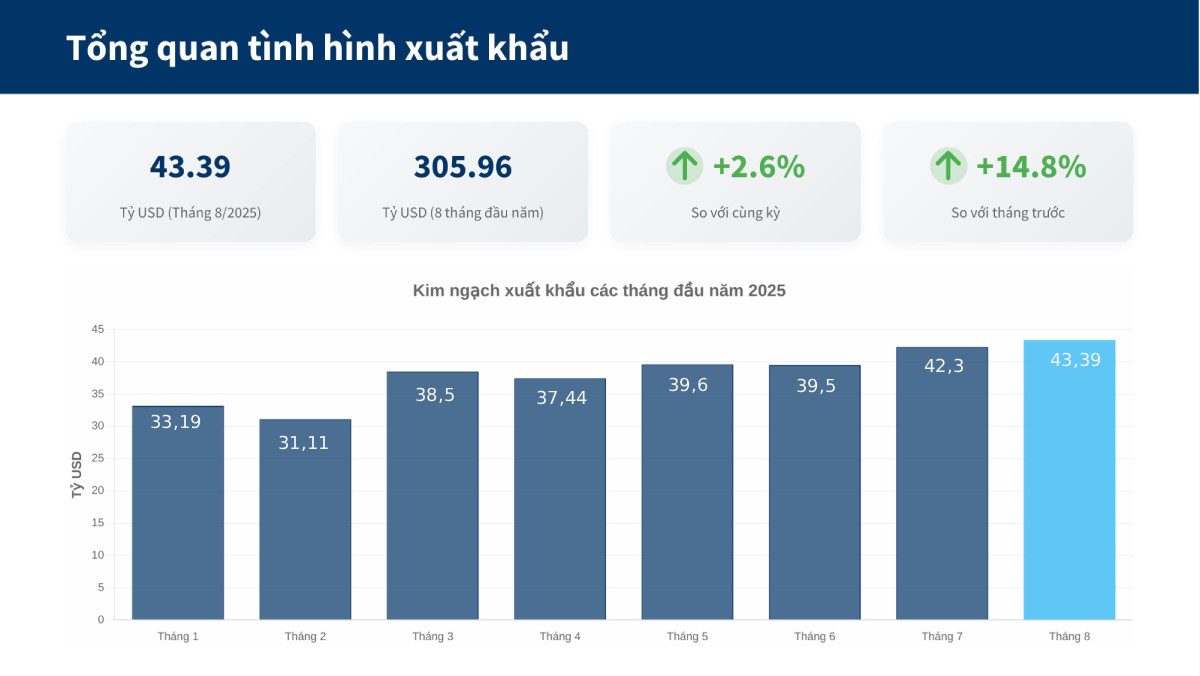
August 2025 marked a positive step forward as export turnover reached USD 43.39 billion, up 14.8% from the previous month. Cumulatively, exports in the first eight months of the year amounted to USD 305.96 billion, an increase of 2.6% year-on-year. Although cumulative growth remains modest, these figures demonstrate a gradual recovery of exports amid global economic volatility.
What were Vietnam’s top export products in the first 8 months of 2025?
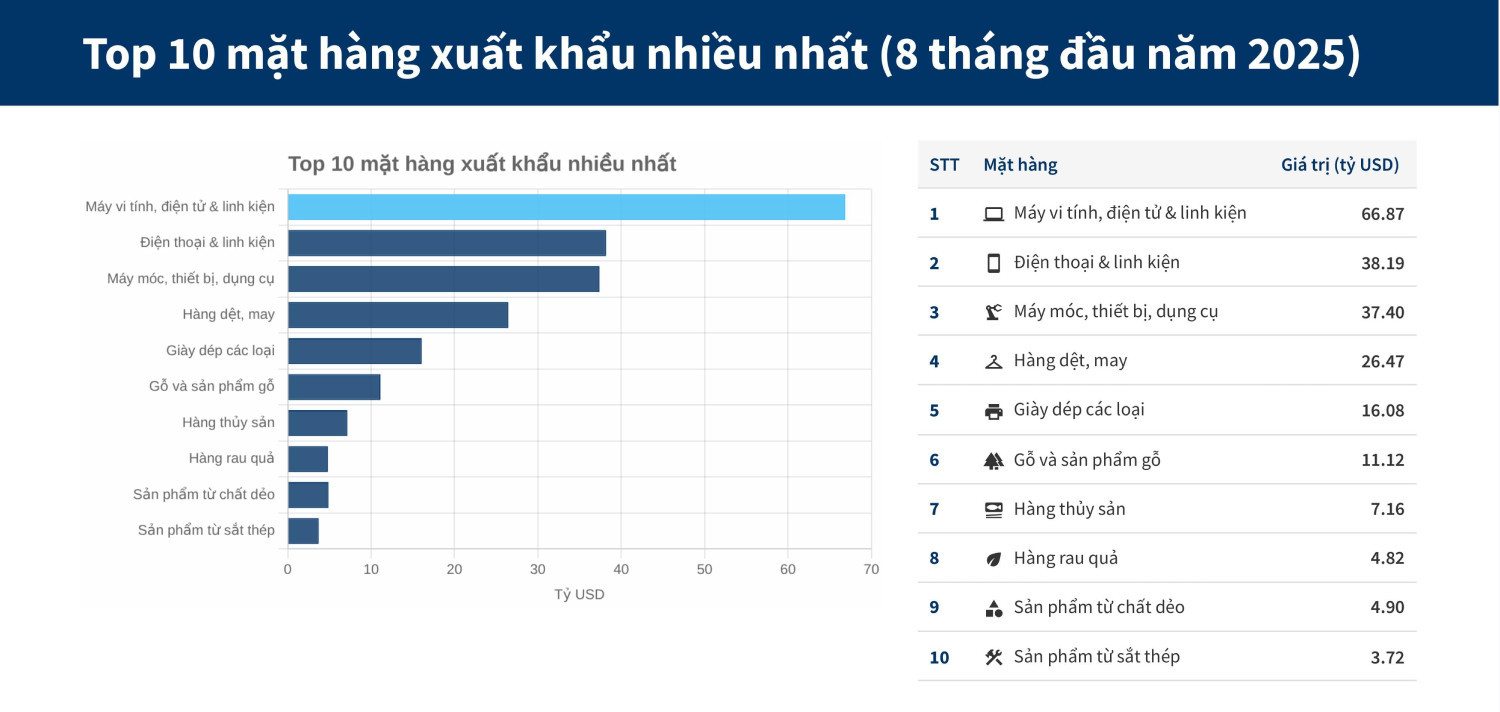
In the first eight months of 2025, Vietnam’s export structure was primarily driven by high-tech manufacturing and traditional agricultural products. High-tech goods, particularly computers, electronic products and components (USD 66.87 billion), telephones and components (USD 38.19 billion), and machinery, equipment, and parts (USD 37.40 billion), were the leading export categories by value. This dominance reflects stable foreign investment and the ongoing shift of global supply chains to Vietnam. Additionally, textiles and garments (USD 26.47 billion) and footwear (USD 16.08 billion) continued to be significant traditional exports, despite a slight slowdown in their growth.
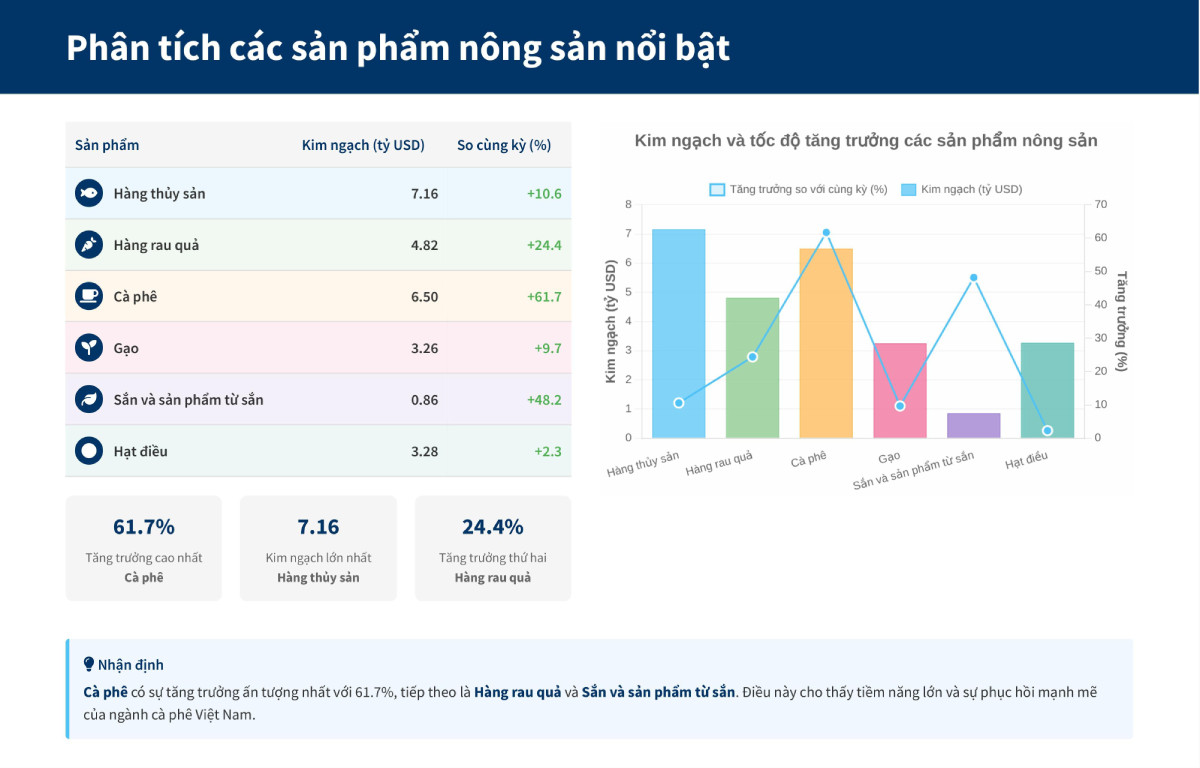
Notably, many agricultural commodities recorded impressive breakthroughs during the first eight months. Coffee exports surged to USD 6.50 billion, rising by 61.7% year-on-year, making it the brightest spot in the agricultural sector. Seafood maintained its leading position in this group with USD 7.16 billion (+10.6%). Fruits and vegetables reached USD 4.82 billion (+24.4%), reflecting sustained global demand for fresh and processed produce. Rice and cashew exports remained steady at USD 3.26 billion and USD 3.28 billion, respectively, while cassava and cassava-based products, though modest at USD 0.86 billion, grew sharply by 48.2%, demonstrating strong potential in this segment.
Which countries were Vietnam’s biggest export markets from January to August 2025?
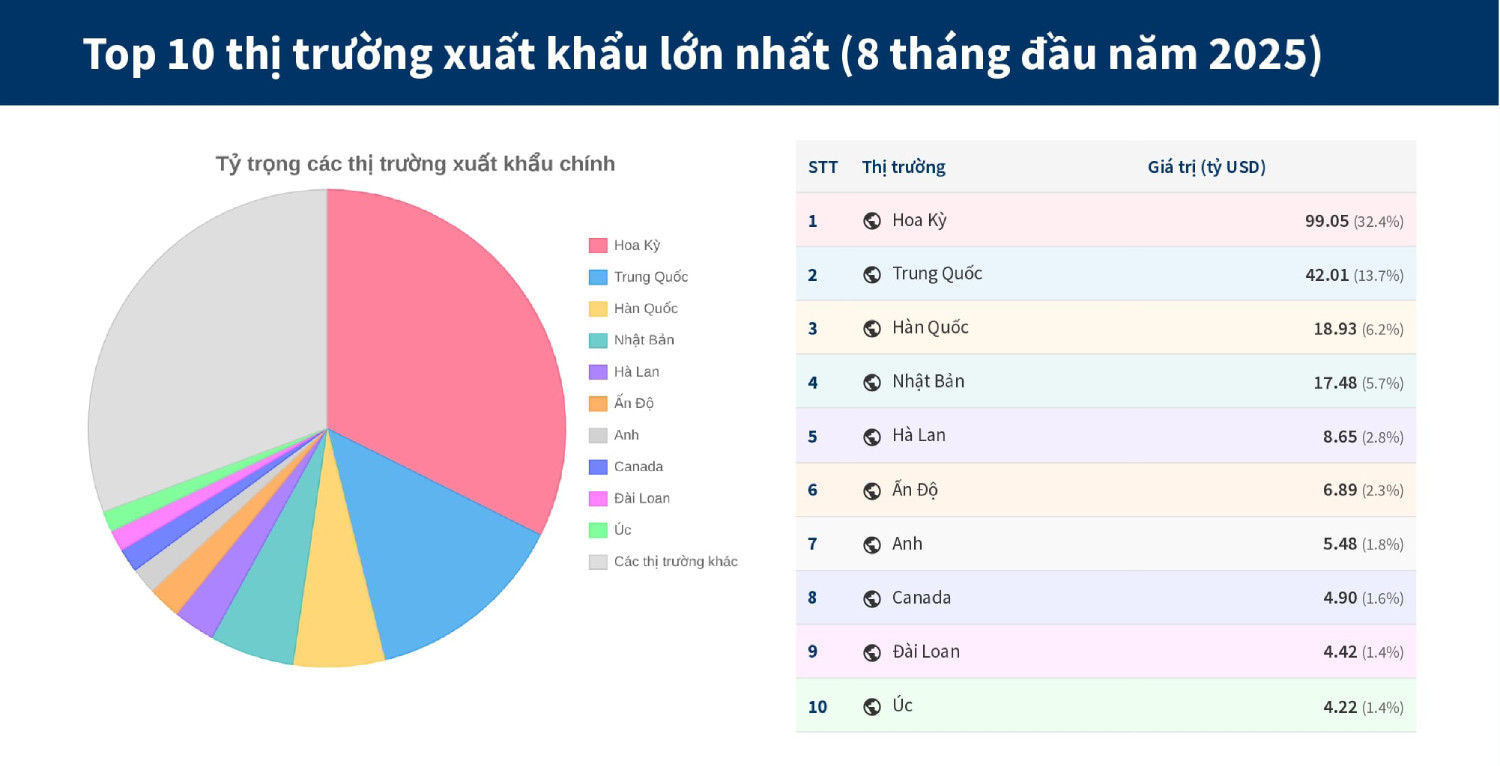
From January to August 2025, the United States was Vietnam’s largest export market, with exports totaling USD 99.05 billion, representing 32.4% of all exports. China followed as the second-largest market at USD 42.01 billion (13.7%). Other significant markets included South Korea (USD 18.93 billion), Japan (USD 17.48 billion), and the Netherlands (USD 8.65 billion). This market structure shows a high concentration, with the U.S. and China together accounting for nearly half of Vietnam’s total exports, which, while offering scale advantages, also presents risks related to potential trade policy shifts or geopolitical instability.
Opportunities and Challenges
Vietnam’s export performance during this period showed several bright spots. Total turnover continued to rise, high-tech commodities sustained robust growth, and agricultural products recovered strongly, particularly coffee, fruits and vegetables, and cassava. However, challenges remain: overall growth is still modest, some traditional commodities experienced fluctuations, and heavy reliance on a few major markets could pose long-term risks. Additionally, fierce competition from regional peers continues to exert pressure on Vietnam’s exports.
Outlook
Looking ahead, the outlook for the remainder of 2025 remains optimistic. Export turnover for the year is projected at USD 460–470 billion, with high-tech products expected to remain the main driver. At the same time, high-quality and sustainable agricultural goods are likely to gain wider access to emerging markets and those requiring stringent standards.
To seize opportunities and address challenges, Vietnam should focus on three key directions. First, strengthen its competitive advantages in high-tech industries and core agricultural exports. Second, improve quality and value-added in agriculture through deeper processing, traceability, and compliance with international standards. Third, diversify export markets to reduce dependence on the U.S. and China while maximising the benefits of FTAs to penetrate promising new destinations.
Conclusion
In summary, Vietnam’s exports in August and the first eight months of 2025 illustrate a clearer recovery trajectory, with high-tech products maintaining strong momentum and agriculture emerging as a new growth driver. The growing opportunities in both established and emerging markets provide a solid foundation for Vietnam to achieve stronger, more sustainable export growth and mark 2025 as a year of significant progress.
See more:


