

Vietnam ranks second in the world for dragon fruit cultivation, trailing only China. The Ministry of Agriculture reports that 32 provinces and cities grow dragon fruit across an area of 55,000 hectares, yielding over 1.2 million tons annually for global markets.
Dragon fruit has a rich history in Vietnam, first introduced in the early 20th century. During the French colonial era, French settlers brought the fruit to Vietnam, initially cultivating it as an ornamental plant in their villas. It wasn’t until the 1950s and 1960s that dragon fruit began to be grown commercially, particularly in Binh Thuan, where the climate and soil conditions are ideal. Since then, dragon fruit has emerged as a significant crop, expanding to southern provinces like Long An and Tien Giang.
In Vietnam, three main varieties of dragon fruit are commonly grown: white-fleshed, red-fleshed, purple-pink,, and American purple-red. Each variety offers unique flavors, textures, and nutritional benefits, making it popular among consumers.
Understanding these differences can help consumers choose the best dragon fruit for their needs, whether for health benefits, culinary applications, or simply enjoying its refreshing taste.
If you are researching for countries to import dragon fruit, this guide will help you: Where to Import Dragon Fruit?
What are the characteristics of white-fleshed dragon fruit from Vietnam?
White-fleshed dragon fruit is a primary variety cultivated and exported from Vietnam, known for its distinct characteristics influenced by its growing regions. This variety is a staple in Vietnamese dragon fruit production, with specific attributes in terms of cultivation area and pricing that differentiate it from other types.
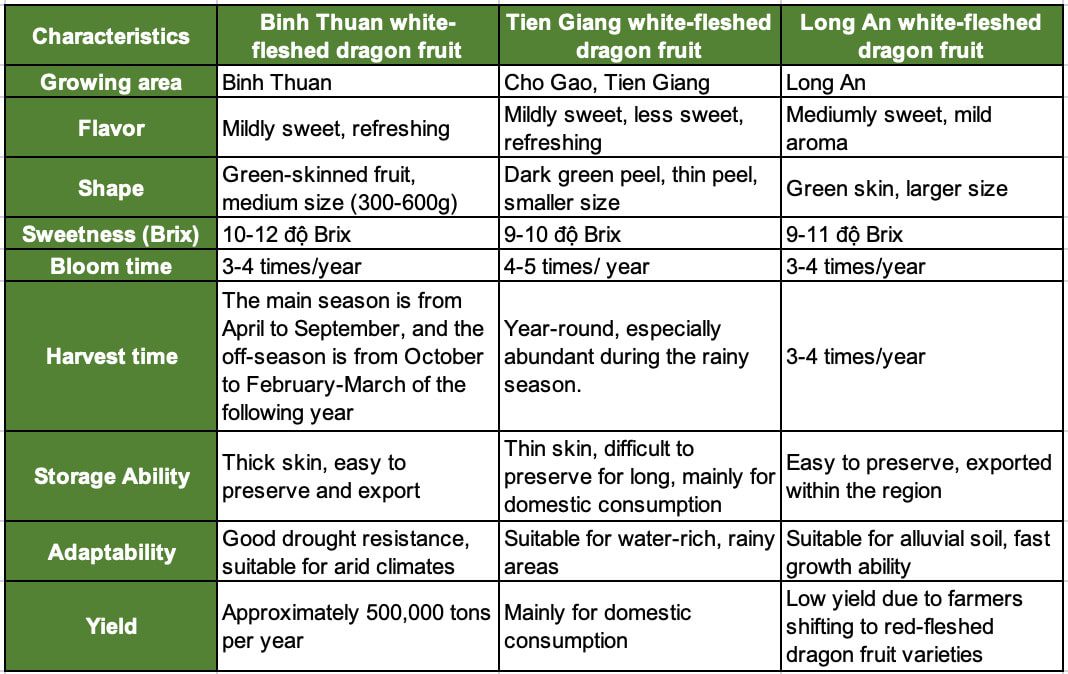
Area: Binh Thuan province is the largest dragon fruit growing region in Vietnam and also the leading exporter of white-fleshed dragon fruit (approximately 55% of the area is dedicated to white-fleshed varieties). Other southern regions, such as Tien Giang, Long An, and Vinh Long, have very low areas for white-fleshed dragon fruit, mainly serving domestic consumption.
Pricing: The purchasing price of white-fleshed dragon fruit ranges from 17,000 to 22,000 VND/kg during the off-season and 10,000 to 13,000 VND/kg during the main harvest season.

What makes Vietnamese red-fleshed dragon fruit unique?
Vietnamese red-fleshed dragon fruit stands out due to its primary cultivation in provinces like Long An, Tien Giang, and Dong Nai, with Long An dedicating a significant 97% of its dragon fruit area to this variety. This focus on red-fleshed cultivation in specific regions highlights its importance and unique characteristics within Vietnam’s agricultural landscape.
Characteristics of Taiwanese What makes Vietnamese red-fleshed dragon fruit unique?
Appearance: The fruit has a green skin similar to that of white-fleshed dragon fruit, but the skin’s wings may turn yellow or light red when ripe. The fruit is usually larger, weighing around 400-700 grams.
Flesh: The flesh is a deep red or bright purple-red, creating an eye-catching contrast compared to white-fleshed dragon fruit.
The flesh is soft and contains many small black seeds, similar to white-fleshed dragon fruit, but with a smoother texture.
Flavor: It has a sweeter taste than white-fleshed dragon fruit, with a distinct flavor and gentle, pleasant sweetness. The sugar content (Brix) of red-fleshed dragon fruit is generally higher, ranging from 14-18 degrees Brix, compared to 10-12 degrees Brix for white-fleshed varieties.
Harvesting Time: Red-fleshed dragon fruit can begin to be harvested about 30-40 days after flowering, depending on climatic conditions and cultivation techniques. Typically, the peak harvest season is from May to October, but the plant can produce fruit year-round if well cared for and if flowering stimulation techniques are applied.
Potential
Export Market: Red-fleshed dragon fruit is becoming a promising export product, especially to discerning markets like the USA, Japan, South Korea, and Europe. Its beautiful colour, sweet taste, and high nutritional value have increased its appeal among foreign consumers.
Economic Value: The selling price of red-fleshed dragon fruit is usually higher than that of white-fleshed dragon fruit. In early 2024, the purchasing price for red-fleshed dragon fruit ranged from 33,000 to 40,000 VND, an increase of 40-50% compared to the same period last year and a 20% rise from the beginning of the year.
Development Potential: Provinces such as Binh Thuan, Tien Giang, Long An, and Dong Nai are expanding the area under red-fleshed dragon fruit cultivation, thanks to suitable climatic conditions and increasing market demand. The application of modern technology in production will help improve both yield and fruit quality.
Why is Vietnamese purple-pink fleshed dragon fruit (LĐ5) a promising export?
The Vietnamese purple-pink fleshed dragon fruit, specifically the LĐ5 variety, holds significant export potential, particularly in major European markets. This promising variety was developed by the Southern Fruit Institute through a sexual hybridization process, combining the red-fleshed LĐ1 and white-fleshed Chợ Gạo varieties, and was granted copyright in 2013, marking it as a unique and protected Vietnamese agricultural innovation.
Characteristics
- Appearance: The purple-pink dragon fruit has bright pink skin, with sharp and attractive wings, giving it an appealing look. The fruit is usually large, weighing between 300-700 grams, depending on cultivation conditions.
- Flesh: The flesh is dark purple or deep red, containing many small black seeds, which adds an interesting texture when enjoyed.
Flavor - Sweetness: Purple-pink dragon fruit has a sweeter and more fragrant taste compared to white and red-fleshed varieties. Specifically, the sugar content (Brix) can range from 14-18 degrees Brix, similar to that of red-fleshed dragon fruit.
- Quality of Flesh: The flesh is soft, with low fiber content, making it easy to eat and digest.
- Flowering Time: The purple-pink fleshed dragon fruit LĐ5 can bloom nearly year-round, with a concentration from March to August. Generally, the pest and disease incidence on purple-pink fleshed dragon fruit is similar to that of white-fleshed dragon fruit but lower than that of red-fleshed varieties.
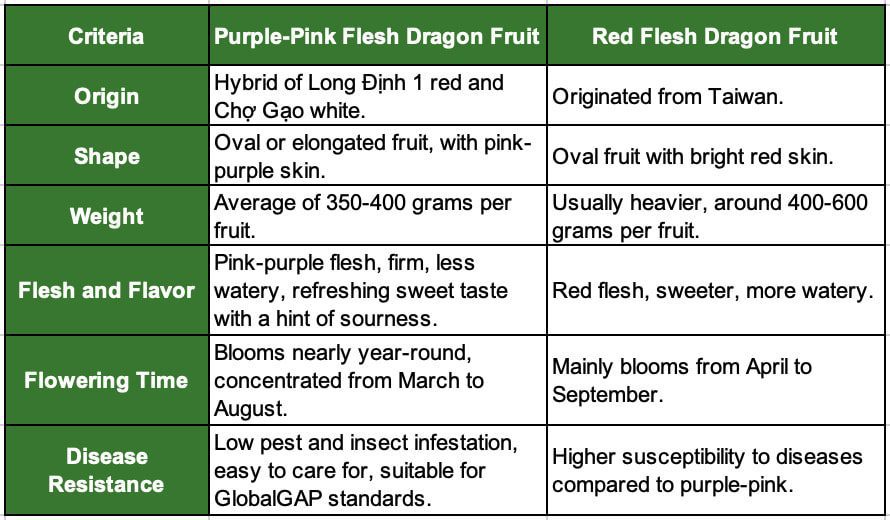
This is the first time a plant variety created by Vietnamese scientists has been commercialized and copyrighted. It is a promising dragon fruit variety to boost exports shortly.
Conclusion
Vietnamese dragon fruit is not only distinguished by its delicious taste and high nutritional value, but it also demonstrates strong export potential in international markets. Thanks to ideal climatic and soil conditions, as well as investment in modern production technology, Vietnam has established its position in the global fruit export industry. Varieties of dragon fruit such as white-fleshed, red-fleshed, and purple-pink are favoured in demanding markets like the USA, Japan, and Europe.
According to reports, the dragon fruit export market is expected to achieve an annual growth rate of 10-15% in the coming years. The application of modern technology in cultivation, combined with support from the government and agricultural organizations, will enhance product yield and quality, thereby boosting competitiveness in the global market. With these efforts, Vietnamese dragon fruit can certainly reach even further, affirming its brand and value on the international agricultural map.
Understand more about the dragon fruit of Vietnam:


