

Why should you source textile products from Vietnam?
Sourcing textile products from Vietnam offers significant advantages due to the industry’s international recognition for high quality and precision. Vietnamese textile products, ranging from fashion apparel to specialty fabrics, are highly regarded for their durability, diverse designs, and strict adherence to international standards. This reputation is built on a combination of modern technology and skilled craftsmanship, resulting in beautiful and high-quality outputs. Furthermore, many textile factories in Vietnam hold international certifications for quality management, environmental protection, and social responsibility, ensuring reliable and ethically produced goods for global importers.
In 2023, textile export revenue reached $40.3 billion, making Vietnam one of the top three textile-exporting countries in the world. Vietnamese textile products are exported to more than 180 countries, with the main markets being the United States, the EU, Japan, and South Korea. The United States accounts for 50% of the total export value, followed by the EU with 18%. Vietnam is also expanding its market to ASEAN and emerging markets such as Australia, Canada, and the Middle East. These achievements not only confirm Vietnam’s production capacity but also enhance the position of its textile industry in the international market, making it a reliable source of supply for global partners.
Maybe you will like: Sourcing Textile & Garment Products from Vietnam: A Complete Guide

Total export turnover of garment industry 2022 – 2023

Export value of textile industry
What makes Vietnam a top choice for footwear sourcing?
Vietnam stands out as a top choice for footwear sourcing primarily due to its combination of low production costs, competitive pricing, and consistently high quality. This has propelled Vietnam to the second position globally in footwear exports, capturing 10% of the worldwide market share. Footwear proudly bearing the “Made in Vietnam” label reaches 150 markets, with major destinations including the United States, the EU, China, Japan, and South Korea, which collectively represent 80% of the total export value. Notably, in 2023, the United States imported over $7.1 billion worth of footwear from Vietnam, and by the first quarter of 2024, Vietnamese footwear already accounted for 45% of the U.S. market share, underscoring its strong global presence and reliability.

Vietnam footwear export quater 1 2024
Overview of Vietnam’s export value of What makes Vietnam a top choice for footwear sourcing?
Currently, more than 10% of the world’s population wears shoes produced in Vietnam, especially fabric shoes, where Vietnam leads the world in production value. Vietnam’s footwear industry stands out with its diversity in types and designs, catering to all market segments from budget to high-end. The factories not only manufacture for major brands like Nike, Adidas, and Puma but also develop unique product lines tailored to market needs. The diversity in materials, from genuine leather and woven fabrics to environmentally friendly synthetic materials, along with creative design and customization capabilities, has helped Vietnam’s footwear industry meet global market demands effectively.
Why is Vietnam a leading source for furniture and home decor?
Vietnam has emerged as a leading source for furniture and home decor, solidifying its position as one of the top five wood-exporting countries globally. This strong market presence is evident in key international markets; for instance, in the first quarter of 2024, wood furniture from Vietnam constituted 40.8% of the total import value in the United States, amounting to $2.7 billion. Furthermore, strategic tariff reduction commitments under agreements like the CPTPP have enabled Vietnam to significantly expand its market share in other major markets, including Canada (14.8%) and Japan (22%), making it an increasingly attractive option for global importers.
Currently, Vietnam has about 6,000 wood processing and manufacturing enterprises with over 420,000 skilled workers employed in factories, with 55-60% of the workforce being trained and stable. The total demand for raw wood for the wood processing industry in Vietnam is 40 million m³ per year, with sources from concentrated plantations (20.5 million m³), scattered trees, and rubber wood (9.6 million m³), and imported wood (8.5 million m³). All wood sources have legal timber certificates, ensuring traceability according to legal regulations.
Vietnam has also effectively implemented related conventions and agreements, such as CITES, UNCCD, and VPA/FLEGT. As of 2023, Vietnam’s natural and planted forest areas are 10.3 million ha and 4.3 million ha, respectively, with 70% of the forest area being natural and 30% being planted forests. The government is focusing on providing the best wood varieties.
Understand more about the Vietnam’s Timber industry here
What agricultural products can you source from Vietnam?
Vietnam’s agricultural sector offers a diverse range of products for sourcing, including globally recognized items like coffee, cashews, and pepper, alongside popular tropical fruits such as mango, dragon fruit, and bananas. Benefiting from favorable natural conditions and sustainable farming practices, Vietnam has become the world’s second-largest coffee exporter and the leading global exporter of cashews. These agricultural products are not only diverse but also highly valued for their quality, consistently meeting international standards. Furthermore, Vietnamese agricultural products are competitively priced in the global market due to low production costs and supportive government policies, enabling importers to optimize costs and enhance their competitiveness while ensuring superior quality.
See more about Durian, Dragon Fruit, Mango: Driving Vietnam’s Export Success
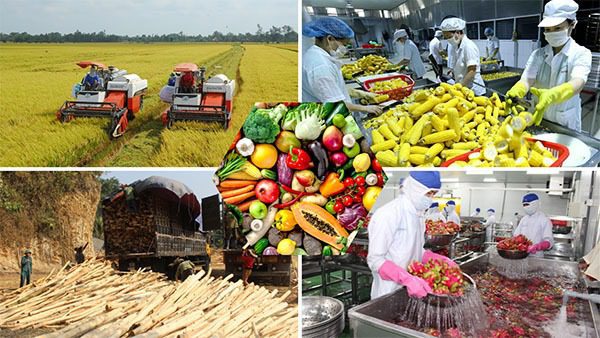
Vietnam agriculture products
Currently, Vietnam has over 10 groups of products with export values exceeding $1 billion, including fruits, rice, coffee, cashews, pepper, and wood products. Vietnamese agricultural products are now present in 200 countries worldwide, becoming familiar names in demanding markets such as the U.S., EU, and Japan through FTAs and EVFTA agreements.
Why is Vietnam a growing hub for electronics and electrical product sourcing?
Vietnam is rapidly becoming a growing hub for electronics and electrical product sourcing, evidenced by its strong presence in major international markets like the United States, China, and the EU. The continuous growth in export value from Vietnam’s electronics and components industry underscores its vast potential for meeting the diverse demands of global markets. This sector’s expansion is driven by significant investments from leading global technology companies and a strategic focus on enhancing domestic production capacity, making it an increasingly attractive option for international importers.
With significant investment from leading global technology companies like Samsung, Apple, and Intel, the computer, electronic products, and components sectors, along with electrical products and other components, are consistently among Vietnam’s top export groups, maintaining a quarterly scale of $14-16 billion. Although much of the current growth comes from FDI enterprises, the potential for the domestic electronics sector is still vast. Vietnam is focusing on enhancing domestic production capacity, encouraging local businesses to invest in new technologies and improving product quality. This creates significant opportunities for companies looking to tap into this promising market.
Thanks to low labour costs and government support, electronics and components produced in Vietnam are very competitively priced. This allows importers to optimize costs while ensuring product quality, thereby increasing competitiveness in the global market.
Overview Vietnam Phones & Accessories Export Value 2011 – 2023

Vietnam Why is Vietnam a growing hub for electronics and electrical product sourcing?
What opportunities does Vietnam offer for sourcing technology and software products?
Vietnam offers significant opportunities for sourcing technology and software products, driven by a booming industry characterized by innovative startups in areas like fintech, e-commerce, AI, and blockchain. These startups are not only addressing domestic needs but are also successfully expanding into international markets, developing cutting-edge products and services such as mobile payment applications and e-commerce platforms. The Vietnamese government actively supports this growth through policies like a high-tech development program extending to 2030 and tax incentives for new businesses. Furthermore, the presence of startup incubators and venture capital funds fosters rapid and sustainable development within the tech sector. A key advantage for foreign companies sourcing from Vietnam is the significantly lower human resource costs compared to global averages, without compromising on quality, making it an attractive destination for technology and software development.
Conclusion
With a rapidly growing economy, skilled workforce, and strategic geographic location, Vietnam is solidifying its position as a leading global sourcing destination. From textiles and footwear to wood products, agricultural goods, and high-tech products, Vietnam offers great opportunities for international businesses. Significant progress in infrastructure development, government support policies, and adherence to international standards have created a favourable and reliable business environment. Sourcing from Vietnam not only helps companies optimize costs but also ensures product quality, contributing to success and sustainable growth in an increasingly competitive global landscape.
See more related articles:


