

Spanning all 63 provinces, Vietnam is home to more than 46 distinct mango varieties, ranging from time-honoured traditional breeds to innovative, high-quality cultivars tailored for international demand. The country’s mango export industry has undergone significant advancements, with export turnover projected to hit over 260 million USD in 2024, a 40% surge compared to 2023. This growth is fueled by strategic market penetration into high-demand regions like the United States, Japan, and South Korea, alongside the traditional Chinese market. This milestone highlights Vietnam’s commitment to improving cultivation methods and ensuring top-tier quality for global markets.
What makes Cat Hoa Loc mango Vietnam’s most premium variety?
Cat Hoa Loc mango is widely considered Vietnam’s most premium variety, earning international admiration and even being declared the “best mango in the world” by US Ambassador to Vietnam, Mr. Daniel J. Kritenbrink. This exceptional fruit, with a prestigious history of being presented to French aristocrats, is renowned for its superior quality and ability to satisfy even the most discerning palates, making it a standout among Vietnamese mangoes.
Originating in Hoa Loc commune, now Hoa Hung commune in Cai Be district, Tien Giang province, Cat Hoa Loc mango has become synonymous with the region’s unique soil, which contributes to its renowned flavor. While this mango variety is now grown in several provinces across the Mekong Delta, the Tien Giang-grown version remains the most prized. According to the Tien Giang Department of Agriculture and Rural Development, the average yield of Cat Hoa Loc mango is between 10 to 15 tons per hectare. In regions employing off-season cultivation techniques, profits can be 1.5 times higher than regular growing methods. The harvest season for Cat Hoa Loc mangoes runs from March to May, with an off-season stretching from October to December
In addition, nearly 41 hectares of Cat Hoa Loc mango orchards have been officially registered for export to China, with 22 hectares owned by 36 farming households. This expansion of export areas has helped boost the mango’s international reputation.
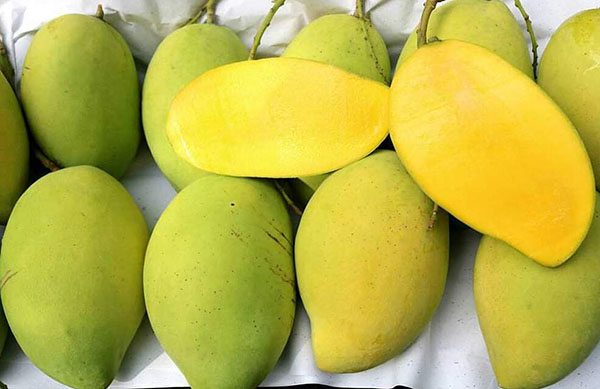
Cat Hoa Loc mangoes are large, weighing between 450 – 600g, with smooth, thick flesh and minimal fiber. The fruit’s skin is a vibrant green when unripe and turns a golden lemon yellow once it ripens. A thin powdery layer coats the surface when ripe, with tiny black dots near the stem, giving the mango its perfect shape and texture.
Why is Cat Chu mango a favorite tropical delight from Vietnam?
Cat Chu mango is a favorite tropical delight from Vietnam due to its unique flavor and superior quality, making it a standout specialty from Cao Lanh, Dong Thap province. This premium variety, also cultivated in other regions like Tien Giang, Can Tho, and Vinh Long, has successfully built a strong reputation in both domestic and international markets, captivating tropical fruit lovers worldwide.
With its long, slender shape and distinctive reddish-yellow skin when ripe, Cat Chu mango captivates with its smooth, thick flesh, minimal fiber, and subtle toughness that melts in the mouth. The sweet, rich taste and pleasant fragrance are unforgettable, leaving a refreshing aftertaste that lingers long after the last bite.
The mango’s exceptional flavor is attributed to the fertile alluvial soil and ideal climate conditions in Cao Lanh district, Dong Thap province, which boasts abundant irrigation. With a mango-growing area of over 9,000 hectares, Dong Thap accounts for the lion’s share of mango production in the Mekong Delta, with Cat Chu mangoes making up around 60% of the total. The combination of meticulous care and favourable cultivation conditions has propelled Cat Chu mango to a prominent place in global markets.

What is the Green-Skinned Tuong mango and why is it called a ‘giant’?
The Green-skinned Tuong Mango, a specialty primarily from Can Tho in the Mekong Delta, is called a ‘giant’ because it stands out as the largest mango variety in Vietnam, with each fruit typically weighing between 0.5 to 1 kg. This impressive size, combined with its elongated shape, thick, firm flesh, and smooth, shiny green skin (which turns light yellow when ripe), makes it a visually captivating and highly distinctive mango in the global market.
What sets the Green-skinned Tuong Mango apart is its unique flavor profile. When green, it carries a slightly sour taste, but once ripe, it offers a distinctive sweetness that delights the palate. The fruit’s minimal fiber results in a smooth texture that many consumers find irresistible, making it a highly favored choice. Harvested during the rainy season from May to July, Green-skinned Tuong Mango is picked when the fruit turns light yellow, ensuring that it stays fresh longer and resists spoilage.
In Can Tho, Green-skinned Tuong Mango holds a dominant position, accounting for about 47% of the city’s mango-growing area with approximately 1,587 hectares dedicated to this variety. Can Tho’s total mango-growing area spans 3,376 hectares, yielding nearly 17,500 tons of mangoes annually. Alongside Tuong Mango, other varieties like Hoa Loc are also widely cultivated in the region.

What makes Cam Lam mango a premium choice from Khanh Hoa?
Cam Lam mango is considered a premium choice from Khanh Hoa province due to its exceptional quality and high yield, largely attributed to the fertile lands of Cam Lam district. This region, often called the mango-growing capital of Khanh Hoa, dedicates over 8,800 hectares to mango cultivation, producing more than 38,000 tons annually. This significant output, combined with an average yield of 58.43 quintals per hectare, ensures a consistent supply of top-tier mangoes that are highly valued both domestically and internationally.
One of the key reasons for the mango’s outstanding quality is the fertile soil of Cam Lam, which is especially suited to growing Australian mango varieties. These Australian mangoes grown in Cam Lam are large and round, weighing an average of 800g per fruit. The ripe mangoes feature a stunning pinkish-yellow hue on their shoulders, making them visually appealing. The flesh is firm, with minimal fiber, and offers a subtle sweetness, providing a satisfying, fragrant taste.
The mango season in Cam Lam stretches from March to July, ensuring a steady supply for both domestic consumption and international exports throughout the year. The ripe mangoes are known for their sweet taste, with a Brix level of 12-14%, as well as their irresistible aroma and vibrant colour.

What is unique about the Keo mango variety from Vietnam?
The Keo mango variety, originally from Cambodia and introduced to Vietnam in the 2000s, is unique due to its remarkable adaptability to the local climate and soil, which has led to its swift popularity in the Southeast and Mekong Delta regions. This distinct mango offers a unique set of characteristics that differentiate it from other varieties, making it a notable choice for consumers seeking something different.
Keo mangoes have a distinct shape, with a rounded middle that tapers slightly towards both ends, creating a subtle curve while maintaining an overall rounded form. The fruit is smaller than other popular varieties like Hoa Loc or Taiwanese mangoes, typically weighing between 0.25kg and 0.45kg
The flesh of the Keo mango is light yellow when unripe and darkens to a rich yellow as it ripens. What truly makes Keo mango stand out is its unique flavor profile. While most mango varieties only become sweet when ripe, Keo mangoes offer a blend of sweet and sour flavors. When unripe, they carry a tartness that turns into a balanced, sweet-sour flavor as they mature, offering a refreshing contrast to other mango varieties.
The early harvest season of Keo mango, typically starting in March and lasting through May, allows farmers to fill the market gap when other mango varieties are not in season. This timing, combined with its unique taste, makes Keo mango a popular choice in many dishes, from mango salads to tropical fruit salads, as well as for fresh consumption.
Conclusion
Vietnam’s mango industry is on a promising growth trajectory, with projections indicating that by 2030, the mango growing area will expand to 140,000 hectares, yielding up to 1.5 million tons. Additionally, over 70% of export processing and preservation facilities are expected to reach advanced production levels, ensuring high-quality mangoes for international markets. With a rich diversity of mango varieties, Vietnam offers a wide range of options to meet the specific needs of global customers.
Challenges in Sourcing from Vietnam:
- 40% of suppliers are small and medium-sized enterprises.
- 45% of suppliers face difficulties in English communication and tend to be risk-averse.
- Many suppliers prefer direct sales from the factory, avoiding complex export procedures.
Solution from VnCommEx: VnCommEx bridges the gap between suppliers and international markets, simplifying the export process. With their support, you can access reliable, high-quality mango products from Vietnam at competitive prices.
Contact VnCommEx today to receive detailed quotes and professional assistance in importing premium mangoes and processed mango products from Vietnam!
See more: Vietnam’s Mango Industry: Opportunities and Growth Potential


