

Visualizing Vietnam’s Logistics Edge: Strategic Trade Corridors in 2026
Analyzing high-resolution hình ảnh (imagery) of Vietnam’s deep-water ports and multimodal transport hubs reveals why the nation remains a powerhouse for B2B commodity export growth in 2026. Strategically positioned along major maritime routes, Vietnam seamlessly connects ASEAN supply chains to global markets under updated Incoterms 2026 guidelines. Supported by strict compliance with ISO 22000, EUDR, and FDA standards, verified FOB and CIF benchmarks demonstrate how optimized geographic placement cuts transit times, reduces freight overhead, and guarantees scalable, high-grade agricultural and industrial shipments for international importers.
Geographical Position of Vietnam
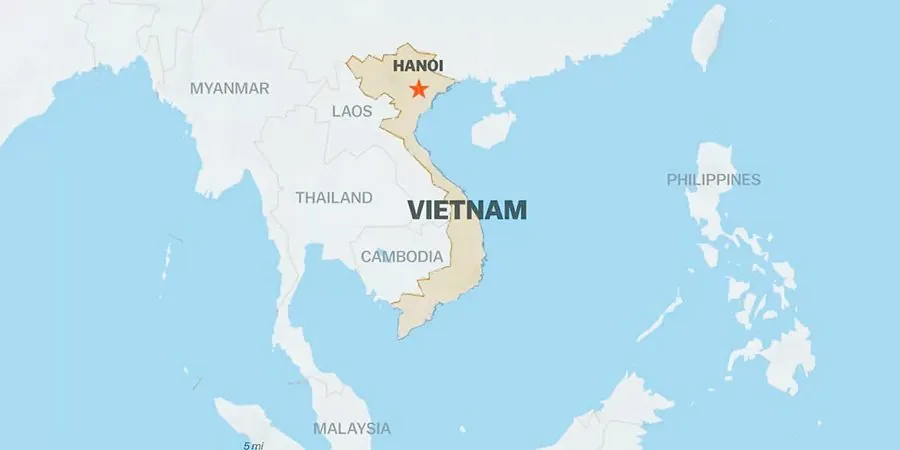
Vietnam is located in Southeast Asia, strategically positioned at the gateway to the East Sea with a coastline stretching over 3,200 km. It borders China to the north, Laos and Cambodia to the west, and lies along key international shipping routes. Vietnam is not only situated on one of the world’s busiest trade routes, connecting the Pacific and Indian Oceans, but it also has easy access to large markets such as China, Japan, South Korea, and other Southeast Asian countries. This positioning enables Vietnam to optimize transportation costs, enhance competitive advantages, and strongly attract foreign investment in manufacturing and export sectors.
Role of Geographical Position in Economic Development
Advantageous for Industrial Zone and Infrastructure Development
With its strategic geographic position, Vietnam has developed industrial zones in the north, south, and central regions, making it favourable for attracting investment and manufacturing goods for export.
- Northern Industrial Zone: Northern Vietnam is close to the Chinese border, one of the world’s largest markets, and is a prime investment destination for many international companies looking to expand into ASEAN and Asia. Industrial zones in provinces like Bac Ninh, Hai Phong, and Hanoi have attracted many electronics companies, such as Samsung and LG, due to their quick connectivity with production centres in China.
- Southern Industrial Zone: The south, especially Ho Chi Minh City, is Vietnam’s largest economic centre, with modern infrastructure and a developed logistics network. With Cat Lai Port, one of the largest container ports in Southeast Asia, this area plays a vital role in the transhipment of exported goods.
Development of Seaports and Logistics Centers
- Long Coastline: The coastline from north to south facilitates the construction of key international seaports such as Hai Phong, Da Nang, and Cai Mep – Thi Vai ports. These ports serve as gateways for exporting goods from Vietnam to other countries, helping to reduce transportation costs and shorten delivery times.
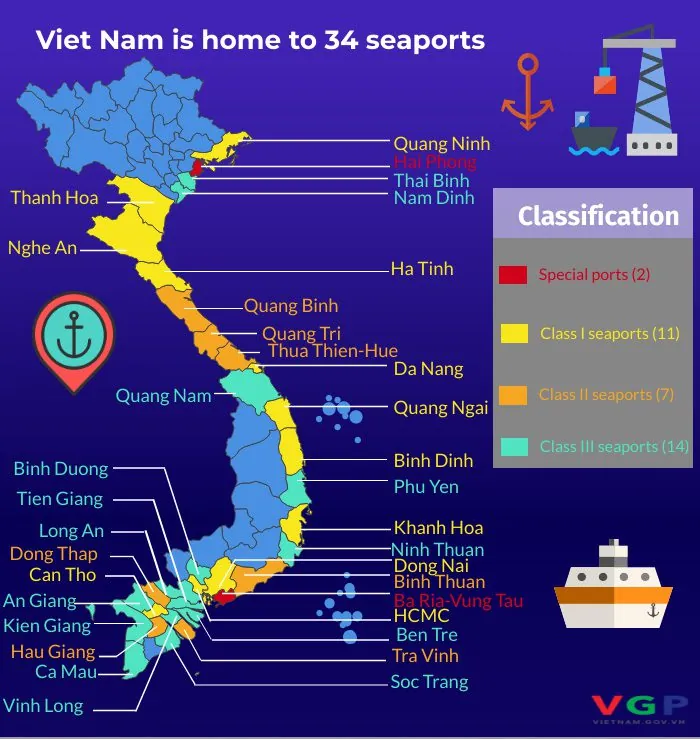
- Developed Logistics Network: Vietnam now has a well-developed logistics network connecting seaports, airports, and industrial zones, optimizing the transportation of goods. In 2023, the total export value from Vietnam reached over $371 billion USD, an increase of 10.5% from the previous year, reflecting the strong growth of Vietnam’s logistics system and its appeal within the global supply chain.
Leveraging Strategic Position for Export Growth
Export to Major Regional Markets
- Proximity to Major Consumer Markets: Vietnam has easy access to key markets like China, Japan, South Korea, and ASEAN countries due to its neighbouring position and growing transportation infrastructure. In 2023, exports from Vietnam to these markets accounted for up to 40% of the total export turnover.
- Advantages of Free Trade Agreements (FTAs): With its strategic location and several free trade agreements (FTAs) such as CPTPP, EVFTA, and RCEP, Vietnam benefits greatly from reduced export tariffs, increasing the competitiveness of its products in the international market. These FTAs enable Vietnamese goods not only to access large markets more easily but also to compete well in terms of price and quality.
Understand more about the advantages of Vietnam’s FTA: Maximizing Benefits from Vietnam’s FTAs and Business Incentives
Leveraging Strategic Position in Supply Chain Development
- Center for Manufacturing and Assembly: Positioned at the heart of East Asian trade routes, Vietnam is becoming a manufacturing and assembly hub for multinational companies like Samsung, LG, and other manufacturers. Many companies have chosen Vietnam to expand production, thanks to its advantageous location, abundant labor force, and reasonable production costs.
- Developing a Global Supply Chain: Vietnam is now deeply involved in the global supply chain, from producing raw materials, and accessories to finished products. The development of logistics centres and industrial zones near seaports makes it easier for Vietnam to connect with countries within the region and globally, boosting export growth and making Vietnam an essential link in the global supply chain.
Conclusion
Vietnam’s strategic geographical position is a crucial factor driving its economic development and export growth. With its developed logistics network, access to major markets, and the advantages of free trade agreements, Vietnam is increasingly becoming a reliable centre for production, export, and logistics in the region. In 2023, Vietnam’s total export turnover exceeded $371 billion USD, a significant increase from previous years, affirming Vietnam’s vast potential and attractiveness in the global supply chain.
International businesses can leverage this advantage when partnering with Vietnam, not only to access the Asian market but also to expand operations and optimise costs within the global supply chain
Understand more about Vietnam Advantage: Vietnam’s Climate Advantage: A Key Driver of Economic Growth
Visualizing Vietnam’s Logistics Edge: Strategic Trade Corridors in 2026
Analyzing high-resolution hình ảnh (imagery) of Vietnam’s deep-water ports and multimodal transport hubs reveals why the nation remains a powerhouse for B2B commodity export growth in 2026. Strategically positioned along major maritime routes, Vietnam seamlessly connects ASEAN supply chains to global markets under updated Incoterms 2026 guidelines. Supported by strict compliance with ISO 22000, EUDR, and FDA standards, verified FOB and CIF benchmarks demonstrate how optimized geographic placement cuts transit times, reduces freight overhead, and guarantees scalable, high-grade agricultural and industrial shipments for international importers.
Geographical Position of Vietnam
Vietnam is located in Southeast Asia, strategically positioned at the gateway to the East Sea with a coastline stretching over 3,200 km. It borders China to the north, Laos and Cambodia to the west, and lies along key international shipping routes. Vietnam is not only situated on one of the world’s busiest trade routes, connecting the Pacific and Indian Oceans, but it also has easy access to large markets such as China, Japan, South Korea, and other Southeast Asian countries. This positioning enables Vietnam to optimize transportation costs, enhance competitive advantages, and strongly attract foreign investment in manufacturing and export sectors.
Role of Geographical Position in Economic Development
Advantageous for Industrial Zone and Infrastructure Development
With its strategic geographic position, Vietnam has developed industrial zones in the north, south, and central regions, making it favourable for attracting investment and manufacturing goods for export.
- Northern Industrial Zone: Northern Vietnam is close to the Chinese border, one of the world’s largest markets, and is a prime investment destination for many international companies looking to expand into ASEAN and Asia. Industrial zones in provinces like Bac Ninh, Hai Phong, and Hanoi have attracted many electronics companies, such as Samsung and LG, due to their quick connectivity with production centres in China.
- Southern Industrial Zone: The south, especially Ho Chi Minh City, is Vietnam’s largest economic centre, with modern infrastructure and a developed logistics network. With Cat Lai Port, one of the largest container ports in Southeast Asia, this area plays a vital role in the transhipment of exported goods.
Development of Seaports and Logistics Centers
- Long Coastline: The coastline from north to south facilitates the construction of key international seaports such as Hai Phong, Da Nang, and Cai Mep – Thi Vai ports. These ports serve as gateways for exporting goods from Vietnam to other countries, helping to reduce transportation costs and shorten delivery times.
- Developed Logistics Network: Vietnam now has a well-developed logistics network connecting seaports, airports, and industrial zones, optimizing the transportation of goods. In 2023, the total export value from Vietnam reached over $371 billion USD, an increase of 10.5% from the previous year, reflecting the strong growth of Vietnam’s logistics system and its appeal within the global supply chain.
Leveraging Strategic Position for Export Growth
Export to Major Regional Markets
- Proximity to Major Consumer Markets: Vietnam has easy access to key markets like China, Japan, South Korea, and ASEAN countries due to its neighbouring position and growing transportation infrastructure. In 2023, exports from Vietnam to these markets accounted for up to 40% of the total export turnover.
- Advantages of Free Trade Agreements (FTAs): With its strategic location and several free trade agreements (FTAs) such as CPTPP, EVFTA, and RCEP, Vietnam benefits greatly from reduced export tariffs, increasing the competitiveness of its products in the international market. These FTAs enable Vietnamese goods not only to access large markets more easily but also to compete well in terms of price and quality.
Understand more about the advantages of Vietnam’s FTA: Maximizing Benefits from Vietnam’s FTAs and Business Incentives
Leveraging Strategic Position in Supply Chain Development
- Center for Manufacturing and Assembly: Positioned at the heart of East Asian trade routes, Vietnam is becoming a manufacturing and assembly hub for multinational companies like Samsung, LG, and other manufacturers. Many companies have chosen Vietnam to expand production, thanks to its advantageous location, abundant labor force, and reasonable production costs.
- Developing a Global Supply Chain: Vietnam is now deeply involved in the global supply chain, from producing raw materials, and accessories to finished products. The development of logistics centres and industrial zones near seaports makes it easier for Vietnam to connect with countries within the region and globally, boosting export growth and making Vietnam an essential link in the global supply chain.
Conclusion
Vietnam’s strategic geographical position is a crucial factor driving its economic development and export growth. With its developed logistics network, access to major markets, and the advantages of free trade agreements, Vietnam is increasingly becoming a reliable centre for production, export, and logistics in the region. In 2023, Vietnam’s total export turnover exceeded $371 billion USD, a significant increase from previous years, affirming Vietnam’s vast potential and attractiveness in the global supply chain.
International businesses can leverage this advantage when partnering with Vietnam, not only to access the Asian market but also to expand operations and optimise costs within the global supply chain
Understand more about Vietnam Advantage: Vietnam’s Climate Advantage: A Key Driver of Economic Growth
17-Year Official Series (2009–2026)
Vietnam Trade Intelligence & Interactive Seasonality Heatmap
Explore 211 consecutive reporting periods, global trade partner map, FDI vs. Domestic sector contribution, and seasonality matrices across 74 export-import commodity categories on our official digital data portal.
✓ 34 Administrative Regions
✓ Monthly Periodic Ingestion
FREQUENTLY ASKED QUESTIONS (B2B BUYER FAQ)
A: Standard export grading requires moisture under 12.5%, minimal foreign matter (<0.5%), and phytosanitary certificate compliance.
A: VNCOMMEX supports FOB Cat Lai / Hai Phong Port, CIF major worldwide destinations, and 100% Irrevocable L/C at sight.
A: Yes, customized export packaging including 25kg/50kg PP/jute bags or 1,000kg jumbo bulk bags is fully supported upon request.

Hai Truong (Henry Truong) is the author of supply chain export analyses and the Founder of VNCOMMEX and the trade.vncommex.com intelligence portal. Bringing practical expertise in direct factory auditing, export compliance (TCVN, ISO, GlobalG.A.P, US FDA, EUDR), and international trade negotiations, he and the VNCOMMEX team are committed to connecting global importers directly with verified Vietnamese manufacturers—eliminating intermediary trading markups and ensuring consistent product quality.
FREQUENTLY ASKED QUESTIONS (B2B BUYER FAQ)
A: Standard export grading requires moisture under 12.5%, minimal foreign matter (<0.5%), and phytosanitary certificate compliance.
A: VNCOMMEX supports FOB Cat Lai / Hai Phong Port, CIF major worldwide destinations, and 100% Irrevocable L/C at sight.
A: Yes, customized export packaging including 25kg/50kg PP/jute bags or 1,000kg jumbo bulk bags is fully supported upon request.
Visualizing Vietnam’s Logistics Edge: Strategic Trade Corridors in 2026
Analyzing high-resolution hình ảnh (imagery) of Vietnam’s deep-water ports and multimodal transport hubs reveals why the nation remains a powerhouse for B2B commodity export growth in 2026. Strategically positioned along major maritime routes, Vietnam seamlessly connects ASEAN supply chains to global markets under updated Incoterms 2026 guidelines. Supported by strict compliance with ISO 22000, EUDR, and FDA standards, verified FOB and CIF benchmarks demonstrate how optimized geographic placement cuts transit times, reduces freight overhead, and guarantees scalable, high-grade agricultural and industrial shipments for international importers.
Geographical Position of Vietnam
Vietnam is located in Southeast Asia, strategically positioned at the gateway to the East Sea with a coastline stretching over 3,200 km. It borders China to the north, Laos and Cambodia to the west, and lies along key international shipping routes. Vietnam is not only situated on one of the world’s busiest trade routes, connecting the Pacific and Indian Oceans, but it also has easy access to large markets such as China, Japan, South Korea, and other Southeast Asian countries. This positioning enables Vietnam to optimize transportation costs, enhance competitive advantages, and strongly attract foreign investment in manufacturing and export sectors.
Role of Geographical Position in Economic Development
Advantageous for Industrial Zone and Infrastructure Development
With its strategic geographic position, Vietnam has developed industrial zones in the north, south, and central regions, making it favourable for attracting investment and manufacturing goods for export.
- Northern Industrial Zone: Northern Vietnam is close to the Chinese border, one of the world’s largest markets, and is a prime investment destination for many international companies looking to expand into ASEAN and Asia. Industrial zones in provinces like Bac Ninh, Hai Phong, and Hanoi have attracted many electronics companies, such as Samsung and LG, due to their quick connectivity with production centres in China.
- Southern Industrial Zone: The south, especially Ho Chi Minh City, is Vietnam’s largest economic centre, with modern infrastructure and a developed logistics network. With Cat Lai Port, one of the largest container ports in Southeast Asia, this area plays a vital role in the transhipment of exported goods.
Development of Seaports and Logistics Centers
- Long Coastline: The coastline from north to south facilitates the construction of key international seaports such as Hai Phong, Da Nang, and Cai Mep – Thi Vai ports. These ports serve as gateways for exporting goods from Vietnam to other countries, helping to reduce transportation costs and shorten delivery times.
- Developed Logistics Network: Vietnam now has a well-developed logistics network connecting seaports, airports, and industrial zones, optimizing the transportation of goods. In 2023, the total export value from Vietnam reached over $371 billion USD, an increase of 10.5% from the previous year, reflecting the strong growth of Vietnam’s logistics system and its appeal within the global supply chain.
Leveraging Strategic Position for Export Growth
Export to Major Regional Markets
- Proximity to Major Consumer Markets: Vietnam has easy access to key markets like China, Japan, South Korea, and ASEAN countries due to its neighbouring position and growing transportation infrastructure. In 2023, exports from Vietnam to these markets accounted for up to 40% of the total export turnover.
- Advantages of Free Trade Agreements (FTAs): With its strategic location and several free trade agreements (FTAs) such as CPTPP, EVFTA, and RCEP, Vietnam benefits greatly from reduced export tariffs, increasing the competitiveness of its products in the international market. These FTAs enable Vietnamese goods not only to access large markets more easily but also to compete well in terms of price and quality.
Understand more about the advantages of Vietnam’s FTA: Maximizing Benefits from Vietnam’s FTAs and Business Incentives
Leveraging Strategic Position in Supply Chain Development
- Center for Manufacturing and Assembly: Positioned at the heart of East Asian trade routes, Vietnam is becoming a manufacturing and assembly hub for multinational companies like Samsung, LG, and other manufacturers. Many companies have chosen Vietnam to expand production, thanks to its advantageous location, abundant labor force, and reasonable production costs.
- Developing a Global Supply Chain: Vietnam is now deeply involved in the global supply chain, from producing raw materials, and accessories to finished products. The development of logistics centres and industrial zones near seaports makes it easier for Vietnam to connect with countries within the region and globally, boosting export growth and making Vietnam an essential link in the global supply chain.
Conclusion
Vietnam’s strategic geographical position is a crucial factor driving its economic development and export growth. With its developed logistics network, access to major markets, and the advantages of free trade agreements, Vietnam is increasingly becoming a reliable centre for production, export, and logistics in the region. In 2023, Vietnam’s total export turnover exceeded $371 billion USD, a significant increase from previous years, affirming Vietnam’s vast potential and attractiveness in the global supply chain.
International businesses can leverage this advantage when partnering with Vietnam, not only to access the Asian market but also to expand operations and optimise costs within the global supply chain
Understand more about Vietnam Advantage: Vietnam’s Climate Advantage: A Key Driver of Economic Growth
17-Year Official Series (2009–2026)
Vietnam Trade Intelligence & Interactive Seasonality Heatmap
Explore 211 consecutive reporting periods, global trade partner map, FDI vs. Domestic sector contribution, and seasonality matrices across 74 export-import commodity categories on our official digital data portal.
✓ 34 Administrative Regions
✓ Monthly Periodic Ingestion
FREQUENTLY ASKED QUESTIONS (B2B BUYER FAQ)
A: Standard export grading requires moisture under 12.5%, minimal foreign matter (<0.5%), and phytosanitary certificate compliance.
A: VNCOMMEX supports FOB Cat Lai / Hai Phong Port, CIF major worldwide destinations, and 100% Irrevocable L/C at sight.
A: Yes, customized export packaging including 25kg/50kg PP/jute bags or 1,000kg jumbo bulk bags is fully supported upon request.
Hai Truong (Henry Truong) is the author of supply chain export analyses and the Founder of VNCOMMEX and the trade.vncommex.com intelligence portal. Bringing practical expertise in direct factory auditing, export compliance (TCVN, ISO, GlobalG.A.P, US FDA, EUDR), and international trade negotiations, he and the VNCOMMEX team are committed to connecting global importers directly with verified Vietnamese manufacturers—eliminating intermediary trading markups and ensuring consistent product quality.


