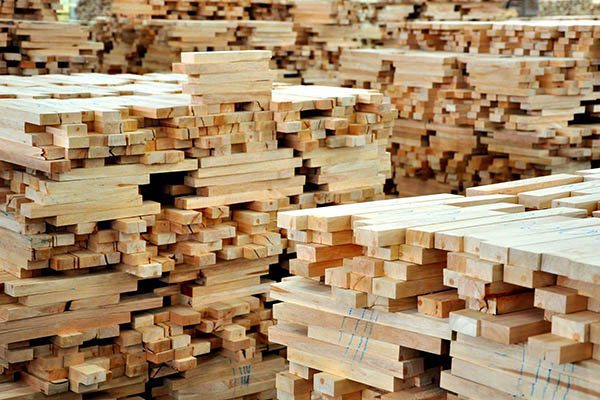
In this article, we will take a closer look at the quality and price of rubberwood in Southeast Asian countries, including Malaysia, Indonesia and Vietnam. The article will provide detailed information on the characteristics of rubberwood from each country and analyze the differences in prices on the international market.
This is the second in a series of articles comparing the quality and price of popular wood species in Southeast Asia. This series is designed to give you a comprehensive overview of different species, from acacia to teak to palisade, to help you choose the wood that best suits your needs. Explore other articles in the series to learn more about the species you are interested in.
- Compare the quality and price of Acacia wood from Southeast Asian
- Compare the quality and price of Teak wood from Southeast Asian
- Compare the quality and price of Basswood from Southeast Asian
- Compare the quality and price of Rosewood from Southeast Asian
How does rubberwood quality compare across Southeast Asian countries?
Quality of Malaysian Rubberwood
Malaysian rubberwood is highly regarded for its durability and quality, thanks to advanced management and processing. Many rubber plantations are certified as sustainable by international organizations such as PEFC and FSC.
Malaysian rubberwood is widely used in the production of furniture, plywood and industrial wood products. Many products are exported to the USA, Europe and Japan.
Quality of Indonesian Rubberwood
Indonesian rubberwood is of good quality, but sometimes inconsistent due to limited forest management and processing technology in some regions. Indonesia is also working to achieve sustainability certification to increase export value.
Indonesian rubberwood is mainly used for furniture, plywood and construction. Indonesia is a major exporter with major markets including China, Japan and South Korea.
Vietnam Rubberwood Quality
Vietnamese rubberwood is of good quality and treated to prevent termites and other problems. Vietnam has obtained many international certifications such as ISO, and FSC, which help to enhance the reputation and value of its products in the international market.
Vietnam rubber wood is mainly used in the production of furniture and plywood. Vietnam exports many rubber wood products to international markets including China, the USA and Europe.

What are the price differences for rubberwood in Southeast Asia?
When comparing rubberwood prices across Southeast Asian countries, both raw material and finished product costs show competitive ranges. For raw rubberwood, Vietnam typically prices between $50 – $60 per cubic meter, while Indonesia and Malaysia offer slightly lower rates at $45 – $55 per cubic meter. For finished rubberwood products, prices are generally competitive across all three nations, with some variations based on product type and craftsmanship. In Vietnam, living room furniture sets range from $200 – $1,500, bedroom furniture from $700 – $3,500, kitchen furniture from $500 – $2,500, wooden chairs from $50 – $150 per piece, and flooring from $15 – $25 per square meter. Indonesia’s finished product prices are comparable, with living room furniture sets at $300 – $2,000, bedroom furniture at $700 – $4,000, kitchen furniture at $500 – $3,000, wooden chairs at $50 – $200 per piece, and flooring also at $15 – $25 per square meter. Malaysia’s finished rubberwood products also fall within similar price brackets: living room furniture sets at $300 – $2,000, bedroom furniture at $700 – $4,000, kitchen furniture at $500 – $3,000, and wooden chairs at $50 – $200 per piece. Malaysian flooring, however, tends to be slightly higher, ranging from $20 – $30 per square meter.