

Mango is one of the most beloved tropical fruits worldwide, representing about 50% of total tropical fruit production. Packed with nutrients, mangoes are rich in natural sugars, protein, fiber, and carotene, a precursor to vitamin A. Few fruits offer such a comprehensive nutritional profile. While often enjoyed fresh, mangoes are also processed into products like juice, jam, and dried mango, preserving their rich flavor and health benefits.
Mango trees thrive in warm climates and are sensitive to cold. The optimal temperature for growth ranges from 25°C to 30°C. Below 20°C, their growth slows, and below 10°C, the trees may stop producing leaves and flowers. This is where Vietnam’s tropical climate shines, making it an ideal location for mango cultivation. Almost every region of the country can grow mangoes, with over 114,000 hectares dedicated to the crop. The Mekong Delta alone accounts for nearly half of this area.
In December 2024, Vietnam’s mango production reached 1.045 million tons, a 2.7% increase from 2023. This growth is due to favourable weather and the country’s strategic investments and policies supporting mango cultivation.
Where are the main mango growing regions in Vietnam?
Vietnam’s mango production is concentrated in key regions, primarily the Mekong Delta, which accounts for over half of the national output. Provinces like Dong Thap, An Giang, Son La, and Dong Nai are recognized for their significant mango acreage, producing high-quality fruit that meets international standards for export markets. The dominant varieties cultivated in these areas are Cat Chu, representing 60% of the area, and Hoa Loc, making up 40%.

In Dong Thap, the mango growing area spans over 14,000 hectares, yielding nearly 140,000 tons annually. The province boasts 296 mango-growing areas, with more than 8,200 hectares certified with area codes, enabling exports to major markets including China, Korea, Japan, the US, New Zealand, and Europe. Additionally, Dong Thap pioneers organic mango production, with an innovative model involving 5 hectares for every 8 households. This approach not only shifts production methods but also boosts productivity to 4.5 tons per hectare.
Cho Moi district, with 6,400 hectares dedicated to mango cultivation, accounts for more than 50% of the province’s mango growing area. The district has integrated modern techniques into mango production, including scientific advancements. Currently, An Giang has 704 hectares certified with VietGAP standards and 41 area codes, while nearly 6,200 hectares comply with international production standards.
With its advanced production processes and commitment to international certifications like VietGAP and organic standards, Vietnam’s mangoes are in high demand worldwide. This commitment ensures the fruits meet the stringent quality expectations of markets such as Japan, the US, and Europe.
Which countries import Vietnamese mangoes?
Vietnam’s mangoes are exported to a growing number of countries, establishing the nation as a significant player in the global mango industry. While China remains the largest importer, accounting for 84.6% of total mango exports due to its proximity and trade facilitation, demand is also increasing from other key markets such as Russia, the United States, South Korea, the EU, Australia, and Japan.

Despite exporting to over 40 countries, Vietnam’s mango exports currently represent only about 1% of the global mango export market. However, the rapid growth in recent years indicates the vast potential of the Vietnamese mango sector. From a value of 46 million USD in 2015, Vietnam’s mango exports surged to over 180 million USD in 2021 and continued to climb to 370 million USD in 2023. In the first 10 months of 2024, mango export value reached over 308 million USD, marking a remarkable 43.5% increase compared to the same period in 2023. This growth represents 5% of Vietnam’s total fruit exports, trailing only durian, dragon fruit, coconut, and bananas.
Although mango exports to China saw a 13% decrease in the first 11 months of 2024, other markets have stepped in to fuel growth. South Korea ranked second with 40 million USD, reflecting a 70% increase from 2023. The United States followed in third place, with 20 million USD in mango imports, marking a significant 276% increase. Other markets like Japan, Poland, and Australia also reported impressive growth, ranging from 48% to 252%. Emerging markets, aided by trade agreements, also demonstrated remarkable growth—Chile’s imports skyrocketed by 14,000%, reaching 1.2 million USD, while Laos saw a 1,300% increase and Iran grew by 6,000%.
The United States has become one of the primary importers of Vietnamese mangoes, particularly frozen and fresh varieties. In 2023, the US imported 643 tons of frozen mangoes worth 988,000 USD, a surge of 84.7% in volume and 82.9% in value compared to 2022. Additionally, 500 tons of fresh mangoes, valued at 1.4 million USD, were imported, marking a 16.7% increase in volume and 38.2% growth in value over the previous year.
Vietnam’s mango industry is experiencing strong export growth, expanding into new and emerging markets, and establishing itself as a reliable and high-quality supplier of mangoes on the global stage.
What are the most popular Vietnamese mango varieties for export?
Vietnam cultivates 46 distinct mango varieties, each offering unique characteristics. For commercial export, the most prominent and widely cherished varieties include Cat Hoa Loc Mango, Cat Chu Mango, and Tuong Da Xanh Mango, alongside others like Hon Mango, Xiem Num Mango, Buoi Mango, Cat Bo Mango, Thanh Ca Mango, Canh Nong Mango, and Yen Chau Mango. These varieties are highly sought after for their outstanding quality and unique flavors.
Cat Hoa Loc Mango is considered the crown jewel of Vietnamese mangoes, particularly renowned in the Mekong Delta. It is regarded as the most delicious and valuable mango variety due to its vibrant color, rich flavor, and high nutritional content. This variety produces large fruits, with an average weight of 600 to 700g per mango. The flesh is thick, smooth, fiberless, and the seeds are small. The sweet, fragrant flavor makes it stand out, and each mature tree (about 10 years old) yields approximately 100kg of fruit annually. This variety is easy to care for, highly stable, and offers exceptional quality.
Cat Chu Mango, the second most popular variety, is primarily cultivated in provinces such as Dong Thap, Tien Giang, Vinh Long, Can Tho, and other Southeast provinces. Known for its high yield, a 10-year-old Cat Chu tree can produce over 400kg of fruit per year. The fruit is long and slender, with thick flesh, small seeds, and smooth, yellow skin when ripe. It is fiberless and has a sweet, fragrant taste. Remarkably, over 80% of the Cat Chu mangoes produced annually are exported, particularly to international markets.
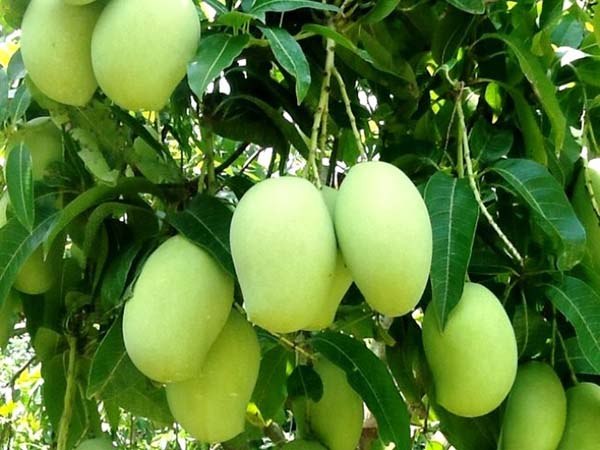
Tuong Da Xanh Mango, a specialty variety from the Mekong Delta, especially Can Tho, is known for its large size and thick, shiny green skin. The bright yellow flesh is supple, sweet, and minimally fibrous, offering a distinct and pleasing flavor. This variety is increasingly popular for export, especially to demanding markets such as the United States and Australia.
Each of these Vietnamese mango varieties offers exceptional quality and a unique flavor, making them a proud representation of Vietnam’s agricultural products. Their distinctive tastes and textures help solidify Vietnam’s position as a leading exporter of high-quality mangoes in the global market.
|
Criteria |
Vietnamese Mangoes (Cat Hoa Loc, Keo, Tu Quy) |
Thai Mangoes (Nam Dok Mai) |
Indian Mangoes (Alphonso, Kesar) |
Mexican Mangoes (Ataulfo, Tommy Atkins) |
Philippine Mangoes (Carabao) |
|
Flavor |
Sweet, aromatic, slightly sour (Cat Hoa Loc), sweet (Keo) |
Sweet, slightly sour |
Sweet, aromatic |
Slightly sweet, balanced sourness |
Sweet, aromatic |
|
Fiber Content |
Low fiber (Cat Hoa Loc), no fiber (Keo) |
No fiber |
Low fiber, soft flesh |
High fiber (Tommy Atkins), little fiber (Ataulfo) |
No fiber |
|
Size |
300-600g/fruit (depending on type) |
300-500g/fruit |
200-400g/fruit |
250-600g/fruit |
200-400g/fruit |
|
Peel Color When Ripe |
Light yellow to deep orange |
Light yellow |
Dark orange |
Dark yellow or bright red |
Light yellow |
|
Storage Time |
10-14 days |
7-10 days |
10-14 days |
14-21 days |
7-10 days |
|
Main Export Markets |
US, Japan, Korea, China, EU |
China, EU |
Middle East, EU, US |
US, EU, China |
Japan, Middle East, EU |
|
Outstanding Advantages |
– Characteristic delicious flavor, many varieties for year-round harvest. – Competitive cost, large output. |
– Sweet taste, suitable for Asian taste. – Strong brand in the international market. |
– Known as the “King of mangoes” thanks to its rich flavor. – Long shelf life, suitable for long-distance transportation. |
– Popular in major markets such as the US and EU. – Fiber-free, rich, sweet flavor. |
– Considered a national specialty. |
Why should importers choose Vietnamese mangoes?
Competitive Pricing
Importers should choose Vietnamese mangoes due to their clear competitive advantages in the global market, particularly their attractive pricing. In 2024, Vietnamese mangoes retailed for 2.5 – 3.5 USD per fruit, which is notably lower than regional competitors like Thai mangoes, priced between 3.0 – 4.5 USD. This cost-effectiveness is primarily driven by low production costs and strategic logistical benefits.
- Low Production Costs: Vietnam benefits from inexpensive labor and efficient farming practices, allowing for more competitive pricing in international markets.
- Proximity to Seaports: Mango-growing regions in Vietnam are located only 50-80 km away from major international seaports, reducing transportation costs significantly compared to other countries like Thailand and India, whose mangoes are often shipped from farther distances.
Mango Yield and Productivity
Vietnam’s average mango yield ranges from 7 to 8.5 tons per hectare, which is lower than countries like India, Thailand, and Mexico. However, areas adhering to international standards such as GlobalGAP and VietGAP can achieve up to 10-12 tons per hectare, putting Vietnam’s yields on par with other top producers like Pakistan and Brazil.

Advantages of Trade Agreements
Vietnam’s participation in 17/ 19 Free Trade Agreements (FTAs) has significantly enhanced its mango industry’s global reach. Key agreements include:
- EVFTA (EU-Vietnam Free Trade Agreement): This agreement eliminates import tariffs on Vietnamese mangoes, making them more attractive in the EU market.
- CPTPP (Comprehensive and Progressive Agreement for Trans-Pacific Partnership): The CPTPP gives Vietnamese mangoes duty-free access to markets like Japan, South Korea, and New Zealand and new opportunities in previously restricted markets such as Mexico, Canada, and Chile.
- RCEP (Regional Comprehensive Economic Partnership): RCEP helps eliminate trade barriers for Vietnamese mangoes in Asia-Pacific markets, further expanding export opportunities.
These trade agreements enable Vietnamese mangoes to compete globally by offering better pricing and fewer trade restrictions, thus enhancing their global market share.
Conclusion
Vietnamese mangoes are a top choice for international importers thanks to a range of outstanding advantages in terms of quality, cost, and logistics. These factors make Vietnamese mangoes a competitive option in the global market.
- High Mango Quality and Unique Specialties: With over 46 varieties, Vietnam is home to premium mango varieties like Cat Hoa Loc, Cat Chu, and Green Skin Tuong Mango. These varieties are not only known for their exceptional flavor but also their high nutritional value, catering to the demands of international markets. Furthermore, GlobalGAP and VietGAP certifications ensure quality and food safety.
- Competitive Costs: Vietnamese mango prices are typically 10% to 30% lower than other regional competitors, including Thailand, due to low production costs and geographical advantages. Retail prices range from 2.5 – 3.5 USD per fruit, offering significant cost savings to importers without compromising on quality.
- Favourable Geographical Location: Vietnam’s strategic location in Southeast Asia, with its long coastline and proximity to major countries like China, Laos, Cambodia, and Thailand, provides a logistical advantage for exporting agricultural products, including mangoes. The growing areas in the Mekong Delta and Southeast provinces are only 50-80 km from international seaports, reducing transportation costs and ensuring quick delivery to global markets.
- Ideal Climate and Land: Vietnam’s tropical climate, characterized by a dry season (from November to April), creates optimal conditions for mango cultivation. The sunny and dry environment helps produce high yields and excellent fruit quality, while the warm temperatures throughout the year are perfect for growing mangoes and other tropical fruits.
- Advantages of Trade Agreements: Vietnam benefits from several free trade agreements (FTAs), such as the EVFTA, CPTPP, and RCEP, which reduce import tariffs and expand access to key markets like the EU, Japan, South Korea, and New Zealand. This provides Vietnamese mangoes with a competitive edge in the international market.
With these outstanding benefits, Vietnamese mangoes are an attractive and reliable choice for importers seeking high-quality products at competitive prices.
See more: Vietnam’s fruit and vegetable exports: Key markets, challenges, and opportunities


