Vietnam Durian: The Definitive B2B Sourcing Playbook for Global Importers
Executive Summary: Strategic Imperatives for Vietnam Durian Sourcing
Vietnam has rapidly emerged as a critical global durian supplier, driven by escalating export volumes (400% YoY growth to China in 2023), diverse varietal offerings like Ri6, and stringent quality advancements. This playbook provides global importers with a comprehensive framework for navigating regional sourcing, technical specifications, robust supplier due diligence, complex export compliance across key markets (China, EU, US), and detailed landed cost analysis. Strategic engagement with vetted Vietnamese producers offers unparalleled opportunities for market diversification and supply chain resilience.
1. Introduction to Vietnam Durian: A Global Market Disruptor
The global durian market, historically dominated by Malaysian and Thai production, is undergoing a profound transformation with Vietnam’s rapid ascent. Characterized by strategic cultivation expansion, robust varietal diversification, and aggressive export-oriented policies, Vietnam’s durian industry has transitioned from a localized agricultural commodity to a formidable international player. The nation’s durian exports surged dramatically, particularly to the lucrative Chinese market, achieving an estimated value of $2.2 billion in 2023, representing a staggering 400% year-on-year increase in value and a significant rise in volume to over 493,000 tonnes. This unprecedented growth underscores Vietnam’s capacity to meet escalating global demand, fueled by its unique geographical advantages, innovative farming practices, and unwavering commitment to international quality and phytosanitary standards. For discerning global importers, understanding the intricacies of Vietnam’s durian ecosystem is no longer merely advantageous but essential for securing competitive and resilient supply chains in this high-value sector.
1.1. Vietnam’s Strategic Position in the Global Durian Economy
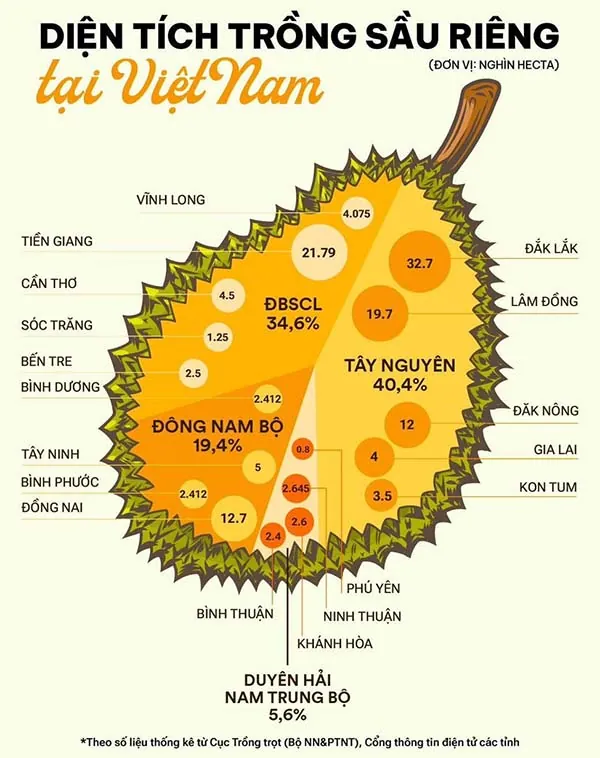
Vietnam’s durian cultivation spans approximately 130,000 hectares, concentrated primarily in the Central Highlands and Mekong Delta regions. This strategic geographic distribution allows for staggered harvest seasons, ensuring a more consistent supply window compared to single-season producers. The government’s proactive support, including the issuance of official export protocols to major markets like China, has catalyzed significant investment in modern farming techniques, post-harvest infrastructure, and stringent quality control systems. Vietnamese durian offers a compelling value proposition: a diverse range of cultivars, notably the highly sought-after Ri6, which boasts a superior dry-flesh texture and pronounced sweetness, alongside the increasingly popular Monthong and emerging Musang King varieties adapted to local conditions. This strategic blend of production capacity, quality assurance, and favorable export policies positions Vietnam not just as an alternative, but as a primary sourcing hub for global durian procurement.
2. Key Production & Regional Sourcing Matrix: Vietnam Durian
Strategic sourcing of Vietnamese durian necessitates a granular understanding of regional specificities, varietal characteristics, and corresponding harvest cycles. This matrix delineates the primary production zones, their dominant cultivars, typical sensory profiles, and associated logistical hubs.
| Region | Primary Cultivars | Peak Harvest Season | Cup Characteristics (Flavor, Texture, Aroma) | Key Export Ports |
|---|---|---|---|---|
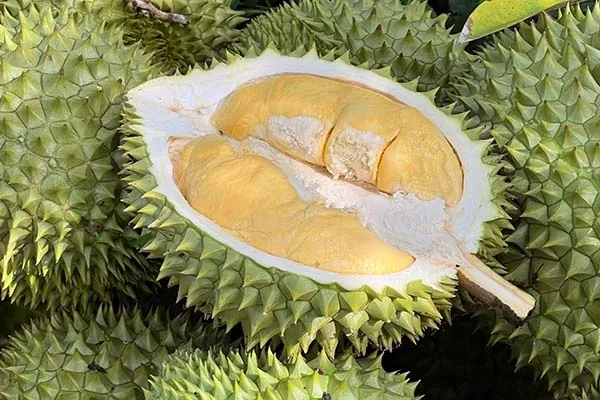
| Mekong Delta (Tien Giang, Ben Tre, Vinh Long, Can Tho) | Ri6, Monthong, Kho Qua Xanh | May – August (main crop), Dec – Feb (off-season) | Ri6: Golden-yellow, thick, dry flesh; sweet, slightly bitter notes; strong aroma. Monthong: Pale yellow, creamy, mild sweetness; less pungent. | Ho Chi Minh City (Cat Lai Port) |
| Central Highlands (Dak Lak, Lam Dong, Gia Lai, Kon Tum, Binh Phuoc, Dong Nai) | Ri6, Monthong, Musang King (new plantings) | July – October (main crop), Nov – Jan (secondary crop) | Ri6: Often larger, vibrant color, intense sweetness with strong aroma. Monthong: Consistently large fruit, high pulp yield, milder flavor. | Ho Chi Minh City, Vung Tau |
| Southeast Regions (Ba Ria-Vung Tau) | Ri6, Cai Mon | June – September | Ri6: Standard characteristics. Cai Mon: Sweet, less fibrous, often smaller fruit. | Vung Tau, Ho Chi Minh City |
3. Core Technical Specifications & Quality Parameters
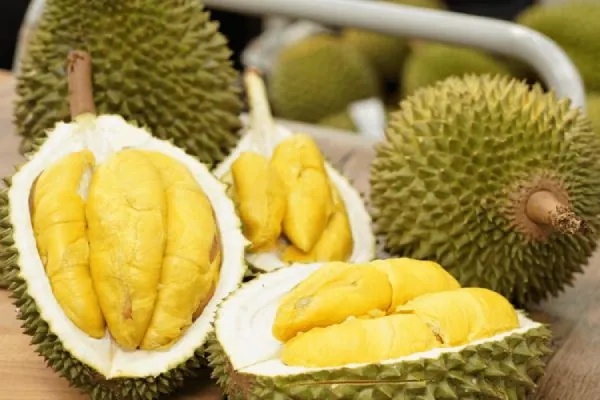
Adherence to precise technical specifications is paramount for successful international durian trade, ensuring product integrity, market acceptance, and compliance with import regulations. This section outlines critical parameters for fresh and frozen durian products.
| Parameter | Specification Details |
|---|---|
| Product Type | Fresh Whole Durian (FHD), Frozen Whole Durian (FWD), Frozen Durian Pulp (FDP), Frozen Durian Arils (FDA), Frozen Durian Paste. |
| Varietal Purity | 100% true-to-type for declared cultivar (e.g., Ri6, Monthong). Genetic verification upon request. |
| Ripeness Level (FHD) | 70-80% physiological maturity for export (semi-ripe). Post-harvest ripening to 90-95% for consumption. Ethylene treatment for controlled ripening. |
| Size Grading (FHD) |
|
| Pulp Yield (Ri6) | Typically 28-35% of total fruit weight for mature Ri6. |
| Brix Level |
|
| Moisture Content (FDP/FDA) | Typically 60-70% for frozen pulp/arils. |
| Defects Tolerance (FHD) |
|
| Residue Levels | Compliance with Maximum Residue Limits (MRLs) of importing country (e.g., EU, US, China standards). Requires recent lab analysis. |
| Packaging (FHD) |
|
| Temperature (Fresh/Frozen) |
|
Deep Dive: For an exhaustive review of durian quality parameters and trade terminology, consult: The Global Guide to Vietnam Durian: Quality, Sizing, and Trade Specifications
4. Supplier Due Diligence & 4-Step Verification Framework
Effective supplier due diligence is the cornerstone of sustainable durian sourcing. A rigorous 4-step verification framework mitigates risks associated with quality, compliance, and supply chain integrity.
Step 1: Foundational Vetting & Document Verification
- Legal Entity & Business Registration: Verify official company registration, operational licenses, and export permits issued by Vietnamese authorities. Cross-reference with government databases.
- Certifications & Standards: Mandate proof of relevant certifications:
- GlobalGAP / VietGAP: For Good Agricultural Practices at farm level, ensuring food safety and sustainable farming.
- HACCP / ISO 22000: For Food Safety Management Systems in packhouses and processing facilities.
- BRCGS / FSSC 22000: For advanced food safety and quality management, preferred by major retailers.
- Export History & References: Request a verifiable track record of international durian exports, ideally with references from other importing partners. Scrutinize phytosanitary certificate issuance history.
- Financial Stability: Conduct basic financial checks to ascertain the supplier’s capacity to fulfill large orders and manage operational costs.
Step 2: On-site Audit & Operational Assessment
- Farm & Orchard Inspection: Assess cultivation practices, pesticide application records, harvesting methods, and adherence to GAP standards. Verify farm codes for GACC registration (critical for China).
- Packhouse & Processing Facility Audit: Conduct a comprehensive audit of the facility’s infrastructure, hygiene protocols, processing lines (sorting, washing, drying, packing), cold chain management (pre-cooling, cold storage), and temperature monitoring systems. Observe worker hygiene and training.
- Equipment & Technology: Evaluate the modernity and maintenance of equipment, including grading machines, cold storage units, and packaging lines.
- Logistics & Loading: Inspect the loading area, container pre-cooling procedures, and efficiency of dispatch operations.
Step 3: Quality Assurance & Traceability Systems
- Quality Control Protocols: Detail the supplier’s QC checkpoints from harvest to shipment. Request internal QC reports for past shipments.
- Pesticide Residue Testing: Mandate third-party lab reports (e.g., Eurofins, SGS) demonstrating compliance with MRLs of the importing country. Establish a regular testing schedule.
- Microbiological Analysis: Especially for frozen pulp/arils, demand regular testing for pathogens (e.g., E. coli, Salmonella) and indicator organisms.
- Traceability System: Verify a robust system for tracking durian from individual farms (or specific blocks within farms) through the packhouse to the final exported carton. This is crucial for rapid recall and incident management.
- Pre-Shipment Inspection (PSI): Engage an independent third-party inspection agency (e.g., SGS, Bureau Veritas) to perform a PSI at the loading port, verifying quality, quantity, and packaging against agreed specifications.
Step 4: Contract Negotiation & Performance Monitoring
- Clear Specifications: Ensure the sales contract meticulously details product specifications (grade, size, ripeness, varietal), packaging, pricing, payment terms, and delivery schedules.
- Dispute Resolution: Establish clear mechanisms for addressing quality discrepancies, late deliveries, or other contractual breaches, including arbitration clauses.
- Communication Protocols: Define communication channels, frequency of updates, and reporting requirements.
- Long-term Relationship Building: Foster transparency and trust. Regular performance reviews and feedback loops are vital for continuous improvement and mitigating future risks.
Strategic Insight: Detailed guidance on vetting procedures is available in: Strategic Sourcing & Packhouse Vetting for Vietnam Durian: A Global Buyer’s Guide
5. Export Compliance & Customs Requirements (US, EU, China)
Navigating the complex regulatory landscape of international durian trade requires meticulous attention to export compliance and customs requirements, which vary significantly by destination market.
General Export Documentation (Common to all Markets):
- Phytosanitary Certificate: Issued by the Vietnam Plant Protection Department (PPD), certifying the consignment is free from pests and diseases and complies with destination country requirements.
- Certificate of Origin (Form E for ASEAN+China, Form B for others): Verifies the durian’s origin in Vietnam, crucial for preferential tariff agreements.
- Commercial Invoice: Detailed description of goods, quantity, unit price, total value, Incoterms, and buyer/seller information.
- Packing List: Itemizes contents of each carton/pallet, weights, and dimensions.
- Bill of Lading (Sea Freight) / Air Waybill (Air Freight): Contract between the shipper and carrier.
- Fumigation Certificate: If applicable (less common for fresh durian, but possible for packaging materials).
Market-Specific Requirements:
China (Primary Market):
- GACC Registration: Both the Vietnamese farm and packhouse must be registered with China’s General Administration of Customs (GACC). Each approved entity receives a unique registration code, which must appear on the Phytosanitary Certificate and packaging.
- Approved Varieties & Regions: Only specific durian varieties from approved Vietnamese provinces are permitted. Currently, fresh whole durian from Vietnam is authorized.
- Pest & Disease Protocol: Strict compliance with the bilateral protocol on phytosanitary requirements, including specific measures for pests such as fruit flies, scale insects, and mealybugs. Hot water treatment (HWT) or cold treatment may be mandated depending on pest risk assessment.
- Packaging & Labeling: Must conform to GACC standards, including clear labeling of origin, varietal, net weight, and GACC registration codes.
- MRLs: Strict adherence to China’s maximum residue limits for pesticides.
European Union (EU):
- Plant Health & Phytosanitary: Compliance with EU Plant Health Law (Regulation (EU) 2016/2031). Specific pest absence declarations may be required on the phytosanitary certificate.
- Food Safety Regulations: Adherence to EU General Food Law (Regulation (EC) No 178/2002) and specific hygiene regulations. Importers are responsible for ensuring traceability.
- MRLs: Compliance with stringent EU MRLs for pesticides. Regular testing is crucial.
- Import Duties: Durian (HS Code 08106000) is subject to EU Common Customs Tariff (CCT) duties, potentially reduced under free trade agreements (e.g., EVFTA between EU and Vietnam).
- VAT: Standard VAT rates apply in the importing EU member state.
United States (US):
- USDA-APHIS Import Permit: Required for fresh durian. APHIS conducts pest risk assessments and sets specific import conditions.
- Treatment Protocols: Depending on the pest risk, specific treatments like cold treatment (for fruit flies) may be mandated prior to or upon arrival. These treatments are costly and impact logistics.
- Food Safety Modernization Act (FSMA): Importers are responsible for verifying foreign suppliers meet US food safety standards (Foreign Supplier Verification Program – FSVP). This includes risk analyses, supplier approval, and ongoing monitoring.
- Prior Notice: Importers must provide prior notice to the FDA before food products arrive in the US.
- MRLs: Compliance with US EPA (Environmental Protection Agency) MRLs for pesticides.
- Customs Duties: Durian (HS Code 08106000) is subject to US Harmonized Tariff Schedule (HTS) duties.
Critical Information: For in-depth customs procedures and phytosanitary requirements, refer to: Vietnam Durian Exports: A Global Guide to Customs, Phytosanitary, and Trade Compliance
6. Landed Cost Breakdown ($/MT) & Shipping Logistics
A comprehensive understanding of the landed cost and associated shipping logistics is vital for accurate pricing strategies and profitability analysis. Costs are presented per metric ton (MT) for clarity.
Landed Cost Components (Illustrative per Metric Ton – $/MT):
- FOB (Free On Board) Price: $1,500 – $3,500/MT (Highly variable by season, varietal, quality, and supply-demand dynamics)
- Raw Durian Cost: Major component, fluctuating based on farm gate prices.
- Sorting, Grading, Washing, Packing: Labor, materials (cartons, nets), facility overhead.
- Domestic Transportation: Farm/packhouse to export port (Ho Chi Minh City).
- Export Documentation & Handling: Phytosanitary, Certificate of Origin, customs declaration fees.
- International Freight: $300 – $1,500/MT (Highly dependent on mode, destination, and market conditions)
- Sea Freight (Reefer Container): $300 – $700/MT (for a 20-25MT 40’RF container to Asia, higher to EU/US). Includes container rental, port charges at origin, bunker adjustment factor (BAF), currency adjustment factor (CAF).
- Air Freight (Temperature Controlled): $800 – $1,500+/MT (significantly higher due to speed and specialized handling, often reserved for premium/urgent shipments).
- Marine Cargo Insurance: $15 – $50/MT (Typically 0.3% – 1% of CIF value, depending on coverage).
- Import Duties & Taxes (Destination): $50 – $400/MT (Highly market-specific)
- China: Fresh whole durian generally enjoys zero tariff under ASEAN-China FTA. 13% VAT still applies.
- EU: Potential for reduced/zero duties under EVFTA, but standard CCT can apply. Standard VAT rates (e.g., 7-25%) apply.
- US: Subject to HTS duties (e.g., 0-5% for fresh fruit).
- Customs Clearance & Port Charges (Destination): $50 – $150/MT
- Customs Broker Fees: For declaration and liaison.
- Terminal Handling Charges (THC) at destination.
- Demurrage/Detention: Penalties for exceeding free time at port (avoidable with efficient clearance).
- Domestic Transportation (Destination): $50 – $150/MT (Port to importer’s warehouse, varies by distance).
- Third-Party Inspection/Treatment Fees: $20 – $100/MT (If PSI or mandatory treatments like cold treatment are required).
Total Illustrative Landed Cost Range: $2,000 – $6,000+/MT (excluding importer profit margin and internal overhead).
Shipping Logistics & Cold Chain Management:
- Reefer Containers: Essential for fresh and frozen durian. Maintain precise temperature (fresh: +12°C to +15°C; frozen: -18°C to -20°C) and controlled humidity. Verify operational condition and pre-cooling.
- Transit Times:
- Asia (e.g., China): 3-7 days (sea freight direct), 1-2 days (air freight).
- EU: 25-35 days (sea freight), 3-5 days (air freight).
- US: 20-30 days (sea freight), 3-5 days (air freight).
- Carrier Selection: Choose reputable shipping lines with proven cold chain expertise and direct routes to minimize transit time and transshipment risks.
- Documentation Flow: Ensure all export and import documents are prepared accurately and electronically transmitted in advance to avoid customs delays.
- Port Congestion: Monitor port conditions at origin and destination, especially during peak seasons, to anticipate potential delays.
- Packaging for Transit: Robust, vented cartons for fresh durian to prevent bruising and allow airflow; sturdy, insulated packaging for frozen products.
Operational Excellence: For detailed insights into logistics, packaging, and cost optimization, see: Vietnam Durian: A Global B2B Guide to Logistics, Packaging, and Landed Cost Breakdown
7. Conclusion: Capitalizing on Vietnam’s Durian Momentum
Vietnam’s emergence as a dominant force in the global durian market presents a compelling opportunity for strategic importers. The nation’s robust production infrastructure, diverse varietal portfolio, and proactive stance on international compliance offer a secure and high-quality supply alternative. By leveraging the insights within this playbook—from understanding regional sourcing nuances and technical specifications to executing thorough supplier due diligence and mastering export compliance—importers can confidently navigate this dynamic market. Proactive engagement, diligent vetting, and meticulous logistical planning will unlock significant competitive advantages, ensuring a consistent supply of premium Vietnamese durian to satisfy escalating global demand.
8. Frequently Asked Questions (FAQ)
Q1: What is the primary durian variety exported from Vietnam, and what are its characteristics?
A1: The primary durian variety exported from Vietnam is the Ri6 (Don Ri6). It is highly prized for its vibrant golden-yellow, thick, dry flesh, intense sweetness with subtle bitter undertones, and strong, distinctive aroma. Ri6 typically has smaller seeds and a higher pulp-to-seed ratio compared to many other varieties, making it very popular in Asian markets.
Q2: How does Vietnam’s durian supply season compare to Thailand’s or Malaysia’s?
A2: Vietnam’s durian harvest seasons are strategically staggered across its main growing regions (Mekong Delta and Central Highlands), providing a more extended supply window. The Mekong Delta typically harvests from May to August, with an off-season crop from December to February. The Central Highlands follow from July to October, with a secondary crop from November to January. This extended availability often complements the primary seasons of Thailand (April-July) and Malaysia (May-August), offering importers greater supply stability.
Q3: What certifications should I look for in a Vietnamese durian supplier?
A3: Key certifications include GlobalGAP or VietGAP for Good Agricultural Practices at the farm level, and HACCP or ISO 22000 for food safety management systems in packhouses. For the Chinese market, GACC (General Administration of Customs of China) registration for both farms and packhouses is mandatory. Additional certifications like BRCGS or FSSC 22000 demonstrate even higher standards.
Q4: What are the typical payment terms for B2B durian transactions from Vietnam?
A4: Common payment terms often involve a deposit (e.g., 30-50%) via T/T (Telegraphic Transfer) upon contract signing, with the balance paid upon presentation of shipping documents (e.g., Bill of Lading copy), or via Letter of Credit (L/C) at sight for larger, more established relationships. For first-time buyers, suppliers may request a higher upfront deposit or 100% payment before shipment. Establish clear terms to manage financial risk.
Q5: How is fresh durian ripeness managed for long-distance international shipments?
A5: For long-distance shipments, fresh durian is typically harvested at 70-80% physiological maturity (semi-ripe). This allows the fruit to withstand transit without over-ripening or spoiling. Upon arrival at the destination, importers often use controlled ripening facilities (e.g., ethylene gas chambers) to bring the durian to optimal consumption ripeness. Strict cold chain management at +12°C to +15°C is maintained during transit to slow down the ripening process.