

How is Vietnam’s processed food export industry performing?
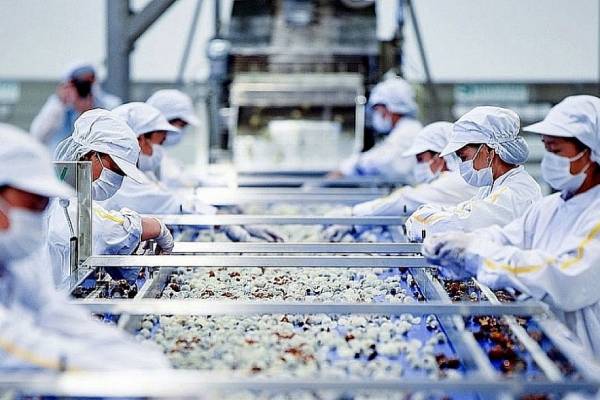
Vietnam’s processed food export industry is experiencing remarkable growth, significantly bolstering the nation’s economy and global market standing. In 2024, total agricultural, forestry, and fishery exports are estimated to reach approximately $62.4 billion, an 18.5% increase from 2023, setting a new record for Vietnam’s agricultural sector. The processed food industry plays a pivotal role, contributing significantly to this growth; it accounted for approximately 19.1% of total industrial production value in 2020, with an average growth rate of 7% per year between 2016 and 2020. By 2023, processed agricultural and food products (including semi-processed and deeply processed goods) accounted for around 30% of total exports, driven by the adoption of modern technology and compliance with international standards such as HACCP and GlobalGAP. However, despite this substantial growth, Vietnam’s food processing technology remains relatively underdeveloped, with only about 30% of businesses applying modern processing technology, leading to lower value-added products and significant post-harvest losses of up to 10-15% for agricultural products (Source: Vietnam News, 2023). This results in a value-added rate of only about 25-30%, significantly lower than the 40-50% average in neighbouring countries like Thailand.
Why is global demand for high-quality processed food increasing?
Global demand for high-quality processed food is increasing sharply, particularly for clean, organic, and convenient products, creating a golden opportunity for Vietnam’s food processing industry. The global processed food market was valued at $4.2 trillion in 2023 and is projected to grow at a CAGR of 5.8% from 2024 to 2029, with the Asia-Pacific region leading this growth (Statista, 2024). This trend is mirrored in Vietnam, where a 2023 Nielsen survey indicated that 85% of consumers are willing to pay higher prices for safe and high-quality food. Vietnamese products like processed seafood, frozen fruits, and instant coffee are well-positioned to meet this rising demand, with fruit and vegetable exports reaching $3.34 billion in 2022 (Ministry of Industry and Trade, 2023). This shift not only drives revenue growth but also encourages investment in advanced processing technology, increasing value-added potential and expanding Vietnam’s footprint in international markets.
What makes Vietnam competitive in food processing?
Vietnam’s processed food industry is highly competitive due to its intrinsic strengths, including abundant raw materials and competitive production costs. These factors enable Vietnam to meet domestic demand while solidifying its presence in the global market, making it an attractive destination for investors seeking sustainable profitability.
Does Vietnam have enough raw materials for food processing?
Yes, Vietnam boasts a diverse and plentiful supply of raw materials, providing a strong foundation for its food processing industry. According to the Ministry of Agriculture and Rural Development (2024), Vietnam ranks among the world’s top producers of agricultural and seafood products, with seafood output reaching 8.9 million tons in 2023, including 3.8 million tons from aquaculture (USDA Foreign Agricultural Service, 2024). Additionally, Vietnam’s 2023 production of rice (43 million tons), coffee (1.8 million tons), and cashew nuts (3.5 million tons) (General Statistics Office, 2024) ensures a stable supply for processed products such as parboiled rice, instant coffee, and roasted cashew nuts. This abundance reduces dependency on imported materials, enhances business autonomy, and ensures the ability to fulfil large international orders.

How does Vietnam’s climate benefit its food processing industry?
Vietnam’s tropical monsoon climate significantly benefits its food processing industry by enabling year-round crop cultivation and diversification of agricultural products. With 33.1 million hectares of agricultural land (over 70% of the total land area), Vietnam produces a variety of tropical fruits such as dragon fruit, mango, durian, and rambutan, catering to the rising global demand for frozen and canned processed foods. According to the Ministry of Industry and Trade (2023), fruit and vegetable exports reached $3.34 billion in 2022 and are expected to surpass $4 billion by 2024, driven by demand from markets such as the U.S., EU, and Japan. This favourable climate not only ensures high yields but also strengthens Vietnam’s competitive edge in supplying premium-quality raw materials for global food processing.
Are production costs in Vietnam competitive for food processing?
Yes, low production costs are a key factor attracting investment in Vietnam’s food processing industry. According to the International Labour Organization (ILO, 2023), the average wage in Vietnam’s agriculture and processing sectors in 2023 was $250 per month, significantly lower than Thailand ($400 per month) and Malaysia ($550 per month). Additionally, industrial land rental costs in Vietnam average between $80-120 per square meter for a 50-year lease (CBRE Vietnam Report, 2024), which is 20-30% lower than neighbouring countries like Indonesia and the Philippines. This cost advantage enables businesses to optimize input expenses, increase profit margins, and compete effectively in the international market, particularly in value-added products like frozen seafood and packaged foods.
How do FTAs help Vietnam’s food exports?
Vietnam’s proactive participation in Free Trade Agreements (FTAs) significantly helps its processed food industry by opening access to international markets at reduced costs and with enhanced competitive advantages. As of 2025, Vietnam has signed and implemented 18 FTAs, including major agreements such as the EVFTA (Vietnam-EU), CPTPP, and RCEP, which eliminate export tariffs on over 70% of processed food products exported to the EU (Ministry of Industry and Trade, 2023). For example, within four years of EVFTA implementation (2020-2024), exports to the EU exceeded $200 billion, with an annual growth rate of 12-15% (General Statistics Office, 2024). These FTAs not only facilitate export growth but also attract foreign investment in processing infrastructure and technology, enabling Vietnamese enterprises to enhance product quality and meet international standards. This strategic advantage positions the industry as a key player in the global value chain.
Conclusion: Unlocking Vietnam’s Full Potential
Vietnam’s processed food export industry is on the cusp of significant expansion, with vast opportunities to increase market share and enhance product value. While challenges in technology and processing quality remain, strategic investments and sustainable development initiatives can position Vietnam as a leading food processing hub in the region. To achieve this, businesses must prioritize innovation, adopt modern technologies, and leverage FTAs to strengthen global competitiveness and capture emerging market opportunities.
Maybe you will like: Agriculture 4.0: Breakthrough Technology & Outstanding Benefits


