

How is Vietnam’s organic farming land area growing?
Vietnam’s organic farming area has seen significant growth in recent years, driven by a commitment to sustainable agricultural development and increasing demand for organic products both domestically and internationally. This expansion reflects a strategic shift towards cleaner, more environmentally friendly farming practices across the country.
Growth of Organic Agricultural Land in Vietnam:
- 2014: Vietnam’s organic farming area reached over 43,000 hectares, ranking 56th out of 172 countries worldwide and 3rd in ASEAN (after Indonesia and the Philippines).
- 2016: The organic farming area increased to around 77,000 hectares, a 3.6-fold increase compared to 2010.
- 2021: The total organic agricultural land area exceeded 174,000 hectares, a 47% increase compared to 2016. Of this, over 63,000 hectares were organic crops, more than 100,000 hectares were organic aquaculture, and over 12,000 hectares were wild harvesting.
- 2022: The organic farming area reached approximately 240,000 hectares, with the participation of nearly 20,000 workers across 46 provinces and cities.
Although this area accounts for less than 1.5% of the total agricultural land in the country, Vietnam is still among the top 10 countries in Asia with the largest organic agricultural land area. Organic farming is being implemented in most provinces, with more than 90% of localities paying attention to and promoting development. The goal by 2030 is to increase the organic farming land area to about 2.5-3% of the total agricultural land while also enhancing the value of products per hectare of organic land.
Compared to the world, Vietnam’s organic agricultural area remains modest, accounting for only a small part of the global 71 million hectares of organic farming. However, the potential for organic agriculture development in Vietnam is significant, especially as consumer demand for organic products continues to rise.
See more about: Organic Agriculture: A Worldwide Overview
What organic certification standards does Vietnam use?
Vietnam Organic Standards: TCVN 11041:2017
Vietnam primarily uses its national standard, TCVN 11041:2017, for organic agriculture, which has been in effect since January 1, 2018. Issued by the Ministry of Science and Technology, this standard guides and regulates the requirements for the domestic production, processing, preservation, and circulation of organic products, ensuring quality and consistency within the country.
The specific regulations of TCVN 11041:2017 include:
TCVN 11041-1:2017 Organic Agriculture – Part 1: General requirements for the production, processing, and labeling of organic agricultural products.
Organic products must be processed under strict conditions to avoid contamination with prohibited chemicals and preservatives.
TCVN 11041-2:2017 Organic Agriculture – Part 2: Organic crop production.
No use of chemical fertilizers and synthetic pesticides. Instead, producers must apply natural methods such as green manure, animal manure, and biological control methods.
TCVN 11041-3:2017 Organic Agriculture – Part 3: Organic livestock production.
No use of growth hormones, antibiotics, or genetically modified feed. Natural farming methods such as outdoor grazing and organic feed are encouraged.

Which international organic standards are important for Vietnamese exports?
For major export markets like the US, EU, and Japan, Vietnamese organic products adhere to specific international organic standards. This commitment to global benchmarks has contributed to record agricultural exports in 2024, demonstrating that a significant portion of Vietnam’s organic agricultural production meets these stringent international requirements.
- USDA Organic: The organic standard of the United States Department of Agriculture, which requires products to be free from synthetic chemicals, artificial fertilizers, synthetic pesticides, and genetically modified organisms. Organic products from Vietnam wishing to be exported to the U.S. must meet this certification.
- EU Organic: The organic standard of the European Union. Products must comply with strict regulations on farming, prohibiting the use of chemical fertilizers and synthetic pesticides while ensuring environmental sustainability in production.
- JAS (Japanese Agricultural Standard): The organic standard of Japan, which also requires no use of synthetic chemicals and protects the natural ecosystem during farming. JAS certification is mandatory for exporting organic agricultural products to Japan.
In addition, a number of other organic standards such as Canadian Organic Standards (COS), Naturland (Germany), Bio Suisse (Switzerland), Australia Certified Organic (Australia), Soil Association (UK), Cosmebio (France) are also gradually being pursued to meet export activities.
What types of organic products from Vietnam are internationally certified?
Vietnam’s organic agricultural products, which have achieved certifications from international standards like USDA Organic, EU Organic, JAS, and Naturland, are primarily concentrated in several key categories. These certifications underscore the quality and global market readiness of Vietnamese organic produce.
Crops:
-
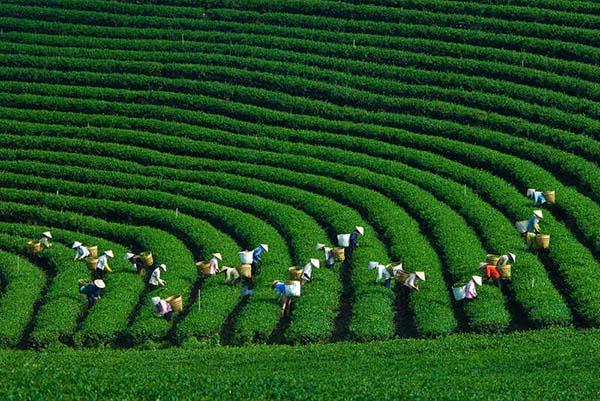
- Tea: A flagship product, particularly exported to the EU, U.S., and Japan. Organic tea regions are often certified by Control Union and Ecocert.
- Coffee: Grown in the Central Highlands, certified USDA and EU Organic, catering to high-end export markets.
- Rice: Organic rice from shrimp-rice farming or clean rice models, certified by international organizations like Control Union.
- Cashew nuts, pepper, cinnamon, star anise: Organic spices highly favored in the U.S. and EU markets.
- Vegetables, fruits: Including dragon fruit, coconut, pomelo, grapefruit, certified by GlobalGAP and international organic standards.
Aquaculture: Organic shrimp (such as black tiger shrimp and white-leg shrimp) from shrimp-rice or forest-shrimp farming models, certified by EU and USDA standards.
Livestock: While organic livestock products such as pork, chicken, and beef are still limited, a few large farms (like Vinamilk and TH True Milk) have achieved international certification for organic dairy.
Medicinal plants and non-timber forest products: Some products, such as Ngoc Linh ginseng, cinnamon, and star anise, have been certified organic by international organizations.
Looking Ahead
Although there are still many challenges ahead, Vietnam’s organic agriculture is showing great potential to become one of the key sectors of the economy. With continuously improving organic standards and an expanding organic farming area, we can fully expect a more sustainable future for the country’s agricultural sector. For businesses and individuals interested in organic produce, this is the golden time to invest and collaborate. VnCommEx is ready to accompany you on the journey of growth and production expansion, helping bring Vietnam’s organic products to the world.


