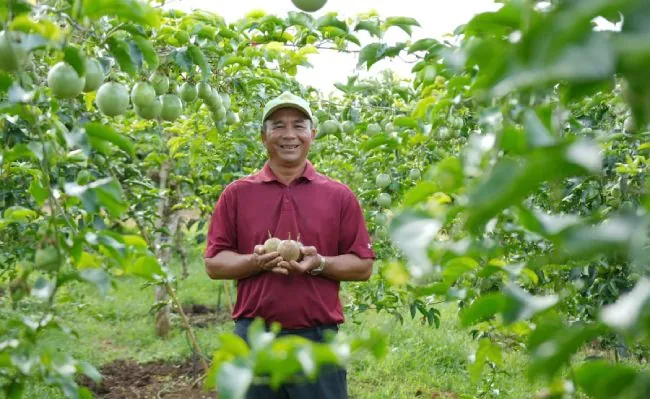
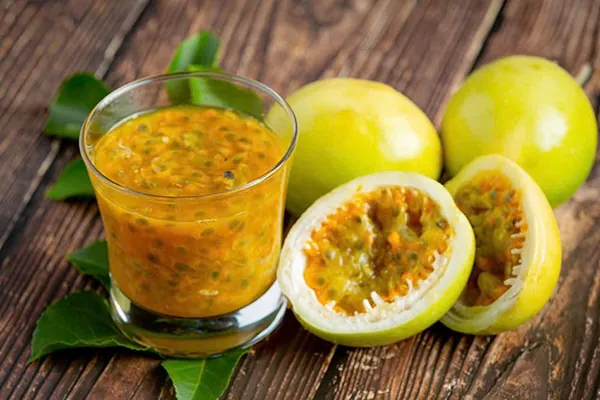
Executive Summary: Vietnam Passion Fruit Procurement Architecture
Vietnam’s passion fruit export sector produces over 200,000 metric tons annually across 12,000+ hectares, generating $150M+ in international trade. Key sourcing hubs in the Central Highlands (Gia Lai, Dak Lak, Lam Dong) and Northern Highlands deliver high-yield Passiflora edulis with Brix ratings between 15.0° and 18.5°. Importers gain year-round supply options, certified GACC/EU MRL compliance, and low FOB costs ($1,100–$1,650/MT fresh; $1,800–$2,700/MT frozen puree).
Vietnam Passion Fruit Sourcing Playbook: Global Export & Investment Guide
The global trade landscape for fresh and processed Passiflora edulis (passion fruit) is undergoing a structural realignment. Historically dominated by Latin American growers, the international market is turning to Southeast Asia to diversify supply chains, mitigate climate-induced yield volatility, and lower procurement costs. Vietnam has emerged as the premier Asian production engine for industrial-scale passion fruit export campaigns.
Supported by state-backed infrastructure investments, rigorous Plant Unit Code (PUC) registration protocols, and favorable agro-climatic conditions across the Central Highlands and Northern Plateau, professional exporters of passion fruit in Vietnam offer international procurement directors predictable volume, strict chemical residue management, and customized processing specifications (fresh, frozen IQF, seedless puree, and concentrated juice). This comprehensive B2B sourcing guide provides enterprise buyers, trade desks, and food manufacturing conglomerates with actionable technical data, operational frameworks, and regulatory playbooks required to execute high-volume procurement programs in Vietnam.
1. Regional Sourcing & Agro-Climatic Matrix
Vietnam’s geographical variety allows for a continuous harvest calendar, mitigating season-end supply disruptions common in single-region production zones. Sourcing executives must evaluate regional microclimates to align fruit attributes (Brix-to-acid ratios, pericarp thickness, juice yield) with target end-use applications (fresh retail vs. industrial extract).
| Growing Region | Cultivation Area (Ha) | Peak Harvest Window | Brix Range & Flavor Profile | Primary Variety | Export Port Logistics |
|---|---|---|---|---|---|
| Gia Lai Province | 4,500+ ha | Year-round (Peak: Jun–Nov) | 15.5° – 18.0° Brix; High acidity, vibrant floral aromatic profile | Taiwanese Purple (Tainung No. 1) | Cai Mep / Cat Lai (Trucking: 10-14 hrs via National Route 14) |
| Dak Lak Province | 3,200+ ha | July – December | 15.0° – 17.5° Brix; Balanced sugar-to-acid ratio, thick pericarp | Purple Passiflora edulis Sims | Cat Lai Port (Ho Chi Minh City) |
| Lam Dong (Da Lat) | 2,100+ ha | September – March | 16.5° – 18.5° Brix; High pulp content (>35%), premium deep purple skin | Specialty Purple & Golden Yellow | Tan Son Nhat Airport (Air) / Cat Lai (Ocean) |
| Son La / Moc Chau Plateau | 1,800+ ha | August – January | 14.5° – 16.8° Brix; Moderate acidity, high industrial juice yield | Tainung No. 1 / Local Hybrids | Lach Huyen / Hai Phong Port (Trucking: 6-8 hrs) |
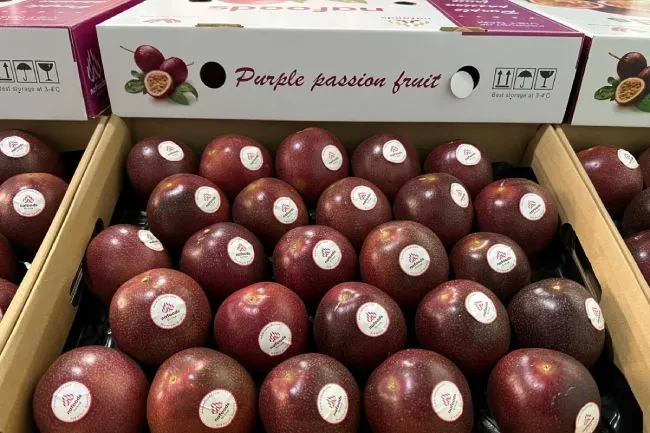
The basaltic soils of the Central Highlands (pH 5.2–6.2) combined with elevations ranging between 500 and 1,200 meters above sea level create an ideal environment for Passiflora edulis. The wide day-to-night temperature variations accelerate sugar accumulation, driving higher Brix levels while retaining essential citric acid levels. This biological profile makes Vietnamese passion fruit ideal for industrial extraction, ensuring stability during downstream thermal processing and beverage blending.
2. Technical Specifications & Quality Grading Standards
Standardization is essential for global passion exports. Vietnamese suppliers categorize shipments into fresh air-freight premium retail grades, sea-freight fresh grades, and industrial processing stock (for frozen puree and concentrate processing).
2.1 Commercial Fresh Fruit Grading Specifications
| Grade Parameter | Class Extra / Grade A (Air Freight) | Class I / Grade B (Sea Freight) | Processing Grade (Industrial) |
|---|---|---|---|
| Fruit Diameter / Weight | 80 – 110 grams (10–12 pcs/kg) | 60 – 80 grams (13–16 pcs/kg) | < 60 grams (Variable count) |
| Soluble Solids (Brix) | ≥ 16.5° Brix | ≥ 15.0° Brix | ≥ 14.0° Brix |
| Skin Coloration | > 90% uniform deep purple/red | > 75% uniform purple coloration | Mixed / Partial green hues allowed |
| Visual Defect Tolerance | < 2% superficial skin blemishes | < 5% mechanical scratch/blemish | Up to 20% surface defects (skin intact) |
| Juice Yield Content (%) | ≥ 35% of total fruit mass | ≥ 30% of total fruit mass | ≥ 28% of total fruit mass |
| Wrinkling Tolerance | 0% (Smooth skin required at packing) | < 5% surface dimpling allowed | Not applicable (Immediate processing) |
2.2 Processed Passion Fruit Derivative Specifications
For enterprise beverage, dairy, and confectionery manufacturers, Vietnamese packhouses process passion fruit into three standardized derivative profiles under ISO 22000 and HACCP certified environments:
- Frozen Seedless Puree (NFC – Not From Concentrate): 13.0° – 16.0° Brix, pH 2.8 – 3.4, acidity 3.0 – 5.0% (calculated as anhydrous citric acid). Micro-filtered to remove all seed fragments down to 0.5mm mesh size. Deep-frozen via blast freezing to -18°C within 4 hours of extraction.
- Frozen Seeded Puree (NFC): 14.0° – 17.0° Brix. Retains washed, sterilized black seeds for artisanal yogurts, dessert toppings, and specialty preserves. Packed in 20kg plastic pails, 190kg steel drums, or 1,000kg aseptic tote bags.
- Concentrated Passion Fruit Juice (50° Brix): Evaporated at low temperatures under vacuum to preserve volatile flavor compounds. Fully soluble, dark reddish-yellow paste, free from scorched notes, designed for low-cost international shipping and reconstitution.
Technical Deep-Dive Reference:
For detailed size-to-count conversions, precise blemish index threshold charts, and lab testing methodologies for pericarp firmness, view our comprehensive technical analysis:
Vietnam Passion Fruit: Quality and Sizing Specifications for Unlocking Export and Investment Potential
3. Strategic Supplier Due Diligence & 4-Step Verification Framework
Engaging with exporters of passion fruit in emerging markets requires a structured verification process to minimize supply chain disruptions, phytosanitary rejections, and financial risks. Enterprise buyers should implement this four-step audit framework prior to executing binding Purchase Orders (POs) or issuing Letters of Credit (LC).
Step 1: Plant Unit Code (PUC) & Farm Traceability Audit
Verify that the supplier operates farming cooperatives or holds contract farming agreements registered under official Plant Unit Codes (PUC) issued by the Vietnam Plant Protection Department (PPD). Validate that the farm management system tracks chemical applications (pesticides, fungicides, herbicides) and respects mandatory Pre-Harvest Intervals (PHI). Sourcing without registered PUCs blocks entry into regulated markets including China (GACC), the EU, and the United States.
Step 2: Packhouse Facility & Processing Line Vetting
Audit the physical infrastructure of the packing facility. For fresh exports, ensure the packhouse features forced-air pre-cooling chambers, automated optical sizing/sorting lines, ethylene scrubbing infrastructure, and temperature-controlled packing areas (12°C–15°C). For frozen puree processors, confirm GFSI-recognized certifications such as BRCGS Food Safety, FSSC 22000, or ISO 22000, along with operational Metal Detection (1.5mm Ferrous / 2.0mm Non-Ferrous limits) and X-ray inspection systems.
Step 3: Pre-Shipment Multi-Residue Chemical Testing
Mandate ISO 17025 accredited third-party sampling (e.g., Eurofins, SGS, Intertek) from pooled composite lots prior to loading. The screen must cover target compounds including Dithiocarbamates, Carbendazim, Prochloraz, Chlorpyrifos (strictly banned in EU/US), and Metalaxyl. Establish clear commercial contract clauses where loading is contingent upon receiving a Certificate of Analysis (CoA) that meets destination country MRL thresholds.
Step 4: Financial Structure & Trade Contract Risk Mitigation
Structure commercial payment terms around performance milestones. Standard international structures for verified Vietnamese suppliers involve 30% advance T/T upon contract signature, with the balance 70% payable upon presentation of clean on-board Bill of Lading, Phytosanitary Certificate, and third-party Quality Inspection Certificate. For initial high-volume programs, utilize Irrevocable At-Sight Letters of Credit (LC) issued by tier-1 global financial institutions.
Procurement Risk Management Reference:
Access our complete packhouse evaluation scorecard, contract template clauses, and supplier audit checklists:
Strategic Sourcing and Packhouse Vetting: Unlocking Export and Investment Potential in Vietnam’s Passion Fruit Industry
4. Export Compliance, Regulatory Standards & Market Access
Exporting fresh and processed passion fruit from Vietnam requires strict compliance with destination-market phytosanitary protocols, Maximum Residue Limits (MRLs), and importer safety registrations.
4.1 Market Access Regulatory Matrix
| Target Market | Regulatory Authority | Key Compliance Requirements | Phytosanitary & Chemical Constraints |
|---|---|---|---|
| European Union (EU) | EFSA / DG SANTE | GlobalGAP, TRACES NT System, EU Official Control Regulation (EU) 2017/625 | Strict MRL adherence under Reg (EC) No 396/2005. Default limit of 0.01 mg/kg applies to unlisted pesticides. Zero tolerance for quarantine pests (Fruit flies: Bactrocera spp.). |
| China | GACC (General Admin of Customs China) | GACC Decrees 248/249 Registration, Designated Border Gate Entry, Official Bilateral Protocol | Mandatory packing in approved, registered facilities. Traceability label with PUC and Packhouse Code required on every outer carton. Pest risk assessments for scale insects. |
| United States | USDA-APHIS / FDA | FDA FSVP (Foreign Supplier Verification Program), Irradiator Facility Certification (if fresh) | USDA-APHIS import permit required. Fresh fruit requires pre-clearance irradiation treatment (400 Gy minimum dose) against fruit fly species. Processed puree requires FDA FCE/SID registration. |
| ASEAN & Middle East | Local Ministries of Agriculture / Health | Phytosanitary Certificate from Vietnam PPD, Halal Certification (JAKIM/MUI recognized) for puree | Standard pesticide screening. Fast-track customs clearing at hub ports (Singapore, Dubai). Low tariff barrier under ASEAN Free Trade Agreements (ATIGA). |
Navigating non-tariff barriers requires technical synchronization between the Vietnamese exporter and the buyer’s customs broker. In 2024, expanded agricultural agreements under the EVFTA (EU-Vietnam Free Trade Agreement) eliminated baseline tariffs on both fresh passion fruit (HS Code 0810.90.50) and processed passion fruit juice (HS Code 2009.89.79), giving Vietnamese exporters a competitive edge over non-FTA Latin American suppliers.
Regulatory & Customs Reference:
Examine step-by-step export filing documents, GACC registration forms, and full pesticide MRL limit tables:
Unlocking Vietnam’s Passion Fruit Potential: A B2B Guide to Customs, Phytosanitary Standards, and Trade Compliance
5. Landed Cost Breakdown ($/MT) & Cold Chain Logistics
Building an accurate procurement budget requires analyzing costs across every stage of the supply chain—from farm-gate acquisition to destination port discharge. Below is a structured cost breakdown and cold chain operational roadmap for Vietnamese passion fruit export operations.
5.1 Commercial Landed Cost Modeling (Fresh Fresh vs. Frozen Puree)
| Cost Component | Fresh Fruit (Sea Freight) ($/MT) | Fresh Fruit (Air Freight) ($/MT) | Frozen Seedless Puree ($/MT) |
|---|---|---|---|
| Raw Farm-Gate Fruit Purchase | $550 – $700 | $750 – $950 (Class Extra) | $1,100 – $1,400 (Raw input equivalence) |
| Sorting, Washing, Pre-Cooling & Labor | $120 – $160 | $150 – $200 | $250 – $350 (Extraction & Filtration) |
| Export Packaging & Master Cartons | $90 – $120 (Cartons + Bags) | $110 – $140 (Heavy Duty 2-wall) | $120 – $180 (Aseptic Drums / Pails) |
| Documentation, Phytosanitary & Local Port Clearance | $40 – $60 | $50 – $70 | $40 – $60 |
| Estimated FOB Vietnam Port Price | $800 – $1,040 / MT | $1,060 – $1,360 / MT | $1,510 – $1,990 / MT |
| Mainline Freight (Rotterdam/Hamburg or LAX) | $180 – $320 (Reefer Sea) | $2,200 – $3,500 (Air Freight) | $200 – $380 (Frozen Reefer Sea) |
| Estimated CIF Destination Port Price | $980 – $1,360 / MT | $3,260 – $4,860 / MT | $1,710 – $2,370 / MT |
5.2 Cold Chain Management Protocol for Sea Transit
Maintaining quality over long sea transits (21–32 days to European base ports) requires controlled cold chain management. Fresh passion fruit continues to respirate post-harvest, releasing ethylene gas which accelerates ripening, skin wrinkling, and fungal decay if not managed properly.
- Pre-Cooling Protocol: Freshly harvested fruit must undergo forced-air pre-cooling within 6 hours of harvest to drop core temperatures from ambient field heat (~28°C) down to the target transit temperature of 7°C–8°C.
- Ocean Container Parameters (40ft High-Cube Reefer):
- Temperature Setting: Set continuously at +7.5°C to +8.5°C for sea transits. Setting temperatures below +5.5°C causes chilling injury, leading to pitting, dark water-soaked spots, and failed color development.
- Relative Humidity (RH): Maintain between 85% and 90%. Air humidity above 92% promotes mold growth (Cladosporium spp.), while humidity below 80% causes moisture loss, leading to skin wrinkling and weight loss exceeding 8%.
- Fresh Air Exchange Rate: Maintain continuous airflow at 15 to 20 m³/hr to vent accumulated carbon dioxide (CO2 must remain below 1.0%) and sweep trace ethylene out of the container atmosphere.
- Atmosphere Packaging (MAP): Utilize micro-perforated Modified Atmosphere Packaging (MAP) liner bags inside master corrugated boxes. MAP balances O2 levels at 3-5% and CO2 levels at 4-7%, suppressing fruit respiration rates and extending commercial shelf life up to 35 days.
Freight & Logistics Reference:
Review optimal pallet stacking configurations, reefer container air circulation diagrams, and detailed freight rate matrices:
Unlocking Vietnam’s Passion Fruit Potential: A B2B Guide to Freight Logistics, Packaging, and Landed Costs
6. Frequently Asked Questions (B2B Sourcing FAQ)
Q1: What are the primary export varieties of passion fruit available from Vietnamese suppliers?
The primary export variety is the Taiwanese Purple cultivar (Tainung No. 1 / Passiflora edulis Sims), which accounts for over 85% of commercial exports. It is favored for its rich purple skin, high Brix content (15–18°), strong aroma, and robust rind suitable for ocean freight. Yellow Passion Fruit (Passiflora edulis f. flavicarpa) is also produced in smaller volumes, primarily for industrial juice blending due to its higher natural acid profile.
Q2: What is the typical shelf life for fresh Vietnamese passion fruit under ocean freight?
When managed under an unbroken cold chain (7°C–8°C, 85–90% RH) with Modified Atmosphere Packaging (MAP), fresh purple passion fruit maintains optimal commercial quality for 30 to 35 days from harvest. This provides sufficient buffer for transit times from Vietnamese ports (Cat Lai / Cai Mep) to Western Europe (24–28 days) or the US West Coast (18–22 days).
Q3: How do enterprise buyers ensure pesticide MRL compliance for European markets?
Buyers should source through suppliers operating GlobalGAP certified orchards linked to registered Plant Unit Codes (PUC). Contractual terms must specify mandatory pre-shipment composite sampling by an independent laboratory (e.g., Eurofins or SGS) verifying compliance with EU Regulation (EC) No 396/2005. Key chemicals requiring screening include Dithiocarbamates, Carbendazim, and Metalaxyl.
Q4: What packaging options are standard for frozen passion fruit puree exports?
Frozen passion fruit puree (seedless or seeded) is typically packed into 20kg food-grade plastic pails, 190kg/200kg aseptic bags inside steel drums, or 1,000kg aseptic fluid tote containers (IBCs). All processed derivative packaging is shock-frozen to -18°C and shipped in standard 40ft reefer containers maintaining -18°C to -20°C continuously.