

What is the current state of Vietnam’s wood export industry?
Vietnam’s wood export industry has seen remarkable growth since the 1990s, evolving into a major global player. Starting from a modest $214 million in 2000, exports surged past $1 billion by 2004 and hit $14 billion by 2021. This expansion was largely fueled by rising global demand, especially for furniture, a trend accelerated by the pandemic and the shift to remote work. For 2024, Vietnam is projected to export $12.15 billion in wood and forestry products, underscoring its significant presence in the international market.
 Vietnam’s wood industry has undergone a notable expansion, with exports reaching over $10 billion annually to 140 countries. The United States is the leading market, accounting for over 50% of exports, particularly in furniture. However, following the pandemic, the U.S. market share has declined slightly. China is the second-largest market, primarily for wood chips, while the European Union, particularly the United Kingdom, is another key market. Growth is projected in 2024, especially in the United States and the European Union.
See more detail about the Vietnam’s wood exports 2024: Overview, opportunities, risks and challenges
What types of wood products can you source from Vietnam?
Plywood and laminated wood are engineered wood products made by bonding thin layers of wood veneer together. They are widely used in construction, furniture, and cabinetry.
Vietnam exports value to the US: 571.62 thousand m³, generating $282.22 million, accounting for 4% of total wood exports to the U.S

This category includes prefabricated buildings, joinery, and carpentry products made of wood, such as windows, doors, and frames used in construction projects.
– Exports to the US: 322 thousand m³, valued at $296.58 million, representing 4.2% of total wood exports to the U.S., with a 47.6% increase in volume.
– Exports to the EU: 48.42 thousand m³, generating $31.68 million, a 30.2% decline in volume.

Wood pellets are small cylindrical pieces made from compressed sawdust or other wood waste, used primarily as fuel in heating and power generation.
– Exports to Japan: 2.8 million tons, generating $438.67 million.
– Exports to the EU: 110.87 thousand tons, generating $17.88 million.

Wood chips are small pieces of wood used in pulp and paper production, biomass energy, and as raw material for producing composite wood products.
– Exports to China: 9.38 million tons, valued at $1.44 billion, accounting for 82.9% of Vietnam’s total wood exports to China.
– Exports to Japan: 3.94 million tons, generating nearly $610 million.

Veneer refers to thin layers of wood, usually peeled from logs, used for surface applications on furniture, panels, and decorative wood products.
Exports to China: 903.32 thousand m³, generating $150.94 million.

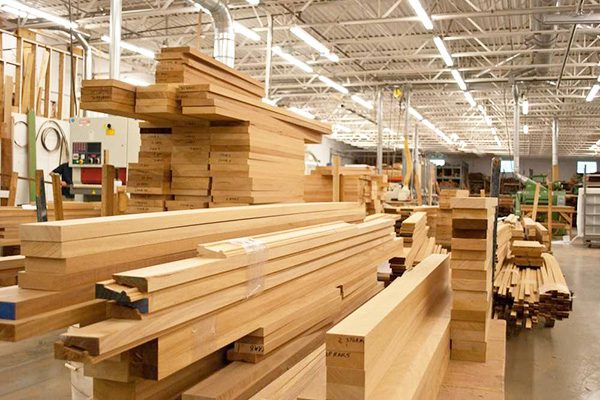
Sawn timber is wood that has been cut into boards or planks, and used for construction, flooring, and various carpentry applications.
Exports to China: 184.76 thousand m³, generating $77.19 million.

Office furniture includes desks, chairs, storage units, and other equipment designed for office environments.
Exports to the U.S.: $149.28 million, a 31.3% decline from 2022.

Kitchen furniture encompasses cabinets, countertops, and storage units designed specifically for kitchen environments.
Exports to the U.S.: $846.44 million, a 6.7% decrease compared to 2022.

This category covers a broad range of wooden furniture, including living room, dining room, and bedroom furniture.
– Exports to the U.S.: $906.34 million, down 29.2% from 2022.
– Exports to the EU: $23.09 million, a 34.4% decrease from 2022.
This category includes wooden chairs and seating furniture, often used in dining rooms, offices, and public spaces.
Exports to the EU: $133.69 million, a 30.5% decline compared to 2022.
Why is Vietnam a good place to source wood products?
Vietnam stands out as an attractive destination for wood importers due to its diverse supply of high-quality wood and competitive pricing. The country’s modern processing technology and abundant labor resources contribute to the growing popularity of Vietnamese wood products in the international market. Several compelling factors make importing wood from Vietnam a strategic choice for global businesses.
- Vietnam offers a diverse range of wood types, including acacia, rubberwood, and teak, which are highly valued for use in furniture and construction.
- Vietnam places a strong emphasis on sustainable forestry and responsible sourcing, making it an environmentally conscious choice.
- Vietnamese wood products are competitively priced, offering customers an affordable option.
- Vietnam is renowned for its high-quality craftsmanship, particularly in furniture manufacturing.
What are the most popular types of wood used in Vietnam’s production?
Vietnam’s wood processing industry heavily depends on raw materials, which typically constitute 40-60% of the final product cost. Annually, the country requires approximately 40-42 million m³ of raw wood for production. The primary sources for these materials are planted forests, with acacia and rubber wood being the two most significant types utilized.
1. Acacia Wood
Dominance in Planted Forests: Acacia wood makes up 80% of the planted forest area in Vietnam, providing approximately 30 million m³ of raw wood annually. Acacia wood is versatile and is used in the production of various wood products, including:
- Wood chips (for paper, pulp, and energy)
- Veneer (for furniture production)
- Pellets (used for energy and heating)
- Wooden products such as bookcases, chairs, and outdoor furniture.
Acacia wood is easy to process and is relatively low-cost, making it the primary raw material in Vietnam’s wood processing industry.

2. Rubber Wood
Vietnam has nearly 1 million hectares of rubber plantations, mostly smallholder rubber, yielding 3-4 million m³ of rubber wood annually. Although the supply of rubber wood is smaller than that of acacia, it remains a vital component of Vietnam’s wood processing industry. It is primarily used in the production of:
- Industrial wood products (such as plywood and furniture components)
- Household wood products (such as furniture and small wooden items).
Rubberwood is favoured for its smooth surface and durability, making it suitable for a wide range of applications.
See further: Top 7 types of wood favoured for import from Vietnam
Where does Vietnam source its raw wood materials?
As of 2022, Vietnam’s planted forest areas span approximately 4.66 million hectares, accounting for about 30% of the total national forest area. These forests are crucial for meeting the raw material demands of Vietnam’s wood processing industry. While the country’s planted forests are primarily concentrated in the northern regions, the Southeast region serves as the key hub for wood production.
Key Forest Regions
- Northern Midlands and Mountainous Region: This region, which includes provinces like Lai Chau, Son La, and Thanh Hoa, holds about 5.4 million hectares of forests (both natural and planted), making it one of the largest forested areas in Vietnam.
- North Central and Central Coastal Regions: This area, which includes provinces such as Nghe An and Quang Binh, has about 5.6 million hectares of forests, contributing significantly to Vietnam’s wood resources.
Major Wood Production and Export Areas
Southeast Region (Dong Nai and Binh Duong): Despite the concentration of planted forests in the north, the Southeast region is the largest contributor to wood production and exports. This region is home to the two most important provinces for wood production:
- Dong Nai: Known for its strong industrial base and craft villages, Dong Nai is a key producer of wood products and has developed cooperatives that enhance production capacity.
- Binh Duong: Often referred to as the “capital” for many large domestic and foreign wood processing enterprises, Binh Duong is crucial to Vietnam’s wood industry, contributing significantly to both domestic production and exports.
These two provinces together account for over 50% of the wood output and more than 70% of the export value in Vietnam’s wood processing industry.

What certifications and international standards does Vietnamese wood meet?
Vietnam’s wood industry is actively aligning with international sustainability standards to satisfy the stringent requirements of key export markets, such as the EU and the US. These markets typically mandate that 70% of raw materials originate from FSC-certified sources, with the remaining 30% permitted from non-certified materials, provided they adhere to robust traceability standards.

As of September 2023, 500,000 hectares of Vietnam’s forests are certified under FSC and VFCS/PEFC standards, making up about 64% of the country’s planted forests. This includes bamboo and rubber plantations as well. Additionally, many companies are investing in renewable energy systems to promote more sustainable production practices. These efforts ensure that Vietnam’s wood products meet international demands for environmental responsibility, enhancing their competitiveness in global markets.
With the growing trend toward sustainability and eco-conscious consumption, Vietnam is poised to become a go-to destination for high-quality, affordable wood products in the next decade. The greening movement, paired with strategic trade policies, positions Vietnam perfectly to meet the rising global demand for sustainable materials. As we look to 2025-2030, Vietnam’s wood industry is set to flourish, offering exciting opportunities for international businesses. If you’re seeking premium wood products at competitive prices, Vncommex is ready to provide you with expert guidance and unmatched support.
See more: Why Vietnam is the Best Place to Source Cashews: A Deep Dive


